The Genius Song · Review
The Genius Song Review: Our 2.9 Scorecard, Pros and Cons
A cheap, short audio track wrapped in a very loud sales pitch. We scored The Genius Song one area at a time and explain what pushed each number up or down.
A short digital audio track (the seller says about 7 minutes) for daily listening with headphones, sold with digital bonuses. Its benefits are the seller's claims, and the presenter's name is a pen name.
- $39 one-time price
- 90-day refund
- Cognitive Support
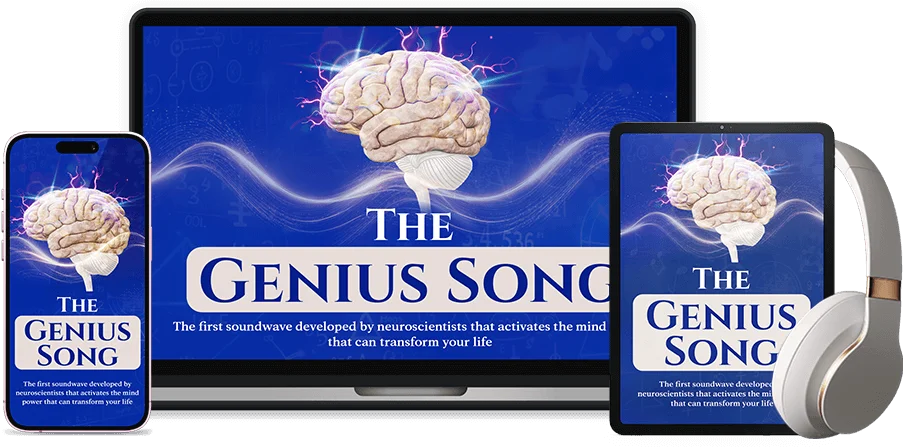
At a glance
- Refund window
- 90 days from purchase
- Price
- $39 one-time
- digital purchase, no shipping
- Category
- Cognitive Support
- Our editorial score
- 2.9 / 5
- our judgement, not a customer rating
Sold as The Genius Song, this is a brief digital recording that the seller puts at about 7 minutes, priced at $39 with a few digital extras and a 90-day refund route. Our editorial score is 2.9 out of 5. Low physical risk and fair refund terms keep it off the bottom, while the absence of any study on the track and a presentation full of claims we could not check keep it below the middle.
The verdict at a glance
| Question | Short answer |
|---|---|
| What you buy | One audio track, about 7 minutes per the seller, delivered digitally |
| How the seller says to use it | Headphones on, eyes closed, once a day |
| Price | $39 one-time; checkout converts to local currency and adds tax |
| Refund | 90 days from purchase, per the Terms and the ClickBank checkout |
| Tested in a published study? | No. Only general gamma and entrainment research is mentioned |
| Presenter | Goes by “Dr. Robert Lake”, which the site’s own disclaimer calls a pen name |
| How the Terms frame it | Products “provided for entertainment purposes only” |
| Our editorial score | 2.9 / 5 (breakdown below) |
Our editorial score, one area at a time
Our editorial score: 2.9/5. Our team set it using the five areas on our methodology page. It is not a customer rating, and we did not buy or test the track on anyone.
| Area | Our score | Our reasoning |
|---|---|---|
| Evidence | 1.5 / 5 | Gamma rhythms are a real research topic, yet the best-known 40 Hz sound and light work was done in mouse models of Alzheimer’s disease, and binaural-beat research points both ways: Garcia-Argibay and colleagues (2019) pooled studies and found a medium-sized effect on cognition, anxiety and pain measures, whereas a 2023 review counted only 5 of 14 entrainment studies backing the brainwave change. Nothing published looks at this recording. The promises about luck, wealth and promotions have no research behind them. The half point above the floor reflects only that the underlying topic is genuine science. |
| Transparency | 1.5 / 5 | The site’s footer says “Robert Lake” is a pen name, while a headline calls him a “Top NASA Scientist”. The seller quotes two customer totals (18,366 and 19,389), two bonus lists and two delivery methods. The Terms say testimonials may be acted and some were compensated, and the refund page belongs to another product. |
| Safety | 4 / 5 | Sitting quietly with headphones for a few minutes is low risk for most adults at a moderate volume. We take a point off because the pitch links the track to migraines, joint pain, smoking and weight, which deserve proper care, and because this kind of audio is not for driving or for people with seizure disorders without medical advice. |
| Value | 3.5 / 5 | One payment of $39, nothing shipped and a few digital extras is a small outlay for an experiment. The $200, $100 and $49 figures are the seller’s reference prices, and buying signs you up for marketing email lists. |
| Refund terms | 4 / 5 | Ninety days from purchase appears in the Terms under “For Digital Products” and on the ClickBank checkout. A point comes off for the separate refund page, a 60-day policy for NeuroActivate bottles with an Ohio return address, which could confuse a buyer who reads it first. |
| Overall | 2.9 / 5 | The average of the five areas. Easy to undo, weak on proof. |
What a 2.9 tells you
The number does not measure how well the track “works”. Safety, value and refund terms describe the downside of buying: small money, little physical risk and a clear way to get it back. Evidence and transparency describe the upside, where almost nothing the seller promises can be confirmed. Keep those two stories apart and the decision gets calmer.
What would move the score
| Change | Area it would affect |
|---|---|
| A controlled study of this track, published in a journal | Evidence (up) |
| The real name and role of the person presenting it | Transparency (up) |
| One consistent bonus list and one clear delivery method | Transparency (up) |
| Removing the NeuroActivate refund page | Refund terms and transparency (up) |
| A shorter refund period or a recurring charge at checkout | Refund terms and value (down) |
| Any report of listening harm | Safety (down) |
Pros and cons
| Pros | Cons |
|---|---|
| A single $39 payment, with no subscription shown at checkout | No published study has tested the track |
| Short daily routine; the video says a missed day is “okay” | Presenter name is a pen name, per the site’s disclaimer |
| Nothing shipped and no hardware needed | Terms say feedback may be acted by “digital representations, avatars, or actors” |
| 90 days to ask for a refund, with ClickBank as the retailer | Customer totals and bonus lists differ between the seller’s pages |
| The presenter admits there is “no evidence” the track caused a casino win | Outcome claims reach money, weight loss and pain relief |
| Digital bonuses come with the order | Countdown pricing built on crossed-out reference prices |
Two smaller oddities: the video opens with a “seven second” brain trick but sells a track of about 7 minutes, and the sales page’s browser tab reads “The Gamma Song”. Neither is a safety issue; both weigh on transparency.
A practical note on our links: they land on the seller’s home page. At present that page advertises The Genius Wave, a different audio title sold by this seller, and The Genius Song pitch lives on the site’s /video/ page. The seller lists Wave at 12 minutes (theta) and Song at about 7 minutes (gamma), so read the product name at checkout.
Who it may suit, and who should skip it
Reasonable for a short trial
- An adult who is curious about listening routines and can spend $39 without strain.
- Someone who would value a fixed few minutes of quiet each day, eyes closed, headphones on.
- A buyer who will write down sleep, mood and concentration for a week first, then compare after two or three weeks.
- A person who puts a reminder in the calendar around day 75 and asks for a refund if nothing has changed.
Better to skip, or to speak with a professional
| Your situation | Why we suggest caution |
|---|---|
| You hope to fix memory loss, attention difficulties or a learning problem | These deserve an assessment, and the track has never been tested for them |
| Migraines, joint pain, smoking or weight are your reason for buying | The site’s fine print rules out diagnosing, treating, curing or preventing any disease |
| You want more money, luck or a promotion | Those are sales promises without evidence behind them |
| You have epilepsy, past seizures or a hearing condition | Our advice: check with a doctor before using audio entrainment of any kind |
| You planned to listen in the car | Never listen while driving or operating machinery |
| You want a track for your child | The buyer must be 18 or over under the Terms, and a child’s health concerns belong with a paediatrician |
Our safety page goes through listening safety and the fine print in more detail.
How we reached the verdict
- Watched the full 39-minute sales video with its captions and logged every claimed outcome, research reference and caveat.
- Read the text version of the sales page and compared it line by line with the video, which is how the differing customer totals, bonus lists and delivery wording came to light.
- Read the Terms in full; their entertainment-only section admits that brain entrainment “is not an exact science”.
- Compared the refund wording in the Terms with the ClickBank checkout and with the separate refund page.
- Set the research the pitch borrows from against what the video promises.
The customer stories in the video, such as “Rachel, a nurse from Tustin, California”, “Michael in Dallas” and “Hannah from Manhattan”, played no part in our score. According to the Terms, real names were swapped for pen names, parts of the marketing were “dramatized”, feedback may be acted out, that some people shown may be friends or family of the founders, and that some were compensated.
Bottom line
The Genius Song asks for little money and a few minutes a day, and it can be refunded for 90 days. That is what lifts it to 2.9. Everything else, from faster learning to lucky streaks, rests on a presenter writing under a pen name, testimonials the Terms describe as possibly dramatized, and research that never examined this track. The seller’s own Terms call the products entertainment, and that is the frame we would buy it in, if at all.
If you do order, keep the receipt email, expect the card line CLKBANK*Genius Song, and keep ClickBank’s order support number, 1-800-390-6035, to hand. For the long read, see our full Genius Song review. To see what the order is said to contain, read what’s included, and the claim-by-claim research check is on the benefits page.
Good to know
- • The Genius Song is a digital audio track; nothing is shipped.
- • Results vary, and it is not a treatment for any medical condition.
- • Your order is covered by a 90-day money-back guarantee through ClickBank.
The Genius Song Official Pricing
As listed on the seller's store. Crossed-out prices and savings are the seller's own reference figures. A one-time digital purchase: nothing is shipped, and the checkout shows tax and your local currency.
The Genius Song audio track
$200$39
One-time payment
Seller lists a $161 saving
- Short daily audio track (seller says about 7 minutes)
- Digital delivery after checkout
- Bonuses listed on the sales page
- 90-day money-back guarantee
Prices can change; the checkout shows the final total.
Frequently asked questions
What is the OccHealthNews score for The Genius Song?
2.9 out of 5. It is our editorial score, the average of five areas: evidence 1.5, transparency 1.5, safety 4, value 3.5 and refund terms 4. It is not a customer rating and says nothing certain about how the track will work for you.
Why does transparency score so low?
The presenter's name is a pen name according to the site's own disclaimer, the Terms say testimonials may be acted and some people were compensated, and the seller's pages give two different customer totals, two different bonus lists and two descriptions of delivery. A refund page for a different product also sits on the site.
Did you buy and listen to The Genius Song?
No. We reviewed the sales video and its captions, the text version of the sales page, the Terms, the refund page and the ClickBank checkout. We describe what the seller says you receive, and we could not check the actual length or content of the track.
Is $39 a fair price?
For a one-time digital purchase with a 90-day refund route, $39 is a modest amount to try something. The crossed-out $200, $100 and $49 figures are the seller's own reference prices, so we do not treat them as real savings.
More on The Genius Song
- Overview: The Genius Song Explained: Price, Claims, Bonuses and Refund
- What's Included: The Genius Song Order Contents: Track, Bonuses and Access
- Benefits: The Genius Song Claims Checked Against Gamma Research
- Safety: Is The Genius Song Safe? Listening Risks and the Fine Print
- Price: The Genius Song Cost: $39, Reference Prices and the Refund
- FAQ: The Genius Song FAQ: Short Answers, Grouped by Topic
- Comparison: The Genius Song vs Other Options: Audio, Apps, Games, Habits
- Where to buy: Where to Buy The Genius Song: Seller Site and ClickBank Only
- Official website: The Genius Song Seller Site: Site Map, Contacts, Checkout
More in Cognitive Support, or see our editorial shortlist.
Other products in Cognitive Support
All- Billionaire Brain WaveA 7-minute daily audio the seller describes as a theta-based sound wave, played with headphones as a simple morning ritual. One $39 payment, three bonuses and a 90-day money-back guarantee.$39 one-time
- Phytomem OneA once-a-day chewable brain-support tablet built on a 10-ingredient proprietary blend (458 mg per tablet), grouped by the seller into three complexes for memory, focus and mental clarity.$49 to $79
- The Brain SongA 12-minute digital audio built around gamma-frequency sound patterns and designed to support focus, learning and mental wellness, according to the seller. One $39 payment, 90-day refund.$39 one-time
- The Genius SwitchAn 8-minute digital audio track you play once a day with headphones, sold with four digital bonuses. It is a downloadable file, not an app or a game, and its benefits are the seller's claims.$39 one-time
Sources
- 1 Binaural beats to entrain the brain? A systematic review of the effects of binaural beat stimulation on brain oscillatory activity, and the implications for psychological research and intervention PLOS ONE · 2023
- 2 Multi-sensory Gamma Stimulation Ameliorates Alzheimer's-Associated Pathology and Improves Cognition Cell · 2019
- 3 FTC's Endorsement Guides: What People Are Asking US Federal Trade Commission
About this guide
OccHealthNews Editorial Team. We read the seller's pages, terms and refund policy and the published research, and we show our sources. We do not run lab tests or rate products on personal results. Our methodology.