Gluco6 Ingredients: Every Item on the Label, Explained
Three nutrients with listed amounts, seven plants in one 525 mg blend and a short list of fillers. Here is what each item is and what the seller says it is for.
Contents
- 1The quick map
- 2Sukre (L-arabinose), the headline
- 3The rest of the “Super 6”
- 4Label items the seller doesn’t highlight
- 5What the panel keeps to itself
- 6How to read a blend label
- 7What the research covers
- 8The capsule and its fillers
- 9Caffeine-type substances, in plain terms
- 10Ingredients and your medicines
- 11One question to keep asking
- 12Our verdict on the ingredients
The easiest way to understand a supplement is to meet its ingredients one at a time, and Gluco6 makes that fairly painless. Inside each daily vegetable capsule you’ll find three nutrients printed with amounts and seven plant items gathered into one blend. The distributor sits in Aurora, CO, and its pitch is steady, healthy blood sugar for people already in the normal range, with weight management as the other half of the message. Below, we go through every Gluco6 ingredient: what it is, what the label shows and the role the seller gives it. Those roles are the seller’s descriptions, not outcomes we can promise. The Gluco6 overview holds the same label facts in a single view.
The quick map
| Group | Items |
|---|---|
| Nutrients with amounts | Vitamin D3, vitamin B1, chromium |
| Plant blend, 525 mg total | Seven plant items |
| Capsule and fillers | Shell plus four supporting items |
Sukre (L-arabinose), the headline
Start where the company starts. Sukre is its trade name for a plant fiber that chemists call L-arabinose, and the marketing describes it as a “healthy sugar” sitting at the heart of the formula. Everything else in the story orbits it. It’s also the one ingredient with published research behind it, which we get to below. On the panel, Sukre appears inside the 525 mg blend with no amount of its own.
The rest of the “Super 6”
The sales pages name six headline players. Alongside Sukre they are TeaCrine, gymnema, chromium, cinnamon and green tea.
TeaCrine (theacrine). A tea-type compound sold under a brand name. The company talks about harnessing the power of Chinese tea. Because it belongs to the caffeine family, caffeine-sensitive shoppers should note it.
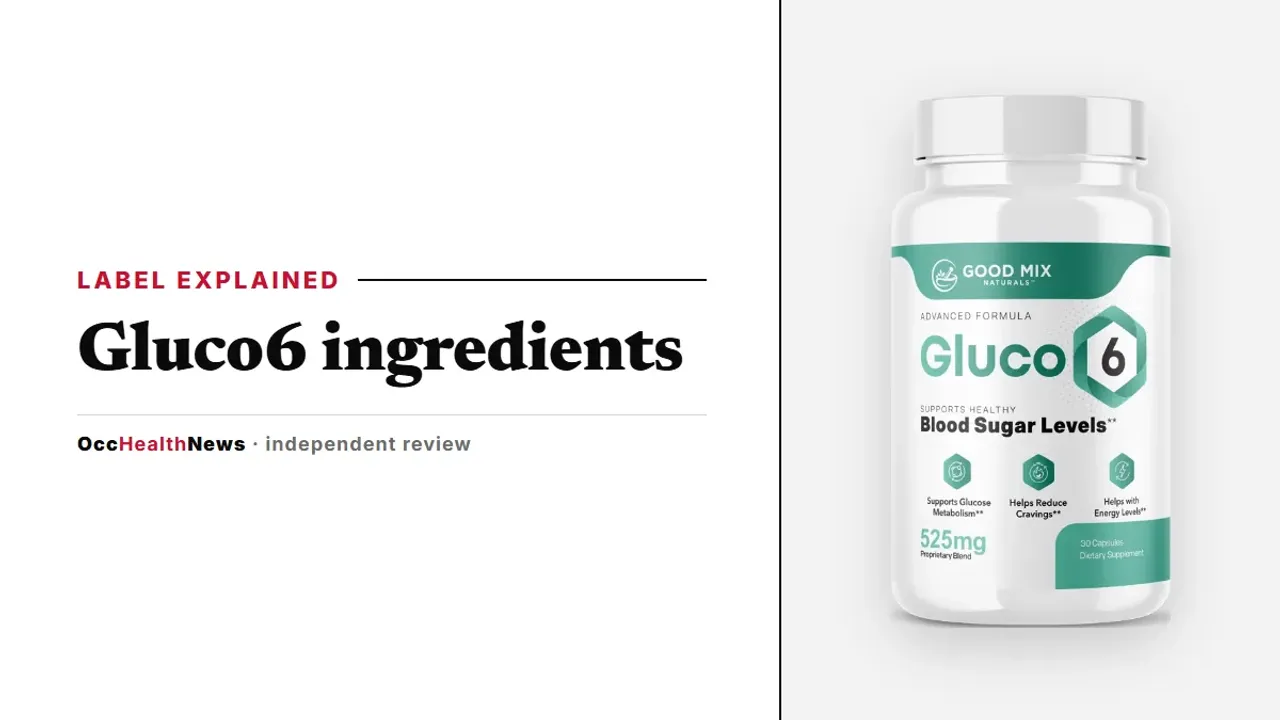
Gymnema (leaf). A plant with a long record of traditional use. The seller connects it with sugar cravings, and the bottle’s own printed line “Helps Reduce Cravings” is wording we report, not a result we vouch for.
Chromium (1 mg, as chromium niacinate). A mineral with its own amount on the panel. The seller describes it as important for steady glucose levels. Its FAQ adds that each capsule already supplies enough, so be careful about stacking another product rich in chromium.
Cinnamon (cassia bark). The seller links cinnamon with healthy sugar handling after meals. Cassia is the common supermarket type, and here it’s part of the blend without a separate dose.
Green tea (leaf). The seller associates green tea with healthy weight management. As a tea-derived item, it’s another caffeine-type ingredient.
Label items the seller doesn’t highlight
Three entries sit outside the “Super 6” story, so there’s no seller role to report for them.
Vitamin D3 (50 mcg). A familiar vitamin, listed as cholecalciferol with its amount.
Vitamin B1 (100 mg). Also known as thiamine, listed with its amount.
Theobromine and eleuthero root. Both live in the blend. Theobromine is a caffeine-type compound associated with cocoa, and eleuthero is a root used in traditional herbal products. Nothing on the seller’s pages spells out what either is for, and we won’t invent a role.
What the panel keeps to itself
The blend is a single number, 525 mg. How much of it is Sukre, how much is gymnema or green tea, or what share goes to anything else isn’t stated, and we won’t guess. The practical result is that you can’t line Gluco6 up against another capsule dose for dose, so you lean harder on the refund window and your own trial. That’s the one real mark against label transparency in our scoring. The blend carries no established Daily Value, and we don’t make much of the percentages printed beside the three nutrients.
How to read a blend label
A short lesson that applies well beyond this capsule. When a label shows a “proprietary blend,” three habits help.
- Look at the total. A 525 mg blend tells you the combined weight, which is more than “proprietary formula” alone.
- Read the order. Ingredients in blends are often listed from most to least by weight, though not always, and the panel here doesn’t promise it.
- Judge the whole. Since you can’t judge items separately, judge the capsule as a unit: the company’s reputation, the refund terms and what you notice yourself.
What the research covers
Three papers are cited by the seller. Each concerns L-arabinose, the substance behind Sukre, and none tests Gluco6 as a finished capsule.
- Japan, 2000. A nutrition journal paper on L-arabinose and blood glucose after sucrose-containing food, in people.
- Hao and colleagues, 2015. A rat study of L-arabinose against a high-carbohydrate, high-fat diet.
- Krog-Mikkelsen and colleagues, 2011. Dose-response work on L-arabinose and an intestinal enzyme called sucrase, in vitro and in humans.
The links sit under Sources. Use them as ingredient background, and don’t take them as proof that Gluco6 itself does anything. What they do show is that the headline ingredient has been properly studied. Whether the finished capsule suits you is the question the refund window helps you answer.
The capsule and its fillers
The shell is hypromellose, a plant-derived material, hence the “vegetable capsule” label. The supporting items are microcrystalline cellulose, silicon dioxide, magnesium stearate and stearic acid, ordinary helpers that keep capsule contents flowing and evenly filled. The seller adds that the formula is plant-based, soy-free, dairy-free, vegetarian and non-GMO, and that it’s made in the USA in an FDA-registered, GMP-certified facility. We pass those along as the seller’s statements.
Caffeine-type substances, in plain terms
Green tea, theacrine and theobromine all belong to one family. The label gives no amounts for them, so we can’t say how much any one contributes. If coffee or strong tea makes you jumpy, take that on board; the morning slot the seller’s FAQ suggests is a sensible one for anyone who worries about evenings. It’s also why we never repeat a claim that the formula contains nothing of the kind. It does.
Ingredients and your medicines
A handful of the plant items, cinnamon, gymnema and green tea among them, are often flagged for people who use blood sugar medicines. We don’t say Gluco6 changes any medicine; we say ask. Carry on with your prescriptions exactly as directed, and have your doctor or pharmacist go through the label before you begin, particularly where diabetes medicines are in the picture. The label itself excludes anyone under 18, pregnant or nursing, and asks people who use medication or have a health condition to see a physician first. The cautions are also gathered on the safety page.
One question to keep asking
When any label lists a plant, ask what it’s there for and who says so. For Gluco6 the answers come mostly from the seller, which is fine as long as you remember whose voice you’re hearing. The panel itself, with its amounts, its blend total and its fillers, is the part you can check with your own eyes.
Our verdict on the ingredients
It’s a readable label: one clear headline ingredient, three stated amounts and a plant blend with its total shown but not divided. That’s worth 4.6 out of 5 in our book, built from how readable the label is, how fair the prices look, how workable the refund is and how many support routes exist. For the whole panel as a table, see our supplement review and the ingredients list guide, and for the packages and terms in one place, the Gluco6 hub. If you only want the summary, the ingredients page is shorter still.
Frequently asked questions
What are the Gluco6 ingredients?
Vitamin D3 (50 mcg), vitamin B1 (100 mg), chromium (1 mg) and a 525 mg proprietary blend of Sukre (L-arabinose), theobromine, green tea leaf, eleuthero root, theacrine, cassia cinnamon bark and gymnema leaf.
What is Sukre?
The seller's name for a plant fiber that is L-arabinose, which it calls a healthy sugar and places at the heart of the formula.
Does Gluco6 contain caffeine?
The label lists green tea leaf, theacrine and theobromine, which are caffeine-type substances. People who are sensitive to caffeine should keep that in mind.
What are the other ingredients?
Hypromellose (the vegetable capsule), microcrystalline cellulose, silicon dioxide, magnesium stearate and stearic acid.
Can I take Gluco6 with my medicines?
Leave prescribed medicines exactly as they are and ask your doctor or pharmacist before starting, especially if diabetes medicines are involved.
Sources
- 1 Effect of L-Arabinose on Blood Glucose Level after Ingestion of Sucrose-containing Food in Human Journal of Japanese Society of Nutrition and Food Science · 2000
- 2 Protective effects of L-arabinose in high-carbohydrate, high-fat diet-induced metabolic syndrome in rats Food and Nutrition Research (Hao et al.) · 2015
- 3 The effects of L-arabinose on intestinal sucrase activity: dose-response studies in vitro and in humans American Journal of Clinical Nutrition (Krog-Mikkelsen et al.) · 2011
About the author
OccHealthNews Editorial Team. We read the studies, guidelines and regulatory filings so you do not have to, and we show our sources on every piece. More about how we work.