Does Gluco6 Really Work? What the Capsule Is Designed to Do
No promises, because nobody can make them honestly. Here is how Gluco6 is built, what its seller suggests and how to run a trial that tells you something.
Contents
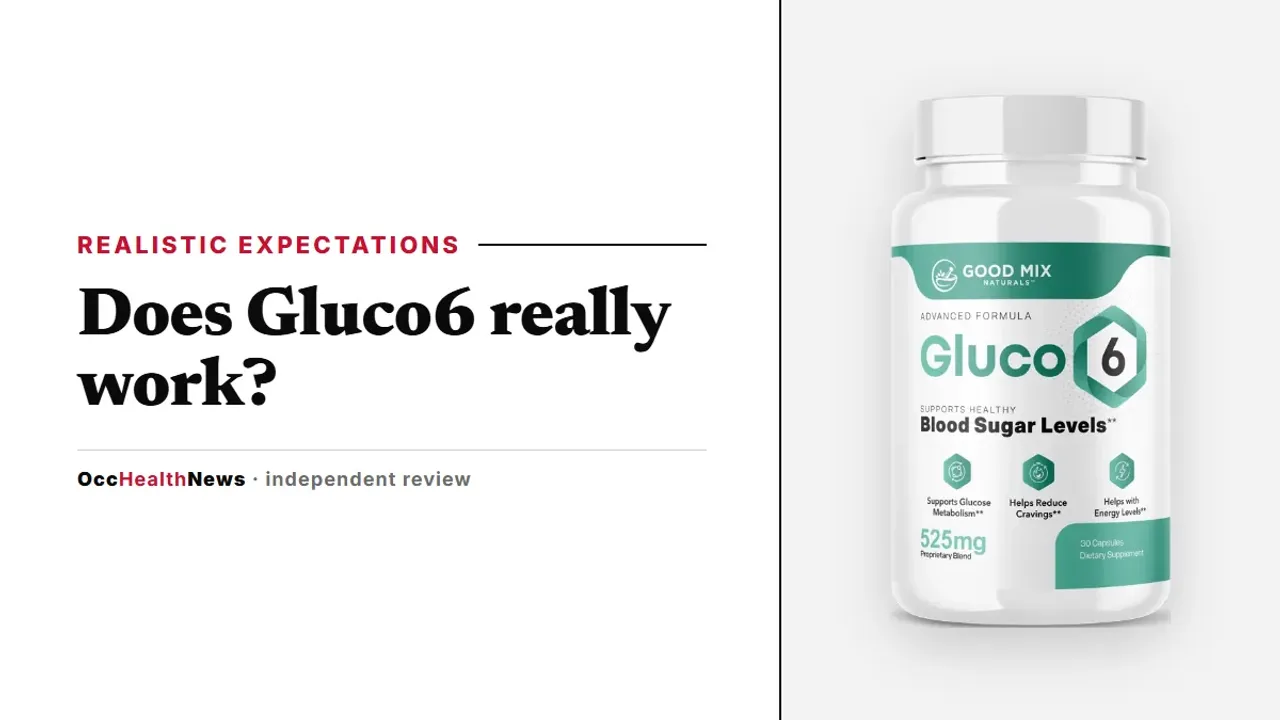
Ask whether Gluco6 really works and you’ll get two kinds of answer: a loud yes from pages that want you to buy, or a flat no from people who haven’t looked. We’d rather give you a third. Here is how the capsule is designed, what its maker suggests, what the underlying ingredient research does and doesn’t cover, and how to run a trial that actually tells you something. The product in question is a daily vegetable capsule, distributed from Aurora, CO. Its seller pitches it at keeping already-healthy blood sugar levels inside the normal range, with weight management as the partner goal. For the label and packages in one view, the Gluco6 overview is handy.
First, what “work” should mean
It helps to decide what you’d count as success before you start, because “work” is slippery. A daily capsule isn’t a switch you flip. For the people it’s aimed at, the realistic goals are modest and personal: afternoons that feel more even, fewer sugary snack runs, a routine you keep. Those are things you can note down and judge over weeks, which is exactly why a notebook beats a hunch.
A supplement like this isn’t a medical measure, and it makes no claim to deal with any condition. Please don’t read anything here that way.
The design, as the seller describes it
According to the company, the whole idea revolves around what the body does with the sugar in a meal. That’s the one line of explanation we’ll pass along, since the rest turns technical and promotional fast. For a buyer, the formula is what counts.
Sukre sits in the middle. It’s a plant fiber, chemically L-arabinose, and the company’s pet name for it is a “healthy sugar.” Around it, the marketing gathers a half-dozen headline players it labels the “Super 6”: Sukre, TeaCrine, gymnema, chromium, cinnamon and green tea. The printed label lists more than that, adding vitamin D3, vitamin B1, theobromine and eleuthero root.
In the company’s telling, each piece has a part. Gymnema is linked to sugar cravings, chromium to steady glucose handling, and TeaCrine plus green tea to energy and weight management. Those are descriptions from the sales side, roles on paper and not outcomes we can confirm, and the panel gives you no way to learn the share of each plant inside the blend. For a closer look at the items one by one, our ingredients guide is the place.
Three published papers are cited by the seller. Each concerns L-arabinose, the Sukre ingredient, and none tests Gluco6 as a finished capsule, so we file them as background on a single ingredient.
- Japan, 2000: a nutrition journal paper on L-arabinose and blood glucose following food that contained sucrose, with human participants.
- Hao and colleagues, 2015: a study in rats, testing L-arabinose against a diet heavy in carbohydrate and fat.
- Krog-Mikkelsen and colleagues, 2011: dose-response work on L-arabinose and sucrase, an intestinal enzyme, in vitro and in people.
Boiled down: the headline ingredient has been properly studied. What the papers can’t say is how a capsule that pairs it with a plant blend, a few nutrients and a 525 mg total will behave in your own routine. The links sit under Sources.
The timeline the seller suggests
What the company recommends is steady use across three to six months, with the caveat that people respond differently. That’s a useful framing, because it defines a fair test. Thirty days, the span a single capsule bottle covers, is short by that yardstick. A three-bottle order stretches to 90 days, and six bottles run to 180.
One catch deserves a mention. The refund window lasts 60 days from the date of purchase, which closes well before a three-to-six-month plan finishes. The practical approach is to use those first sixty days as your decision period, relying on your notes to judge whether the routine suits you, and then carry on or send the bottles back on that evidence.
How to run a trial that tells you something
You don’t need equipment. You need a plan.
- Fix the time. The seller’s FAQ leans toward mornings, before you eat, with water. Choose that or another steady slot, and hold to it.
- Write a baseline. For a week before the first capsule, jot down the mood of your afternoons and how often cravings get their way.
- Keep one weekly line. Sunday evening, two sentences: energy, cravings, and how many days you remembered.
- Change little else. Rebuild your meals, sleep and workouts all at once and you’ll never know what to credit.
- Decide before day 60. Reread your notes near day fifty. Keep going, or get in touch with support about a return.
That last step is the one most people skip, and it’s the one that makes the refund window worth having.
Getting the most from it
Consistency beats everything else. A capsule taken five days a week for a month is a different test from one taken daily. Past that, the helpful habits are the ordinary ones: regular meals, enough sleep, a bit of movement. We mention them because they’re good for you, not because the capsule depends on them.
Caffeine-sensitive? Green tea, theacrine and theobromine all belong to that family. And the seller’s FAQ adds that other chromium-heavy products call for care, because each Gluco6 capsule already holds chromium.
What if you notice nothing?
It’s a fair possibility, and a trial should be designed with it in mind. If your notes show no change by day fifty, you have information, not failure. You can contact support about a return while the window is still open, and there’s no shame in that; the policy exists for exactly this case. If your notes show something you like, that’s a good reason to continue and to order a longer supply.
Either way, don’t let the decision drift. The most common regret with any refund window is realizing, on day sixty-three, that it closed three days ago.
Safety and your doctor
The label excludes children and teens, expecting mothers and nursing mothers, and sends people who use medication or live with a health condition to a physician beforehand. If prescriptions are part of your life, leave them exactly as directed, and have your doctor or pharmacist read the label before Gluco6 joins your day, above all where diabetes medicines are in the picture. The seller’s own FAQ says to stay on prescribed medications until a healthcare professional clears you otherwise.
What it costs to test
A 6-bottle order is $234, so $39 per bottle and about $1.30 per day. Three bottles come to $147 ($49 each, roughly $1.63 a day). Two bottles are $138 with $9.95 of US postage added. Every option is worked through in our price guide, and the benefits page sums up what the seller says the capsule is designed for.
Our answer
Does Gluco6 really work? We can’t promise it will for you, and we’d distrust anyone who does. What we can say is that it’s a well-labeled capsule with a simple routine, a headline ingredient that has been studied and a refund window that lets you find out for yourself. For those reasons the offer earns 4.6 out of 5, our own grade across label, price, refund and support. The Gluco6 hub holds the details in one place.
Frequently asked questions
Does Gluco6 really work?
Nobody can promise a result. The seller says it is designed to support healthy blood sugar levels already in the normal range and weight management, and that results vary. The 60-day refund window lets you test it yourself.
How is Gluco6 designed to work?
The seller builds the formula around Sukre, a plant fiber that is L-arabinose, together with a blend of plant ingredients plus vitamin D3, vitamin B1 and chromium. Its explanation centers on how the body handles sugar from meals.
How long should I use it?
The seller suggests consistent use for 3 to 6 months. The refund window is shorter, 60 days from purchase, so decide about it early.
Has Gluco6 itself been studied?
The research the seller cites concerns L-arabinose, one ingredient. It is background reading, not a trial of the finished capsule.
What should I do about my medicines?
Carry on with prescribed medicines exactly as directed, and have your doctor or pharmacist review the label before you add Gluco6, above all when diabetes medicines are part of your plan.
Sources
- 1 Effect of L-Arabinose on Blood Glucose Level after Ingestion of Sucrose-containing Food in Human Journal of Japanese Society of Nutrition and Food Science · 2000
- 2 Protective effects of L-arabinose in high-carbohydrate, high-fat diet-induced metabolic syndrome in rats Food and Nutrition Research (Hao et al.) · 2015
- 3 The effects of L-arabinose on intestinal sucrase activity: dose-response studies in vitro and in humans American Journal of Clinical Nutrition (Krog-Mikkelsen et al.) · 2011
About the author
OccHealthNews Editorial Team. We read the studies, guidelines and regulatory filings so you do not have to, and we show our sources on every piece. More about how we work.