Gluco6 Ingredients List: The Complete Supplement Facts Panel
The whole label in one place, row by row, with a plain note on what each line tells you and what it leaves out.
Contents
- 1The Supplement Facts panel as a table
- 2What’s inside the 525 mg blend
- 3The front of the bottle
- 4Other ingredients
- 5The directions and cautions
- 6Label vocabulary, decoded
- 7Reading the table, row by row
- 8What the label does not tell you
- 9Three caffeine-type items to notice
- 10Comparing it with another label
- 11Using the label with your doctor
- 12A one-minute routine for new labels
- 13Our verdict
Reading a label closely beats reading about one. This page sets out the entire Gluco6 ingredients list the way the bottle prints it, then walks down it row by row, so you can see what each line states and what it leaves out. The product is a vegetable capsule taken once a day, distributed by Gluco6 in Aurora, CO, and the seller’s pitch is blood sugar support for people already in a healthy range, plus weight management. If you’d like the story behind each ingredient, our ingredients guide covers it; here, we stick to the panel. For a one-page overview of the product itself, the Gluco6 page is the place to start, and it’s the same label on every package size.
The Supplement Facts panel as a table
| Line | Entry |
|---|---|
| Serving size | 1 capsule |
| Servings per container | 30 |
| Vitamin D3 (as cholecalciferol) | 50 mcg |
| Vitamin B1 (as thiamine mononitrate) | 100 mg |
| Chromium (as chromium niacinate) | 1 mg |
| Proprietary blend | 525 mg |
The panel also prints percent Daily Values beside the three nutrients, which we leave out because the daily reference amounts for these nutrients are small and the percentages can look dramatic without telling you much. The blend carries no Daily Value, since none is established for it.
What’s inside the 525 mg blend
Seven items share the blend. Rather than copy the printed order, we’ve grouped them by what kind of ingredient each is, which makes the list easier to take in.
| Kind | Ingredient on the label |
|---|---|
| Fiber | Sukre prebiotic fiber (L-arabinose) |
| Caffeine-type | Theobromine; theacrine (as TeaCrine); green tea (Camellia sinensis) leaf |
| Root | Eleuthero (Eleutherococcus senticosus) |
| Spice bark | Cinnamon (Cinnamomum cassia) |
| Leaf | Gymnema (Gymnema sylvestre) |
A blend like this reports the combined weight and the names, but not the split. We can’t tell you how much of the 525 mg any single item takes up, and the label can’t either.
The front of the bottle
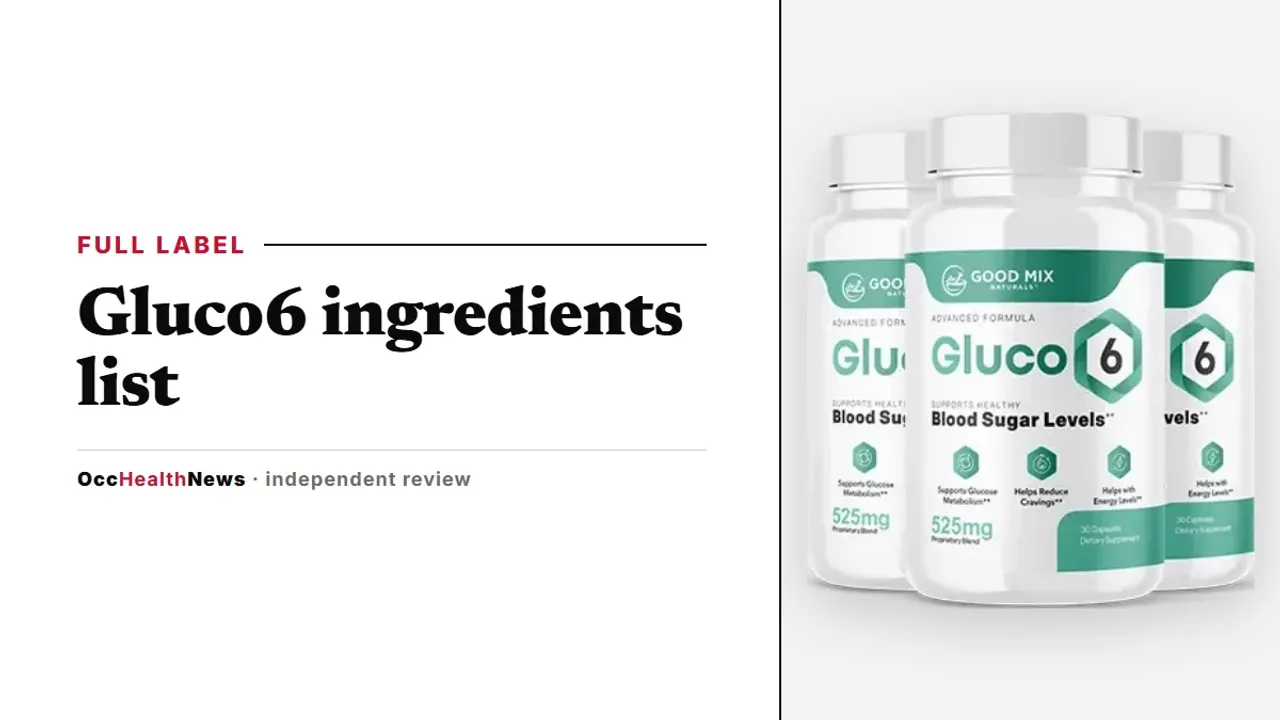
The panel sits on the back. Up front, the bottle reads “Advanced Formula” and “Supports Healthy Blood Sugar Levels,” and three small icons repeat the phrases “Supports Glucose Metabolism,” “Helps Reduce Cravings” and “Helps with Energy Levels.” Those lines are the label’s own marketing, and we report them as such. The Supplement Facts panel is the part you can check against the ingredients.
Other ingredients
Five items round out the list, none remarkable. Hypromellose forms the vegetable capsule shell. Microcrystalline cellulose, silicon dioxide, magnesium stearate and stearic acid are supporting ingredients, the sort that help capsule contents flow and fill evenly. The seller adds that the formula is plant-based, soy-free, dairy-free, vegetarian and non-GMO, with free-from badges for BPA, nuts, crustaceans and eggs, and that it’s made in the USA in an FDA-registered, GMP-certified facility. We report all of that as the seller’s account, since a factory can’t be audited from a desk.
The directions and cautions
The label’s directions are short: as a dietary supplement, take one capsule once a day. The seller’s FAQ narrows that to the morning, before breakfast, with a glass of water. Then come the cautions, in our own wording:
- Don’t go past the recommended dose.
- It isn’t meant for anyone under 18, or for pregnant or nursing mothers.
- See a physician before use, particularly when you take a medication or have a medical condition.
- Store it somewhere cool and dry, below 30 degrees C (86 F), away from children.
- Leave the bottle alone if the safety seal is damaged or missing.
The seller’s FAQ adds that Gluco6 already contains chromium, so go carefully with other formulas that are rich in it.
Label vocabulary, decoded
Supplement panels use a few terms that aren’t obvious. Here are the ones on this label.
Serving size. The amount you take at once. Here, one capsule.
Servings per container. How many servings a bottle holds. Here, 30, which is why a bottle lasts a month at one a day.
“As” forms. The words in brackets, such as “as cholecalciferol,” name the specific form of the nutrient used. They matter to formulators more than to shoppers, but they confirm the label is being specific.
Proprietary blend. A group of ingredients shown with one combined weight and no individual doses. This is the label’s main limitation.
Daily Value. A reference figure for a nutrient. The three nutrients here have one printed; the blend has none because none is established.
Reading the table, row by row
Serving and servings. One capsule, 30 servings, a month’s supply per bottle. Two bottles last 60 days, three last 90 and six last 180.
The three nutrients. Vitamin D3, vitamin B1 and chromium are the only items with their own amounts. The seller’s marketing leans on chromium among them, while D3 and B1 sit outside its “Super 6” list, so the seller assigns them no role.
The blend. Seven plants, one number. It’s the limit of the panel and the reason for a slightly lower transparency mark.
The fillers. Short and unremarkable, which is what you’d hope for.
What the label does not tell you
Every label has gaps, and naming them is part of reading well. This panel doesn’t say:
- how much of the 525 mg each plant accounts for;
- how much caffeine, if any, the blend delivers in total;
- anything about how a capsule might affect you personally.
That last point is something no label can tell you. The seller says individual results vary, and we agree.
Three caffeine-type items to notice
Green tea leaf, theacrine and theobromine are all on the list. They belong to the caffeine family of substances, and the label gives no amounts. If you’re sensitive to caffeine, the morning timing the seller suggests is a sensible habit, and it’s a reason to read the label before your first capsule.
Comparing it with another label
If you’re weighing Gluco6 against another product, line up five things: the serving size, the number of servings, the named amounts, whether there’s a blend and how many items it holds, and the cautions. On those points, Gluco6 offers a clear serving size, three named amounts, a blend total, a full ingredient list and written cautions. It doesn’t offer the individual split. If that matters to you, that’s a legitimate reason to choose differently.
Using the label with your doctor
The most practical use of this page is to show it to someone who knows your health. Print the tables, or photograph the label when the bottle arrives, and take it to your doctor or pharmacist. If you take prescribed medicines, keep taking them exactly as directed, and ask them to read the label before Gluco6 joins your routine, particularly if diabetes medicines are part of your plan. Our side effects guide lists the questions worth asking.
A one-minute routine for new labels
Whenever you meet an unfamiliar supplement, give its label sixty seconds. Find the serving size, count the servings, note which items carry amounts, check whether a blend hides the rest and read the caution lines. That short habit makes Gluco6’s panel easy to place, and it will serve you just as well on the next product you consider.
Our verdict
The label is clear on format, nutrients, fillers and cautions, and silent on the split inside the blend. That’s why we give the offer 4.6 out of 5, an editorial figure that weighs the label, the price ladder, the returns policy and the support routes. The Gluco6 hub keeps the label facts, packages and terms together, and the ingredients page gives a shorter version.
Frequently asked questions
What is the full Gluco6 ingredients list?
Vitamin D3 (as cholecalciferol) 50 mcg, vitamin B1 (as thiamine mononitrate) 100 mg, chromium (as chromium niacinate) 1 mg and a 525 mg proprietary blend, plus hypromellose, microcrystalline cellulose, silicon dioxide, magnesium stearate and stearic acid.
What is in the proprietary blend?
Sukre prebiotic fiber (L-arabinose), theobromine, green tea (Camellia sinensis) leaf, eleuthero (Eleutherococcus senticosus) root, theacrine (as TeaCrine), cinnamon (Cinnamomum cassia) bark and gymnema (Gymnema sylvestre) leaf.
Does the label give the dose of each plant?
No. The blend is shown as a 525 mg total, and no individual amounts are stated.
How is Gluco6 stored?
In a cool, dry place below 30 degrees C (86 F), out of reach of children. The label says not to use it if the safety seal is damaged or missing.
Who should ask a doctor first?
Anyone on prescribed medicines or with a medical condition. Don't alter your medicines; show your doctor or pharmacist the label before adding Gluco6, with diabetes medicines first on the list of reasons.
About the author
OccHealthNews Editorial Team. We read the studies, guidelines and regulatory filings so you do not have to, and we show our sources on every piece. More about how we work.