Eastern vs Western Astrology: Eastern Astrology Language Reading
One system counts years and animals, the other follows the sun, moon and planets. See how each works side by side, and what you need to know about your birth to use them.
Contents
- 1Eastern vs western astrology at a glance
- 2How Eastern astrology works
- 3How Western astrology works
- 4What each system tends to emphasize
- 5What each system asks from your birth details
- 6Where the two systems meet
- 7Why a personal Eastern chart is worth exploring
- 8A 60-day guarantee takes the guesswork out
- 9Who will like which system
You know your sun sign, and a friend keeps telling you what animal you are. Which one tells you more, and what would the Eastern Astrology Language Reading add? Eastern vs western astrology is one of the most-asked questions in the sky-watching world, and the answer is kinder than the debate suggests: each system looks at your birth through a different lens, and the two fit together beautifully.
This guide shows how each one works, side by side. When you are ready to see what the Eastern lens says about you personally, the Eastern Astrology Language Reading is a short quiz away.
Eastern vs western astrology at a glance
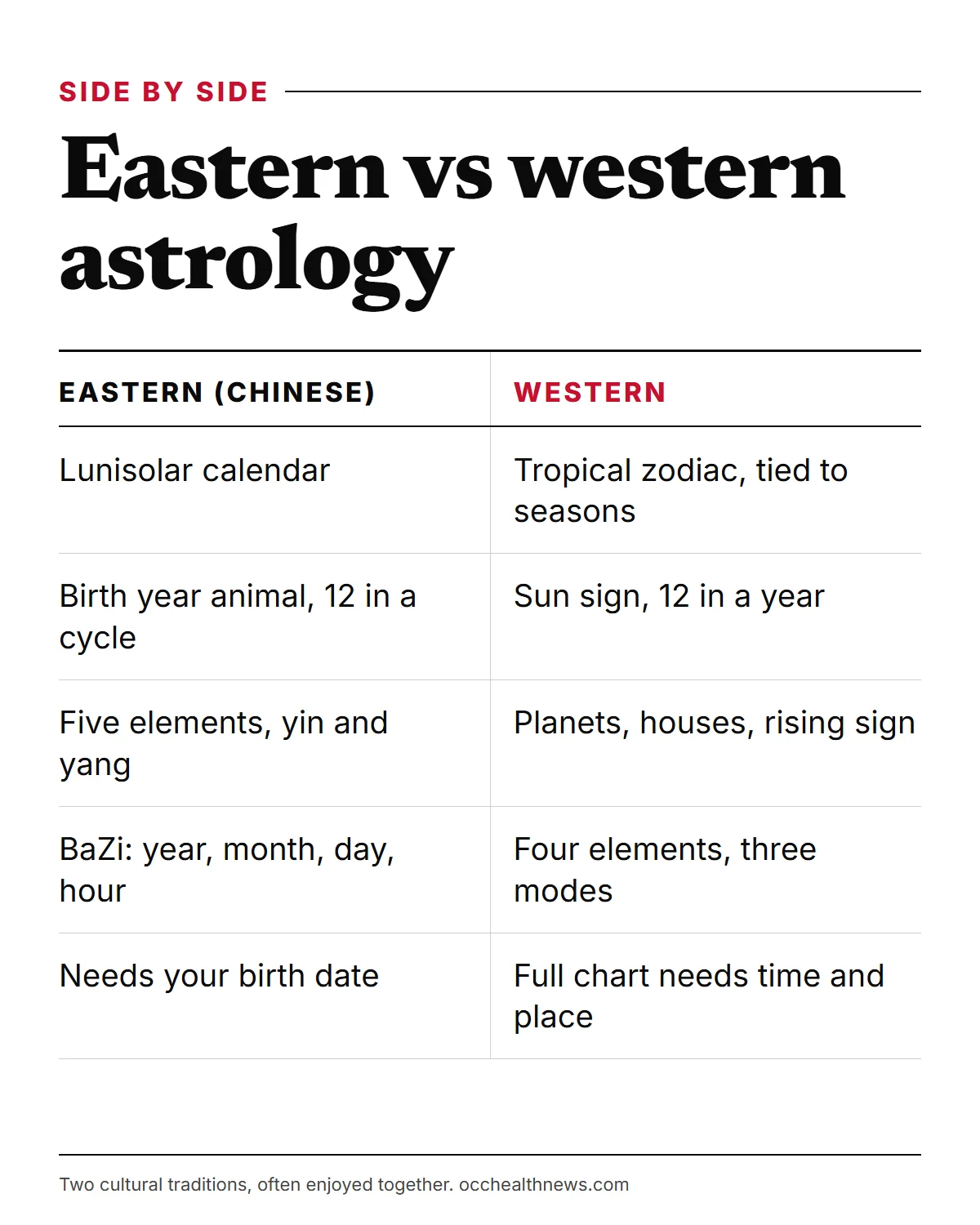
| Eastern (Chinese) astrology | Western astrology | |
|---|---|---|
| Built on | Lunisolar calendar | Tropical zodiac, tied to the seasons |
| Main label | Birth year animal (12) | Sun sign (12) |
| Cycle length | 12 years (60 with elements) | 1 year |
| Other building blocks | Five elements, yin and yang, BaZi pillars | Planets, houses, rising sign, four elements |
| Birth data used | Date, plus hour for BaZi | Date, plus time and place for a full chart |
| Typical focus | Year-by-year character and timing | Personality and daily or monthly themes |
How Eastern astrology works
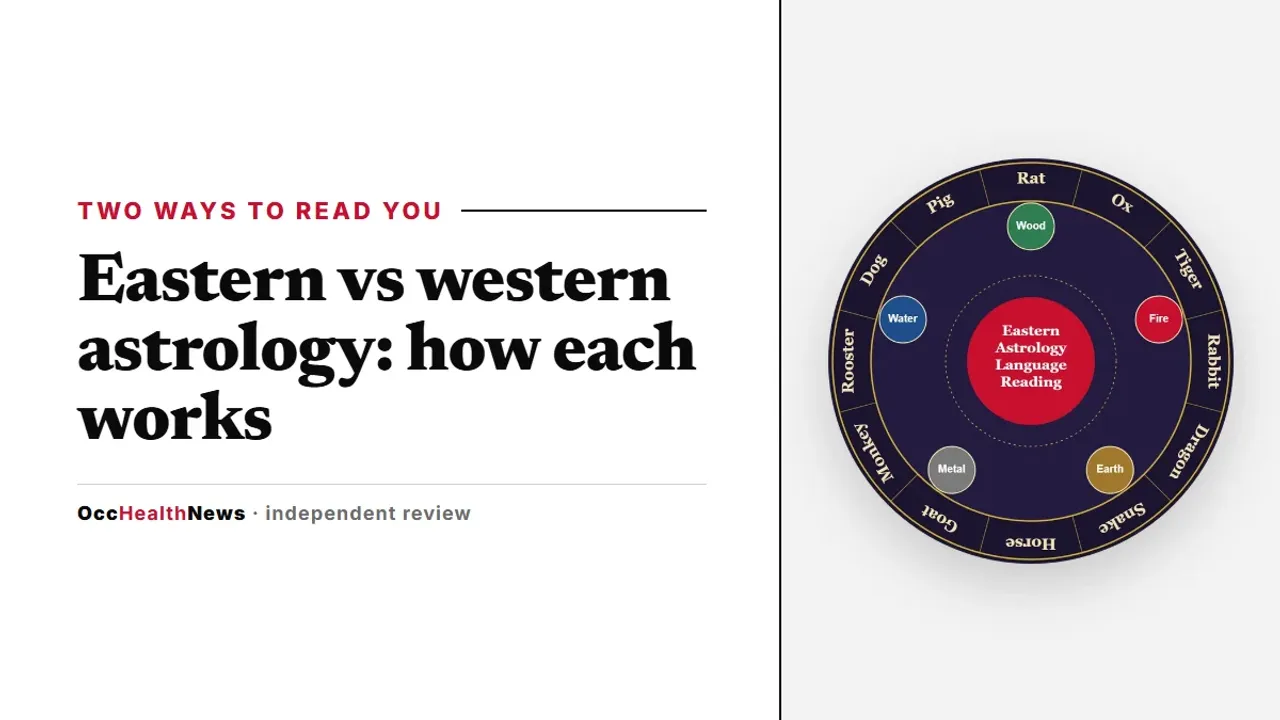
Eastern astrology rests on the Chinese calendar, which blends the moon’s cycle with the solar year. Each year is linked to one of 12 animals, from Rat at the start of the cycle to Pig at the end. Each year also carries an element (Wood, Fire, Earth, Metal or Water) and a yin or yang quality, which adds five elements to the picture. Animal and element together repeat every 60 years, which is why the tradition speaks of a “Fire Horse” or a “Wood Dragon.”
The animal changes at Lunar New Year, a festival that lands anywhere from late January to mid February. That is why a January birthday may belong to the previous animal, and why checking the date of that year’s festival is the first step.
Going deeper leads to BaZi, the “four pillars.” Your year, month, day and hour of birth each get a pair of characters, a heavenly stem and an earthly branch. With four pillars of two characters each, you get eight characters, which is where the name BaZi comes from. The result is a richer portrait than the animal alone, and it is the idea behind a personal chart reading.
How Western astrology works
Western astrology starts from the tropical zodiac. The year is divided into twelve signs beginning at the March equinox, so the signs follow the seasons: in the Northern Hemisphere, Aries opens spring and Cancer opens summer. Your sun sign is simply the sign the sun was in on your birthday.
A full Western birth chart goes much further. It places the moon and planets in the signs, divides the sky into twelve houses for areas of life, and finds your rising sign from the exact time and place you were born. Signs are also grouped into four elements (fire, earth, air, water) and three modes (cardinal, fixed, mutable). That is why a newspaper horoscope, which uses the sun sign only, feels lighter than a complete natal chart.
What each system tends to emphasize
Although the techniques differ, both traditions are interpretive and symbolic. People often notice these themes:
- Western astrology leans toward an inner personality portrait: your drives, moods and emotional style, plus day-to-day horoscopes.
- Eastern astrology leans toward cycles: how a year suits you, who you click with, and the balance of elements in your chart.
- Both use archetypes, elements and cycles, which is why the two are often enjoyed together.
What each system asks from your birth details
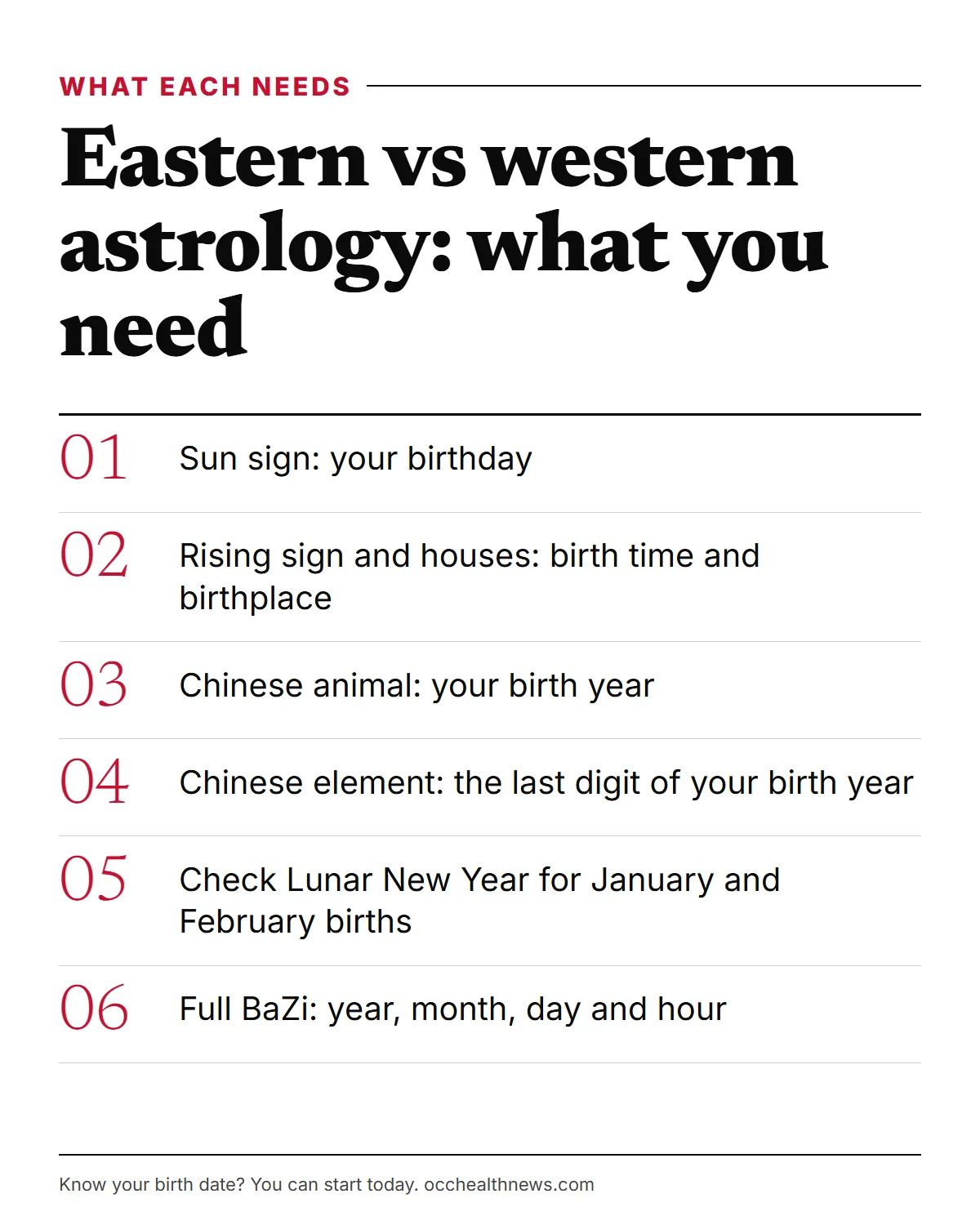
The practical difference shows up the moment you want your own reading. Here is what each tradition needs from you:
- Sun sign: only your birthday. Cusp birthdays, within a day or two of a sign change, are worth double-checking because the exact switch moment shifts slightly from year to year.
- Rising sign and houses: your exact birth time and birthplace, which many people do not know offhand.
- Chinese animal and element: your birth year, with the Lunar New Year check for January and February babies.
- Full BaZi: year, month, day and, traditionally, hour of birth.
That is a big reason Eastern astrology is easy to start with. If you know your date of birth, you already have the main ingredient for an Eastern animal and element reading.
Where the two systems meet
Western astrology gives you the season of your birth and Eastern astrology gives you the year. Together they answer different questions, which is why combining them feels natural. To dig into the Eastern side, try the main guide to Eastern astrology, the walk-through of the 12 animals or the explainer on how a chart is laid out.
The two traditions also grew from different cultures. Western astrology traces back to Hellenistic and Babylonian traditions, and Chinese astrology developed alongside the Chinese calendar. Learning about both is a lovely way to enjoy the symbols of each culture with curiosity and respect.
Why a personal Eastern chart is worth exploring
Every sun sign description is shared by about a twelfth of the world. A personal chart reading built around your own birth date adds another layer that is specific to the year you were born. That is what the Eastern Astrology Language Reading offers, which the seller describes as a 50+ page reading. It points at your animal, your element and “stars” named Wealth, Peach Blossom and Nobleman. Plenty of people order it as a relaxed way to think about love, career and timing.
How it works: open the quiz and answer its nine short questions, which takes about a minute. It also asks for your first name, email and birth date, and then shows your reading and the offer. Prefer fewer emails? Untick the marketing box before you continue.
| Package | Price | What the seller lists |
|---|---|---|
| Essential | $19 | 50+ page chart, email delivery in 48 to 72 hours, optional add-ons at checkout |
| VIP | $47 (seller shows $97 struck through) | Everything in Essential plus 3 bonuses, 12-hour delivery and priority support |
VIP also brings three bonus items, one of them an audio for your mornings. Tax or local currency shows up at checkout.
A 60-day guarantee takes the guesswork out
If you are curious but cautious, the guarantee does the persuading. You get 60 days to decide, because both the seller’s Terms and the ClickBank checkout promise a refund window of that length. Read the chart, enjoy it for a couple of weeks, and if it is not for you, ask for your money back. That makes this a low-pressure way to see what the Eastern side of the sky says about you.
Who will like which system
If you love detailed personality portraits and daily horoscopes, Western astrology will feel like home. If you like year cycles, animals, elements and compatibility, Eastern astrology will draw you in. If you like both, you are in good company, and starting with a personal Eastern chart is an easy way to add the second half to the picture you already have.
Frequently asked questions
What is the main difference between Eastern and Western astrology?
Western astrology follows the position of the sun, moon and planets through twelve sun signs, which track the seasons. Eastern astrology follows the lunisolar calendar, where the year gives you an animal and an element, and a full BaZi chart adds your month, day and hour.
Do I need my birth time for Eastern astrology?
Not for your animal and element, which come from your birth date. Traditional BaZi also uses the hour of birth for a fourth pillar, so a time makes a classic chart more complete. The seller's quiz asks for your date of birth, not your birth time.
Can my Eastern animal and Western sun sign be very different?
Yes, and that is part of the fun. A fiery Aries can be a calm Ox, and the two labels simply describe different layers: the season of your birth and the year you were born in.
Which is more accurate, Eastern or Western astrology?
They are two cultural traditions for reflecting on personality and timing, built on different calendars, so there is no scorecard between them. People pick the one whose symbols speak to them, and many enjoy both.
How do I start with an Eastern reading?
A short free quiz of about 60 seconds asks for your first name, email and date of birth, then your reading and the offer appear. If you only want your reading, you can untick the marketing email box.
What do the Essential and VIP readings cost?
The seller lists Essential at $19 and VIP at $47 (with $97 shown struck through), with tax or local currency added at checkout. VIP adds three bonuses, 12-hour email delivery and priority support.
Is there a guarantee if I do not enjoy my reading?
Yes. Your order is covered by a 60-day money-back guarantee under the seller's Terms and the ClickBank checkout, so you can try it with confidence.
Sources
- 1 Chinese zodiac Wikipedia
- 2 Chinese calendar Wikipedia
- 3 Four Pillars of Destiny Wikipedia
- 4 Western astrology Wikipedia
- 5 Astrological sign Wikipedia
About the author
OccHealthNews Editorial Team. We read the studies, guidelines and regulatory filings so you do not have to, and we show our sources on every piece. More about how we work.