Neuro-Balance Therapy · Safety
Neuro-Balance Therapy Safety: How to Start Gently
A calm checklist for starting Neuro-Balance Therapy at home: who should ask a doctor first, how to set up a supported space and how to use the spike ball with care.
A home balance routine of follow-along videos and a digital manual, built on short spike ball sequences and designed to support steadier footing, says the seller. $37 digital or $47 plus shipping on DVD.
- From $37
- 60-day refund
- Joint & Nerve Support

At a glance
- Refund window
- 60-day money-back guarantee
- Price
- $37 to $47
- one payment at checkout
- Category
- Joint & Nerve Support
- Our editorial score
- 4.5 / 5
- our judgement, not a customer rating
A new routine sits more easily when the ground rules are clear, and a balance routine has a short, friendly set of them. Here is how to begin Neuro-Balance Therapy comfortably: what to raise with your doctor, how to arrange your space, how to pace yourself and how to treat the ball. The seller’s terms say the program is no stand-in for medical advice and invite you to consult a health care professional first. Everything else below is our own general guidance, labeled as ours.
The short version
Neuro-Balance Therapy is a home exercise routine of follow-along videos, designed to support steadier footing and confidence. The sensible way to begin is simple. Ask your doctor, set up a spot where you can hold something sturdy, begin at the Beginner level, move slowly and stop if anything hurts. That is the whole safety plan, and it takes about a minute to put in place.
Talk to your doctor first
A short conversation before you begin is worth having for any balance or exercise routine. It matters most if any of these describe you:
- You have had a fall recently, or you have had surgery.
- You feel dizzy at times.
- You have neuropathy.
- You have had a joint replacement.
- You have osteoporosis.
- You live with any other medical condition.
Your doctor knows your history and can say which moves suit you and which to leave out. Take prescribed medicines exactly as directed, and never alter them because of an exercise routine. If it helps, bring the manual or a lesson to the appointment so your doctor can see the plan.
Set up a supported space
Your space is half of the safety plan, and the setup is easy.
- Clear the floor. Remove loose rugs, cords and clutter.
- Put something sturdy in reach. A strong chair or a kitchen counter gives you a place to hold for every move.
- Use good light. You should see your feet and the screen clearly.
- Place the screen comfortably. Eye level means you do not twist your neck to follow the lesson.
- Keep water nearby. A short session is easier to enjoy when you are comfortable.
Practice next to the chair or counter for each lesson, even when a move feels easy. Having support costs nothing, and it lets you focus on the instructor.
Pace yourself
The video series moves from Beginner to Intermediate to Advanced, and you choose where to start. We suggest starting at the beginning, even if you feel confident, because a gentle first week shows you how the routine works. Move up when a level feels comfortable, and go back a level whenever you like. Pausing is always allowed. Stop if you feel pain or feel unwell, and rest before you try again.
Using the spike ball with care
The routine is built around a spiky massage ball, which comes in the boxed edition and not in the download. Because it presses into the skin of the foot, a few habits help:
- Start with gentle pressure and build up slowly.
- Leave the ball aside when the skin is broken or the feet are numb, unless your doctor agrees.
- Stop if the pressure feels sharp, if the skin looks irritated or if you feel unwell.
- Keep the ball somewhere you will not step on it by accident.
If you are not sure whether the ball suits your feet, ask your doctor before you use it.
A fall or new unsteadiness deserves a check
New unsteadiness, or a recent fall, calls for a doctor’s visit. The cause may be something a home routine cannot reach, such as medicines, blood pressure, eyesight or the inner ear. A medical check is the sensible first move, and a balance routine is an add-on to that care, never a replacement. Our side effects guide covers the same points in a short read.
What the seller says
The seller’s terms say the program is not a substitute for medical advice, and the seller asks you to consult a health care professional before acting on it. That is the seller’s statement, passed along as such, and it sits comfortably next to our advice: talk to your doctor, carry on with medicines and go gently.
The bonus checklist
A home-safety checklist arrives as a bonus with either option. It is a handy companion to a balance routine, since the same instincts apply: good lighting, clear walkways and a tidy floor. Read it once over a cup of tea and you may spot something worth changing. It is a checklist and not medical advice.
A first-week plan, gently
- Before day one. Talk to your doctor and set up your space.
- Day one. Watch the first Beginner lesson from your chair, without doing the moves.
- Days two to four. Follow the lesson with your chair or counter in reach, for a few minutes.
- Days five to seven. Repeat, and note how each session feels.
If anything feels wrong at any point, stop and check with your doctor. A calm start is the best way to build a habit you can keep, and the 60-day guarantee gives you room to find your own pace.
When to stop
Stop and rest if you feel pain, dizziness, faintness or unusual shortness of breath, or if you simply feel unwell. Ask your doctor before you carry on. There is no prize for pushing through, and the routine will be there tomorrow.
Why it is reasonable to begin
Neuro-Balance Therapy is a short routine at home that has you hold something solid and work at your own speed. With a doctor’s approval, a supported space and a gentle start, it is a sensible way to build a habit. If it does not suit you, the refund promise lasts 60 days: download buyers go through ClickBank order support, and DVD buyers post the disc back, with shipping and handling excluded from the money returned.
Good to know
- • Neuro-Balance Therapy is a home exercise routine and individual results vary. Ask your doctor before starting any balance routine, especially after a fall or surgery, and keep taking your prescribed medicines.
Digital Version
$37one payment
$37 total
- Instant download to computer, phone or tablet
- Follow-along videos plus the digital manual
- Free bonus checklist
- Does not include the DVD or spike ball
- 60-day money-back guarantee

Physical DVD Edition
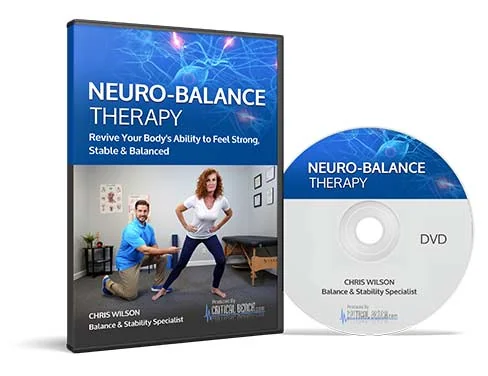
$47one payment
$47 total
- DVD + one spike ball + the digital version
- Plus shipping and handling (shown at checkout)
- Free bonus checklist
- 60-day money-back guarantee
Prices are the ones on the seller's order page when we checked on November 10, 2026. The DVD edition adds shipping and handling, which shows at checkout. Tax and the final total also appear at checkout.
Frequently asked questions
Is it okay to start Neuro-Balance Therapy?
It is a gentle home routine, and the care involved is mostly common sense: see your doctor first, practice beside something solid, begin at the first level and stop if anything hurts.
Who should talk to a doctor beforehand?
Anyone taking up a balance routine, and in particular people recovering from a fall or an operation or living with dizziness, neuropathy, a joint replacement, osteoporosis or another condition.
Can I use the ball on any foot?
Leave it out when the skin is broken or the feet are numb, unless your doctor agrees, because a spiky ball can bruise sensitive skin.
More on Neuro-Balance Therapy
- Overview: Neuro-Balance Therapy Price Nov 2026: $37, Where to Buy
- Review: Neuro-Balance Therapy Review: Options, Price and Our Score
- What's Included: What's Included in Neuro-Balance Therapy: Digital vs DVD
- Benefits: Neuro-Balance Therapy Benefits: What It Aims to Support
- Price: Neuro-Balance Therapy Price: $37 Digital or $47 DVD
- FAQ: Neuro-Balance Therapy FAQ: Price, Options and Guarantee
- Comparison: Neuro-Balance Therapy: Digital vs DVD Edition Compared
- Where to buy: Where to Buy Neuro-Balance Therapy: Ordering Step by Step
- Official website: Neuro-Balance Therapy Official Website: Real Order Page
More in Joint & Nerve Support, or see our editorial shortlist.
Other products in Joint & Nerve Support
All- Joint GenesisA once-a-day joint support capsule from BioDynamix, labeled Doctor Formulated, built on five listed ingredients: ginger, boswellia, a hyaluronic acid matrix, French maritime pine bark and black pepper extract.$49 to $79
- JointViveA liquid joint-comfort formula in a 2 fl oz dropper bottle with nine plant ingredients, taken as one drop a day per the seller, and backed by a 365-day money-back guarantee.$29 to $69
- NeuroSaltA daily capsule built on five calming botanicals, passionflower, marshmallow root, corydalis, prickly pear and California poppy seed, which the seller designed to support nerve comfort, a calm nervous system and restful sleep.$49 to $79
About this guide
OccHealthNews Editorial Team. We read the seller's pages, terms and refund policy and the published research, and we show our sources. We do not run lab tests or rate products on personal results. Our methodology.