Neuro-Balance Therapy · Benefits
Neuro-Balance Therapy Benefits: What It Aims to Support
What Neuro-Balance Therapy is designed to support, how a few minutes a day can fit into your week and how to judge the routine fairly with the 60-day guarantee.
A home balance routine of follow-along videos and a digital manual, built on short spike ball sequences and designed to support steadier footing, says the seller. $37 digital or $47 plus shipping on DVD.
- From $37
- 60-day refund
- Joint & Nerve Support

At a glance
- Refund window
- 60-day money-back guarantee
- Price
- $37 to $47
- one payment at checkout
- Category
- Joint & Nerve Support
- Our editorial score
- 4.5 / 5
- our judgement, not a customer rating
A balance routine earns its place if it is easy to start and easy to repeat. That is the idea behind Neuro-Balance Therapy, and this page looks at what the seller says it is designed to support, how those aims show up in a normal week and how to judge the routine fairly during the 60-day guarantee window. The benefits below are the seller’s wording, passed on as the seller’s. They describe the intention behind the program, and they are not promises about what you will notice.
The four things it aims to support
The seller’s description comes down to four simple ideas.
- Steadier footing. The short sequences are meant to make your stance feel more secure.
- Leg strength. The moves keep your legs working while you stay supported.
- Confidence while you walk and use stairs. This is the everyday payoff the seller points to.
- A habit you can keep. A few minutes a day, at home, with a screen and a spike ball.
The word to hold on to is designed. It describes what the routine is meant to do. The experience differs from one person to the next, and a steady habit matters more than speed.
Steadier footing, in daily life
Balance shows up in small moments: standing at the counter while the kettle boils, stepping off a curb, turning to reach a shelf. The seller built Neuro-Balance Therapy around the idea that a few minutes of practice with a spiky massage ball, done on a regular schedule, can support the feeling of being planted. We read that as an invitation to give the routine a fair, regular try, with a chair or counter close by.
Leg strength and confidence on stairs
Stairs ask a lot of the legs, and the seller aims the routine at that everyday task. The sequences move from Beginner to Intermediate to Advanced, so the challenge grows as you do. You decide the pace. If a move feels like too much, go back a level. If it feels comfortable, try the next one. That choice is the practical benefit of a video series: the lesson waits for you.
A routine that fits a few minutes
The seller says you can do the routine indoors, even seated in front of the TV. That matters because a brief routine is easier to maintain than a long one. Here is how a few minutes could look across a week:
| Day | A realistic slot | What you do |
|---|---|---|
| Monday | After breakfast | Beginner sequence, chair in reach |
| Wednesday | Mid-morning | Repeat the same sequence |
| Friday | Evening | Try the next sequence if the first feels easy |
| Weekend | Any quiet moment | Replay a favorite lesson |
That table is our own example of how a short habit could fit, not a schedule from the seller. Adjust it to your week. The point is that a few minutes a day, or a few days a week, is a plan you can keep.
What the manual adds
Benefits also come from clarity. The digital manual shows each exercise with a picture and a written description, so you can check a move before you try it. A routine feels calmer when you know what comes next, and the manual is there for that.
Seeing it in the way you move
A sensible way to judge a routine is to note how it feels over several weeks. You could jot down one line after each session: how the stairs felt, how long you stood comfortably at the counter, whether a move got easier. Those notes are yours, and they give you a fair record when the 60-day window is nearly over and you decide whether to keep going. That is how the guarantee works as a built-in trial.
What it is not
Neuro-Balance Therapy is a home exercise routine. It is not a medical treatment, it does not replace your doctor’s advice and it is one part of looking after your balance. Regular movement, comfortable footwear, good lighting at home and check-ups all play a part. A fall or new unsteadiness that has no clear cause deserves a medical check, because medicines, blood pressure, eyesight and the inner ear can all be involved.
Choosing the option that suits your plan
The benefits are the same in both options, because the routine is the same. What changes is the way it reaches you.
- Download, $37: the lessons, the manual and the bonus checklist, ready right after checkout.
- Boxed edition, $47 (shipping and handling extra): a DVD series, a single ball and the download. The routine centers on the ball, so this is the pick for buyers who want it in the package. The download holds neither the disc nor the ball.
Our reviews post looks at the routine from a buyer’s point of view, and the comparison page helps you pick.
Who gets the most from it
- Adults who like a clear, short routine and are happy to follow along on video.
- Anyone who prefers to practice at home instead of traveling to a class.
- Buyers who want a low one-time price and a written guarantee.
- People who like to keep notes and judge for themselves.
If you want a fast outcome in a few days, almost any wellness habit will disappoint you. If you like the idea of a steady, gentle routine and a safety net, Neuro-Balance Therapy fits well.
A calm word on safety
Check with your doctor before taking up a balance routine, particularly after a fall or an operation, or if dizziness, neuropathy, a joint replacement, osteoporosis or any other condition is part of your picture. Work beside a firm chair or worktop, begin gently and ease off at the first sign of pain. Carry on with prescribed medicines. Our safety page explains each point.
Good to know
- • Neuro-Balance Therapy is a home exercise routine and individual results vary. Ask your doctor before starting any balance routine, especially after a fall or surgery, and keep taking your prescribed medicines.
Digital Version
$37one payment
$37 total
- Instant download to computer, phone or tablet
- Follow-along videos plus the digital manual
- Free bonus checklist
- Does not include the DVD or spike ball
- 60-day money-back guarantee

Physical DVD Edition
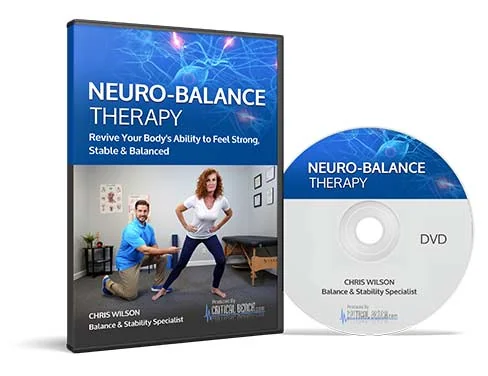
$47one payment
$47 total
- DVD + one spike ball + the digital version
- Plus shipping and handling (shown at checkout)
- Free bonus checklist
- 60-day money-back guarantee
Prices are the ones on the seller's order page when we checked on November 10, 2026. The DVD edition adds shipping and handling, which shows at checkout. Tax and the final total also appear at checkout.
Frequently asked questions
What is the program designed to support?
According to the seller, steadier footing, leg strength and confidence on stairs and when walking, through short guided sequences at home.
How long does a session last?
A few minutes a day by the seller's description, and any lesson can be paused or replayed.
Will everyone notice the same thing?
No. Results vary. It is a home exercise routine and not a medical treatment, so keep your doctor informed.
More on Neuro-Balance Therapy
- Overview: Neuro-Balance Therapy Price Nov 2026: $37, Where to Buy
- Review: Neuro-Balance Therapy Review: Options, Price and Our Score
- What's Included: What's Included in Neuro-Balance Therapy: Digital vs DVD
- Safety: Neuro-Balance Therapy Safety: How to Start Gently
- Price: Neuro-Balance Therapy Price: $37 Digital or $47 DVD
- FAQ: Neuro-Balance Therapy FAQ: Price, Options and Guarantee
- Comparison: Neuro-Balance Therapy: Digital vs DVD Edition Compared
- Where to buy: Where to Buy Neuro-Balance Therapy: Ordering Step by Step
- Official website: Neuro-Balance Therapy Official Website: Real Order Page
More in Joint & Nerve Support, or see our editorial shortlist.
Other products in Joint & Nerve Support
All- Joint GenesisA once-a-day joint support capsule from BioDynamix, labeled Doctor Formulated, built on five listed ingredients: ginger, boswellia, a hyaluronic acid matrix, French maritime pine bark and black pepper extract.$49 to $79
- JointViveA liquid joint-comfort formula in a 2 fl oz dropper bottle with nine plant ingredients, taken as one drop a day per the seller, and backed by a 365-day money-back guarantee.$29 to $69
- NeuroSaltA daily capsule built on five calming botanicals, passionflower, marshmallow root, corydalis, prickly pear and California poppy seed, which the seller designed to support nerve comfort, a calm nervous system and restful sleep.$49 to $79
About this guide
OccHealthNews Editorial Team. We read the seller's pages, terms and refund policy and the published research, and we show our sources. We do not run lab tests or rate products on personal results. Our methodology.