The Last Wish Pineal Gland: What the Science Says
The sales video builds its whole case on one small gland. We set the claims beside the physiology: melatonin, sleep, light, calcification with age and what sound can and cannot do.
Contents
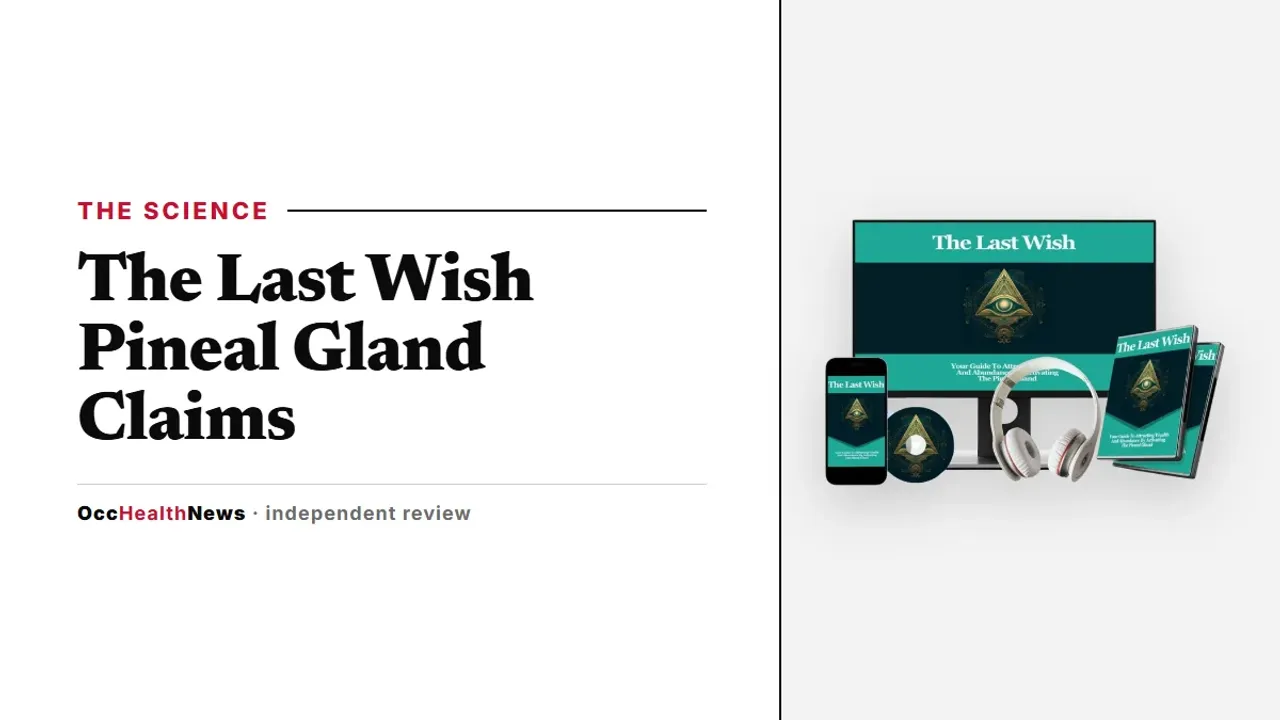
The Last Wish pineal gland story is the foundation of the whole pitch. The sales video presents this small structure in the brain as the place “where you meet God” and as the key to wealth and abundance, and says sound can switch it back on. This article sets those statements next to what scientists know about the gland: what it does, what happens to it with age, how light affects it, and where the video’s facts need correcting.
What the pineal gland actually does
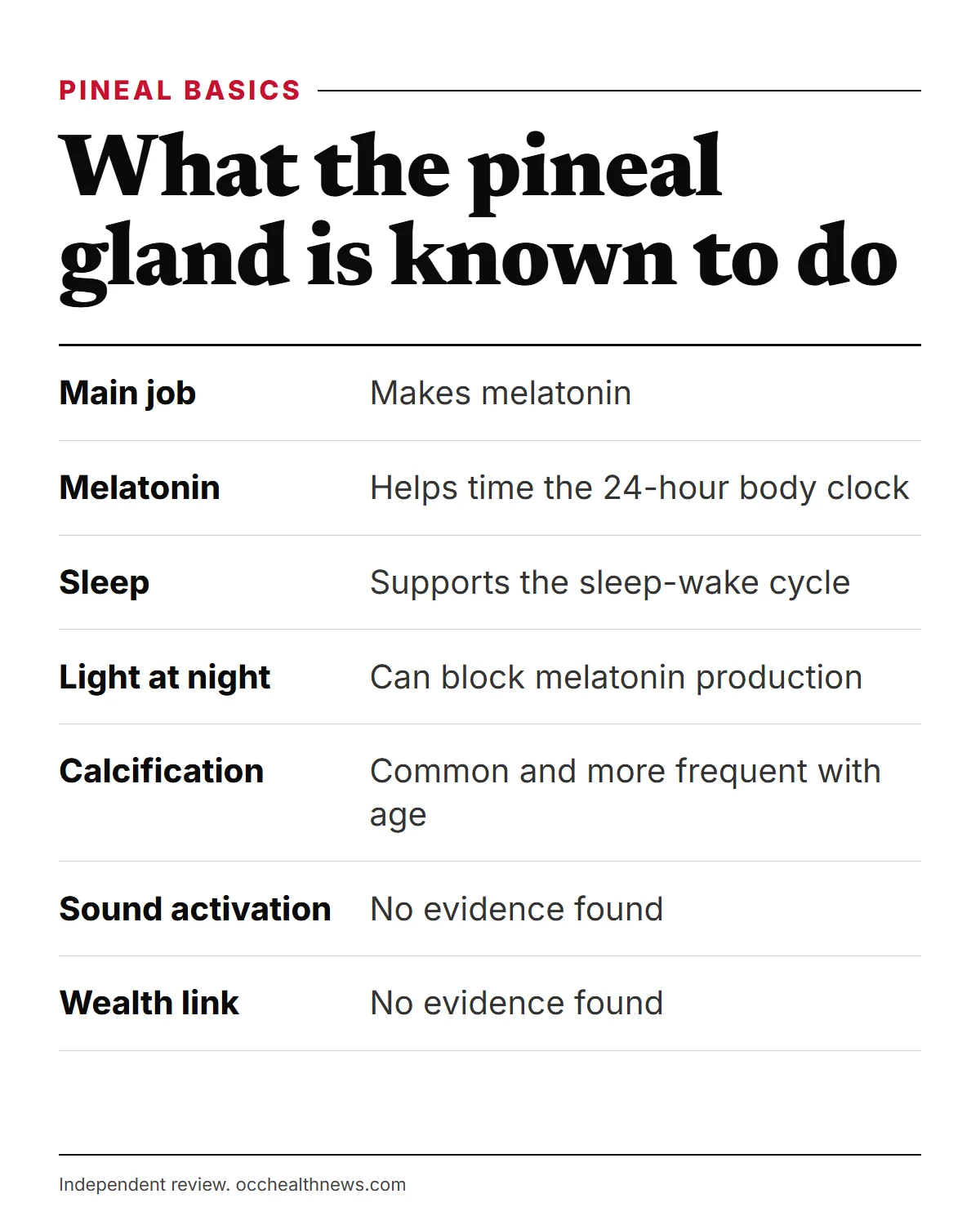
The pineal gland is a small neuroendocrine gland in the brain. Its best-documented job is making melatonin, a hormone that helps set the body’s daily rhythm. A 2023 systematic review describes it as regulating the daily body rhythm through melatonin secretion, in step with the brain’s master clock, which keeps the day-night cycle that governs sleep.
The NIH explains melatonin simply: the brain produces it in response to darkness, and it helps with the timing of the 24-hour internal clock and with sleep. That is the established story. It is also a modest one, and it is why the pineal gland shows up in sleep science rather than in studies of income.
The Last Wish pineal gland claims, one by one
Here is how the video’s main statements compare with the evidence. We attribute each to the seller, and we call out an error only where the facts are clear.
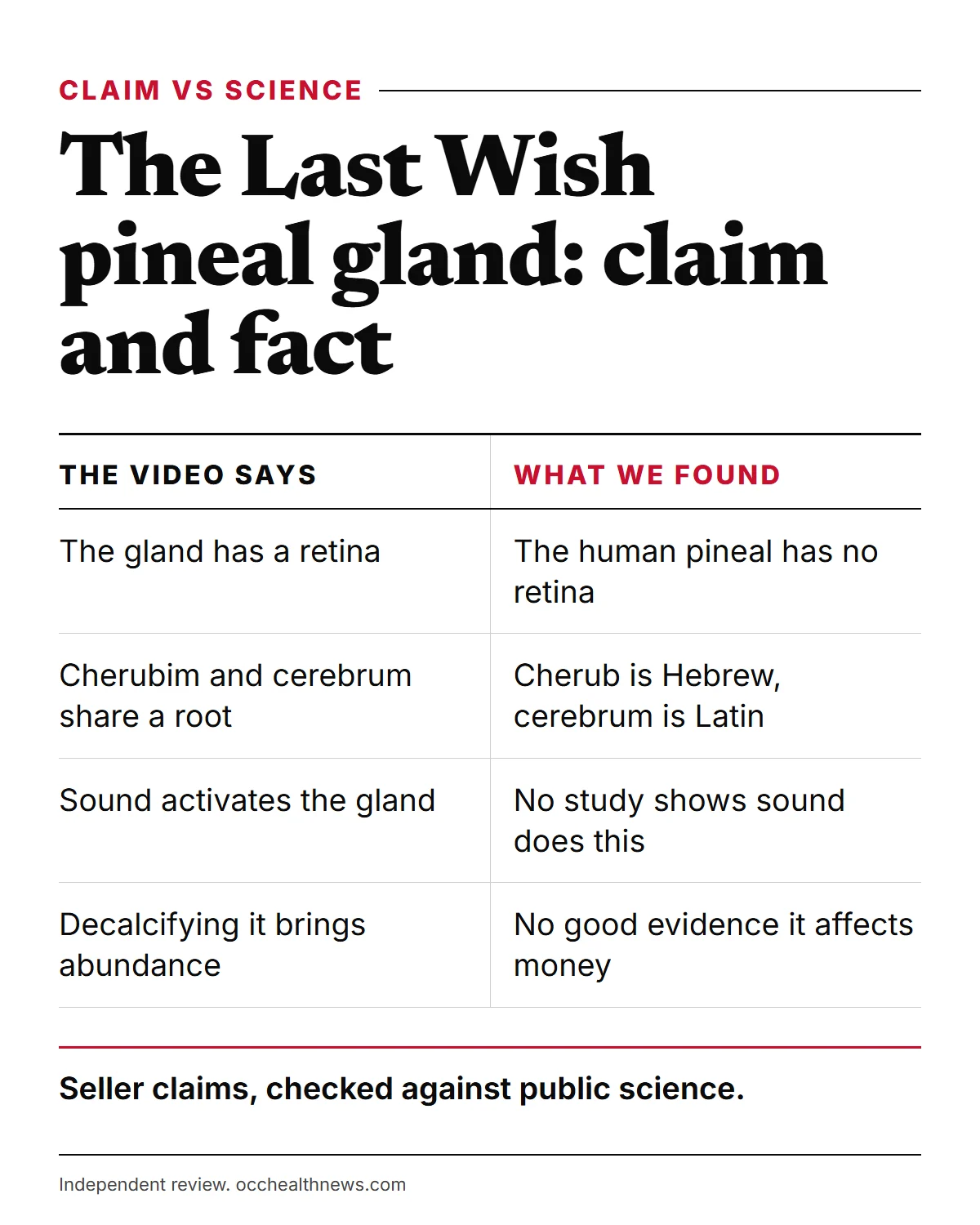
“The pineal gland has a retina.” The video says the gland has a retina and shuts down in light, so you must listen in the dark. A human pineal gland contains no retina. Instead the eyes sense light and relay the signal along nerve pathways, so the gland responds indirectly, which is why light at night can lower melatonin. The NIH puts it plainly: being exposed to light at night can block melatonin production.
“Cherubim and cerebrum share a root.” The video connects the Hebrew word for the golden figures in Exodus 25 with the Latin word for the brain. This is wordplay. “Cherub” is Hebrew and “cerebrum” is Latin, so they are unrelated words that happen to sound alike.
“Descartes called it the seat of the soul.” True as history: the philosopher René Descartes did give the gland that role. It was a philosophical proposal from the 1600s, not a finding of modern physiology.
“Fluoride, metals and pesticides shut it down.” The video lists fluoride in water, heavy metals in grooming products, time indoors and pesticides, and calls it a deliberate effort. It cites no sources, and we found no good evidence for the claim.
“It releases spirit molecules.” The idea that the human gland releases DMT in meaningful amounts is speculative. It is not an established function.
Calcification: common, age-related and not a wealth switch
The video describes tiny calcite crystals in the gland as “extremely sensitive to sound” and says calcification makes it “shut down.” Calcification itself is real. Small deposits in the pineal gland show up on scans and are common.
The 2023 systematic review pooled the published studies and reported a prevalence of about 62 percent, though with very high variation between studies, and it identified older age as one of the main factors linked to higher rates. The authors also note that calcification can appear before adulthood. In other words, a calcified pineal gland is a frequent finding, not a sign of a blocked mind.
What the evidence does not show is that “decalcifying” the gland through diet or any other step changes anything, or that it affects money or luck. The gift plan sold with The Last Wish promises steps to “speed up the decalcification process”; that is a seller claim. If you have a health concern, a doctor is the right person to ask, not a sales video.
Can sound activate the pineal gland?
According to the video, particular frequencies “activate” it. Our search found no published evidence that sound makes pineal calcifications vibrate or turns the gland on, and no study tests The Last Wish recordings.
The wider audio research is mixed. A 2019 meta-analysis of binaural beats reported a medium pooled effect on some measures, among them anxiety, cognition and pain perception. A 2023 PLOS ONE review looked at whether the beats actually change brain oscillations and found five of 14 studies consistent with that, eight contradictory and one mixed, concluding the question cannot yet be settled. Even if some listeners feel calmer, that is a different claim from activating a gland.
What a dark room and a nightly routine can do
There is a fair, practical point buried in the pitch. Because light at night lowers melatonin, a dark room can support a sleep routine, and 11 quiet minutes with headphones may simply feel calming, as an evening wind-down does for many people. That is a reasonable thing to enjoy.
It does not follow that the routine switches on a gland, and it does not connect to wealth. Where research does tie thinking to results, it points to planning: rehearsing the steps toward a goal, or setting the goal against its obstacles and then making an if-then plan. Our manifestation article looks at that research, and the program explainer lays out the seller’s listening rules.
Price, refund and the practical side
If the science is not what draws you, the practical facts are simple. The Last Wish costs $37.44 per the seller’s Terms and order page, in your local currency plus tax at checkout. Both the Terms and the ClickBank checkout allow 60 days to ask for a refund. A 365-day badge on the sales pages has no text behind it, and a footer link opens another company’s terms with tougher 90-day conditions, so keep the ClickBank receipt (the statement reads CLKBANK*TheLastWish) and request any refund through ClickBank.
The order page also carries the line “Backed By Research From Harvard and University of Michigan,” but it names no study, author or link, and our search turned up none tied to this product. Expect marketing emails, some with third-party offers, and treat the countdown timer and “Today Only” pricing as sales tactics. Our own editorial score for the offer is 2.3 out of 5; the reasoning is in our full verdict and on the methodology page.
The bottom line on the pineal gland
The pineal gland is real, interesting and well studied for one thing: melatonin and the sleep-wake cycle. Light at night lowers melatonin, calcification is common with age, and no evidence shows that sound activates the gland or that doing so brings wealth. The video’s claim of a retina in the gland and its link between “cherubim” and “cerebrum” are errors. Enjoy a calm evening routine if you like, but weigh the purchase as entertainment.
Frequently asked questions
What does the pineal gland do?
It is a small gland in the brain that makes melatonin, a hormone that helps time the body's 24-hour internal clock and supports sleep. Output is higher in darkness and light at night can block it. Researchers note other roles that are not fully understood.
Does the human pineal gland have a retina?
No. The video says the pineal gland 'has a retina in it' and shuts down in light, but the human gland has no retina. Light reaches it only indirectly, through the eyes and a chain of nerve connections, which is why bright light at night lowers melatonin.
Is pineal gland calcification a problem?
It is common. A 2023 systematic review pooled studies and found calcification in roughly 62 percent of people, with very large differences between studies, and it becomes more frequent with age. It shows up on scans. We found no good evidence that it is linked to wealth, luck or the claims in the sales video.
Can fluoride or diet 'decalcify' the pineal gland?
The video blames fluoride, heavy metals, time indoors and pesticides for the gland calcifying and 'shutting down,' and the seller's gift plan promises steps to 'speed up the decalcification process.' We found no good evidence that diet changes decalcify the gland or that doing so has any effect on money.
Can sound or certain frequencies activate the pineal gland?
No published evidence shows that. The video says calcite crystals in the gland are 'extremely sensitive to sound' and that certain frequencies 'activate' it. Research on audio such as binaural beats shows small, mixed, short-term effects on relaxation or attention in some studies, and none tests these recordings.
Does the pineal gland produce a 'spirit molecule'?
The idea that the human pineal gland releases the compound DMT in meaningful amounts is speculative. It is not an established function, and the gland's well-documented job is making melatonin.
Are 'cherubim' and 'cerebrum' related words?
The video links them, but the connection is wordplay. 'Cherub' comes from Hebrew and 'cerebrum' is Latin, so they do not share a root. The Exodus passage the video cites is a matter of faith and tradition, and nothing here questions anyone's beliefs.
Is a dark room helpful for listening or sleeping?
For sleep, yes in general: darkness supports melatonin and light at night can block it. A dark, quiet wind-down can feel relaxing for that reason. It does not show that any recording activates a gland.
Sources
- 1 Melatonin: what you need to know NIH National Center for Complementary and Integrative Health
- 2 Prevalence of pineal gland calcification: systematic review and meta-analysis Systematic Reviews · 2023
- 3 Binaural beats to entrain the brain? A systematic review of the effects of binaural beat stimulation on brain oscillatory activity, and the implications for psychological research and intervention PLOS ONE · 2023
- 4 Efficacy of binaural auditory beats in cognition, anxiety, and pain perception: a meta-analysis Psychological Research · 2019
About the author
OccHealthNews Editorial Team. We read the studies, guidelines and regulatory filings so you do not have to, and we show our sources on every piece. More about how we work.