ProstaVive Ingredients: The Plants and Nutrients Behind the Label
A plant-by-plant tour of the ProstaVive label, with the amount per scoop, the seller's cautious description of each role and a clear note on what the research covers.
Contents
- 1ProstaVive ingredients: the headline trio
- 2The plants in the supporting cast
- 3The nutrients alongside the plants
- 4The mixed fruit and vegetable powders
- 5What the research covers
- 6What the seller leaves out of its own list
- 7How to read a plant extract line
- 8Comparing with your own cupboard
- 9Who should check with a doctor first
- 10How the pieces fit
Anyone comparing supplements eventually asks the same thing: what is actually in the scoop? Here is the full answer for ProstaVive ingredients, plant by plant. For each one we give the amount the label prints, the soft role the seller attaches to it, and a plain note where we have nothing to add. The seller’s wording is attributed throughout. We make no promises of our own, and none of this is about managing any condition. It is a guide to a label.
ProstaVive ingredients: the headline trio
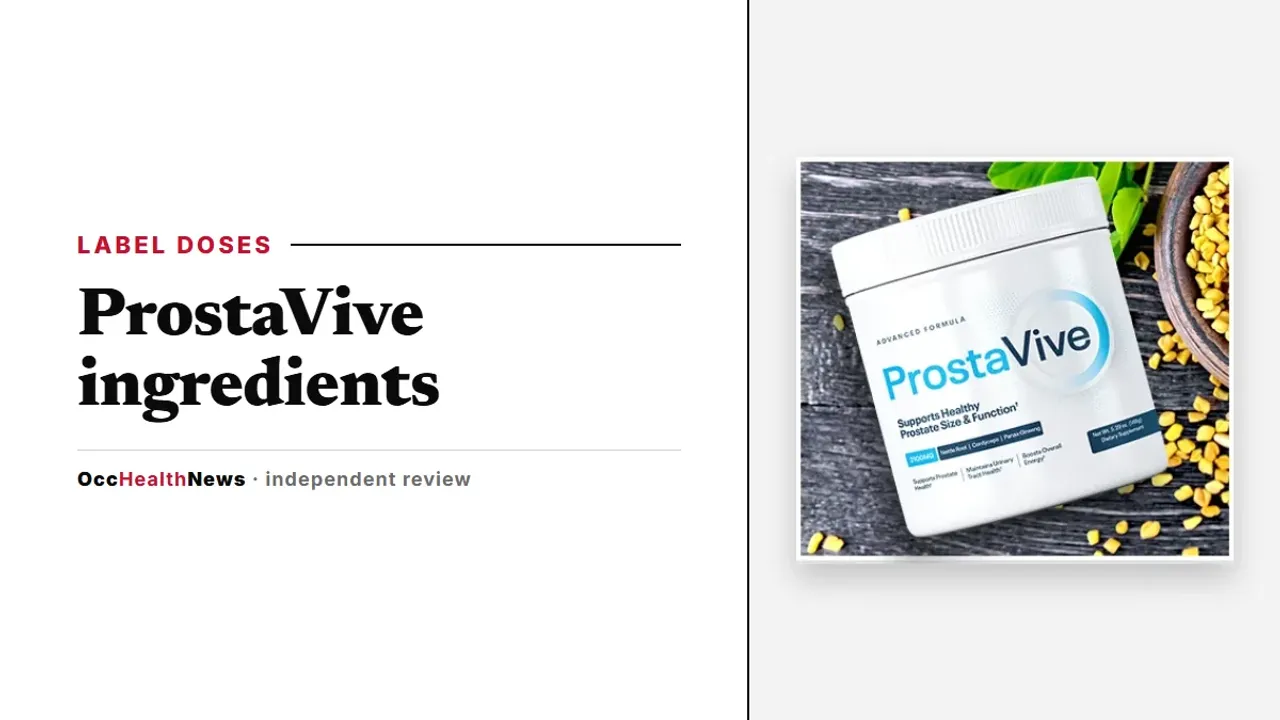
The front of the tub puts three plants forward: nettle root, cordyceps and panax ginseng. We start with the first and the last, because the seller says the most about them.
Stinging nettle root extract, 200 mg. The seller connects nettle root with urinary tract health in men and says it promotes prostate health. That is the seller’s description, and it is the plant most closely tied to the product’s stated purpose.
Panax ginseng root extract, 50 mg. The smallest of the three headline doses. The seller links ginseng with healthy blood flow and with cognition. At 50 mg it is a modest addition, which is neither good nor bad, only worth knowing.
Cordyceps powder, 250 mg. The tub names it, but the seller’s own list of key ingredients leaves it out, and we can quote no role for it. We report the label amount and stop there.
The plants in the supporting cast
Fenugreek seed powder, 500 mg. The largest plant line on the panel. The seller says it supports prostate function and healthy stress, and mentions mood and brain function too.
Artichoke extract, 300 mg. Listed with a standardization to 5% cynarin from the whole herb. The seller calls it rich in natural antioxidants that help maintain prostate health.
Tongkat ali extract, 100 mg. A 100:1 root extract. The seller describes it as an antioxidant that supports prostate health and circulation, and links it with healthy stress.
Ashwagandha root extract, 250 mg. Listed at 1.5% withanolides. The seller says it supports the body’s detoxification.
Maca root extract, 250 mg. The seller ties maca to energy and a better mood.
Boron, 5 mg. Supplied as boron citrate. The seller says boron supports a healthy inflammation response.
The nutrients alongside the plants
Four nutrients complete the base of the formula. Vitamin D3 comes in at 50 mcg, which the label rates at 333% of the daily value. Vitamin B6 is 10 mg, rated 588%. Zinc is 12 mg (109%) and magnesium is 50 mg (12%), with a little sodium from sea salt. The seller says vitamin D matters for a healthy body and for prostate function, mood and bone density, that zinc supports a healthy prostate and better sleep, and that magnesium supports deeper sleep, healthy blood vessels and energy.
The high percentages for D3 and B6 are a reason to look at your own cupboard. If you already take a multivitamin or a separate vitamin D or B6 supplement, add them up with your doctor’s help.
The mixed fruit and vegetable powders
One line of the panel pools six powders: beet root, alfalfa leaf, black currant, broccoli leaf, pomegranate and raspberry. The label gives them a total of 200 mg and no individual amounts. It is the only opaque item on the panel, and it is the main reason we do not score the label a perfect five.
What the research covers
The seller’s references page cites published papers, and we pick three that concern single ingredients and healthy people. A 2013 paper examines tongkat ali, stress hormones and mood state in moderately stressed subjects. A 2015 paper looks at ashwagandha and cardiorespiratory endurance in healthy athletic adults. A 2015 review is titled “Magnesium in Prevention and Therapy”. We list them in the sources below, and we describe them only by title.
Be clear about their limits. These are studies of ingredients, in their own settings and at their own doses. They show that the ingredients are studied. They do not show what a scoop of ProstaVive does, and we found no study of the finished powder.
What the seller leaves out of its own list
The seller’s website names a set of key ingredients, and that list omits cordyceps, vitamin B6 and the mixed powder blend. Because of that gap, the printed label is our source for everything on this page. It is also why you should read the panel when your tub arrives and not rely on any summary, ours included.
How to read a plant extract line
Plant lines on a supplement label use a few terms that look technical and are easy to decode. An extract is a concentrated form of the plant, made by drawing out certain components, and the ratio, such as 100:1 for the tongkat ali here, hints at how much raw material went into it. A standardized extract is tuned to contain a set percentage of a marker compound, which is why artichoke is listed at 5% cynarin and ashwagandha at 1.5% withanolides. A powder, like the fenugreek and cordyceps lines, is the ground plant itself. The part named in brackets, whether seed, root or leaf, tells you which part of the plant went into the scoop.
None of that proves a result. It simply lets you compare ProstaVive with another label on equal terms, which is the most a reader can do from a desk. Our ingredients page lists each line in a compact table for that kind of comparison.
Comparing with your own cupboard
A practical test costs nothing. Lay your current supplements next to a printout of this label, and look for three things. First, any plant that appears twice, since doubling up is the easiest mistake to make. Second, any vitamin or mineral where the totals climb, particularly vitamin D3, vitamin B6 and zinc, where one scoop already supplies 333%, 588% and 109% of the daily values. Third, anything your doctor has asked you to avoid or limit. If a line raises a question, take the printout to your doctor or pharmacist and ask. The seller itself recommends not combining ProstaVive with products that contain similar ingredients.
Who should check with a doctor first
Anyone on prescription medicine, with a prostate condition or urinary symptoms, or without a recent check-up should ask a doctor before starting. The seller’s FAQ also advises asking if you take other supplements, and not combining ProstaVive with products that contain similar ingredients. Our side effects guide covers the practical points calmly.
How the pieces fit
Put the layers together and the picture is a daily powder built from a handful of nutrients, nine named plants and a fruit and vegetable blend, with an amount shown for nearly all of it. Our ingredients list article lays out the full panel as a table, and the ProstaVive hub places it beside the prices and the 180-day guarantee. We score the offer 4.6 out of 5, a grade of our own for the offer and not for any ingredient.
If you remember only three things from this tour, make them these. The amounts are on the label, so read the label and not a summary. The seller’s roles for each plant are descriptions of intent and not results, and research on single ingredients is not a test of the finished powder. And anyone with a medical condition or a medicine routine should ask a doctor before starting. The ProstaVive hub keeps the facts and the terms together when you are ready to decide.
Frequently asked questions
What are the main ProstaVive ingredients?
Stinging nettle root, tongkat ali, panax ginseng, fenugreek, artichoke, ashwagandha, maca, cordyceps and boron, with vitamin D3, B6, magnesium and zinc.
How much nettle root is in a scoop?
The label shows 200 mg of stinging nettle root extract per scoop.
Does the label give every dose?
Nearly every one. A 200 mg blend of six fruit and vegetable powders is listed as a total with no single doses.
Is there research on these ingredients?
There is published research on single ingredients. We cite three papers by title only, and none tests ProstaVive itself.
Do I need to check my other supplements?
Yes. One scoop provides 333% of the daily value of vitamin D3 and 588% of vitamin B6 on the label.
Sources
- 1 Effect of Tongkat Ali on stress hormones and psychological mood state in moderately stressed subjects Journal of the International Society of Sports Nutrition · 2013
- 2 Efficacy of Ashwagandha (Withania somnifera [L.] Dunal) in improving cardiorespiratory endurance in healthy athletic adults Ayu · 2015
- 3 Magnesium in Prevention and Therapy Nutrients · 2015
About the author
OccHealthNews Editorial Team. We read the studies, guidelines and regulatory filings so you do not have to, and we show our sources on every piece. More about how we work.