The Last Wish Manifestation: Faith References Explained
The seller's video draws on scripture, philosophy and art. We explain each reference on its own terms, show how the video uses it, and keep faith separate from the claims made about the product.
Contents
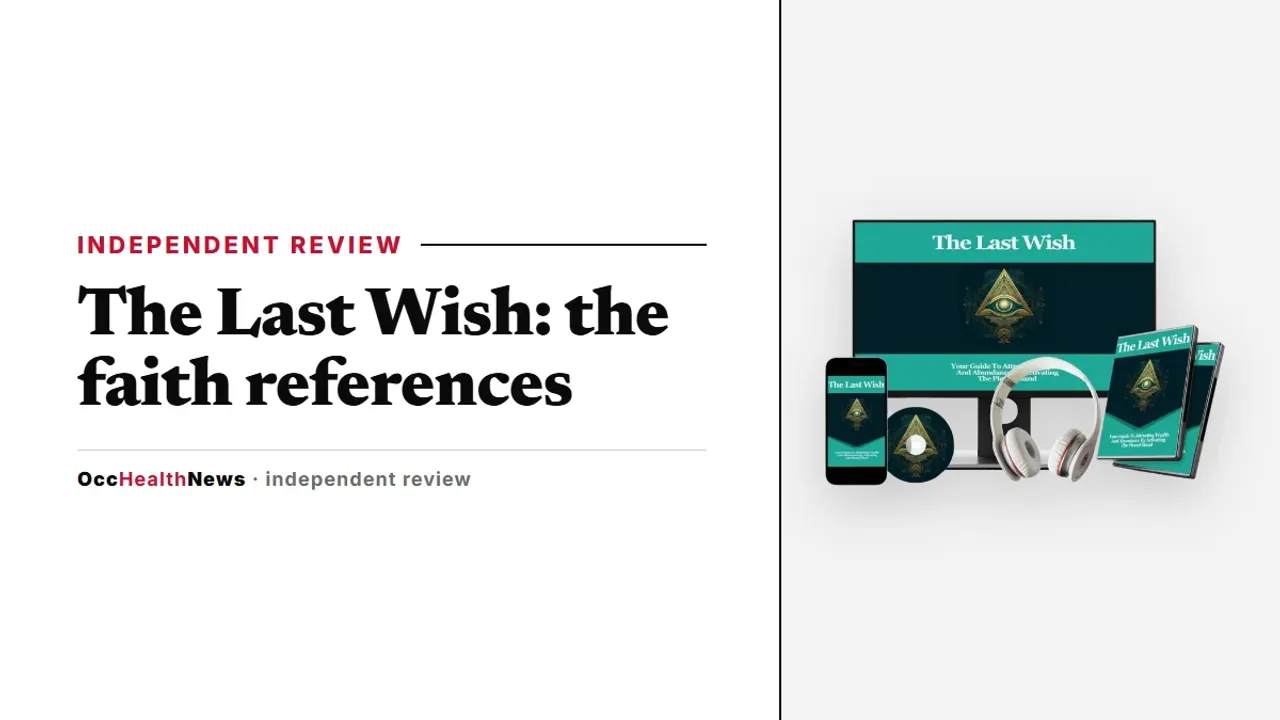
The Last Wish manifestation product is sold with an unusual amount of religious and historical imagery. The video moves from a passage in Exodus to a 17th-century philosopher, a bronze pine cone in the Vatican and a famous fresco by Michelangelo, and ties them all to one small gland in the brain. This page takes each reference in turn, explains what it actually is, shows how the video uses it, and keeps your faith, which is yours, apart from the product claims, which are the seller’s.
We mean no disrespect to anyone’s beliefs, and nothing here should be read as a promise of money, luck, love or health.
Last Wish manifestation and its four references
In the video’s telling, the pineal gland is the place of meeting with God and the concealed part of the mind that unlocks wealth. To make the case, the narrator, who calls himself Danny Kelly, cites Exodus 25, the word “cherubim,” Descartes’ “seat of the soul,” the pine cone statue at the Vatican and Michelangelo’s Creation of Adam. The pattern is the same each time: a real thing from history or scripture, followed by a leap to the claim that sound can activate the gland and bring abundance.
| Reference | What it is | What the video makes of it |
|---|---|---|
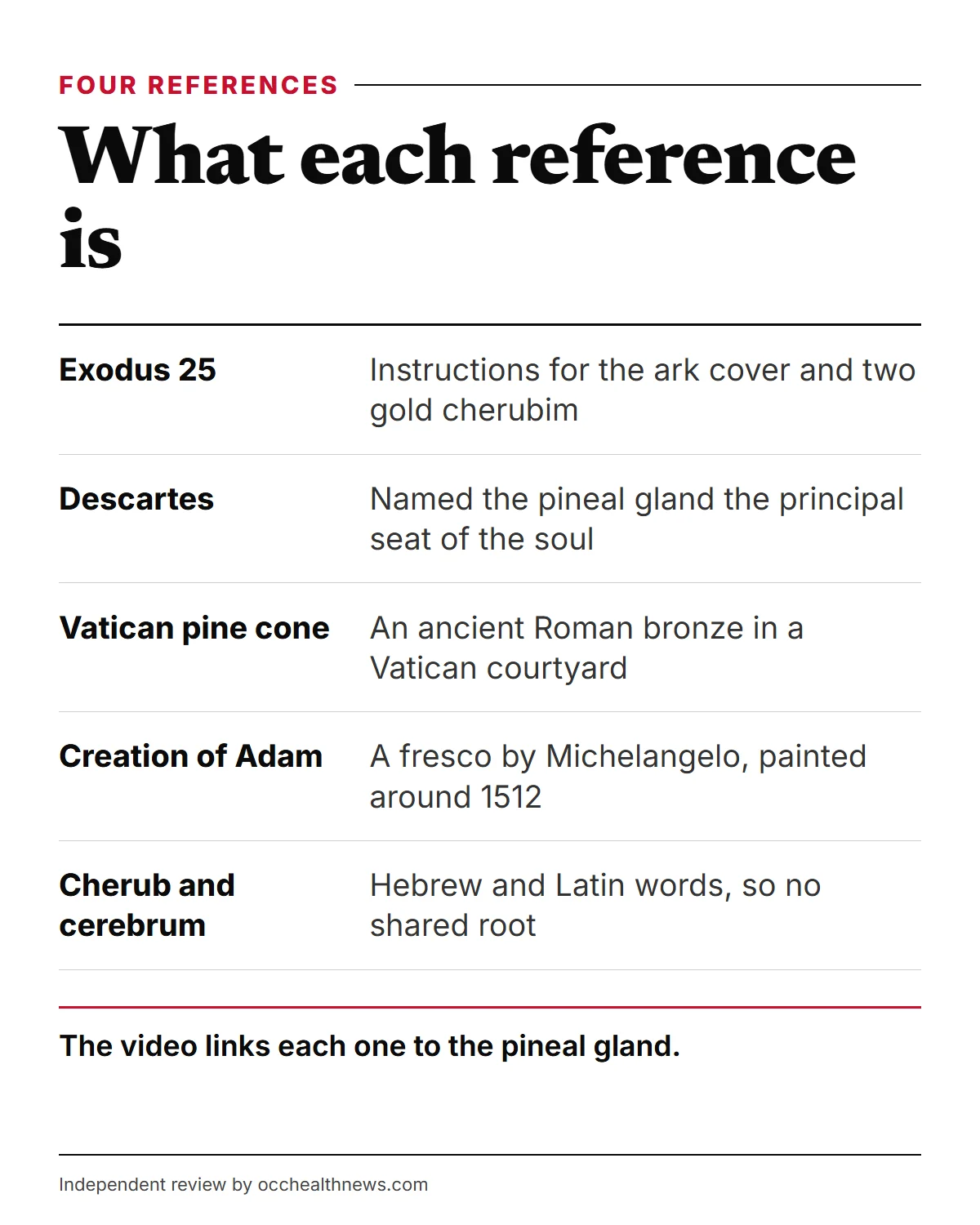
| Exodus 25 | Instructions for the ark’s cover and two gold cherubim | Cherubim point to the brain |
| Descartes | A philosopher who placed the soul’s seat in the pineal gland | Proof the gland is spiritually special |
| Vatican pine cone | An ancient Roman bronze in a Vatican courtyard | A hidden symbol of the gland |
| Creation of Adam | A fresco painted around 1512 | A map of the brain |
Exodus 25: the cherubim of gold
Exodus 25:17 to 22 gives instructions for the cover of the ark. In the New Revised Standard Version Updated Edition, it says “you shall make two cherubim of gold,” made of hammered work at the two ends of the cover. Their wings are spread overhead, their faces turned toward the cover, and God says he will meet Moses there, above the cover and between the cherubim.
For readers of the text, this is a passage about worship and the place of meeting between God and the people. It says nothing about the human brain. The video’s step is to read the pair of cherubim as pointing to the two halves of the brain. That is an interpretation, and a person of faith may or may not find it persuasive, but it is not something the passage states.
Cherub and cerebrum: a sound-alike, not a source
The video also says “cherubim” shares a root with “cerebrum.” Sound-alikes can be tempting, but “cherub” is a Hebrew word and “cerebrum” is Latin, so there is no shared root of the kind the video suggests. We treat this as the seller’s wordplay. It cannot support a claim about what a recording does to the brain.
Descartes and the “seat of the soul”
This reference is accurate as far as it goes. The French philosopher René Descartes did propose that the pineal gland, in the middle of the brain, is the “principal seat” of the soul, according to the Stanford Encyclopedia of Philosophy. He was working on a hard question: how a non-physical mind could act on a physical body.
His answer was a philosophical proposal from the 17th century, made before anyone knew the gland’s function. Today a clinical reference describes the gland’s principal function as secreting melatonin, which regulates circadian rhythms. Descartes’ idea is historically fascinating, but it is not evidence that audio can activate the gland or that doing so would affect money.
The Vatican pine cone
The pine cone in the video is a real object, known in Italian as the Pigna. It is a large bronze described as a 1st-century Roman work, and it was an ancient fountain. It stands in front of the large niche on the top terrace of a courtyard in the Vatican Museums, which takes its name from the bronze. One of the sources we read gives other possible uses, such as the top of Hadrian’s tomb.
That is what is documented. The pages we read do not describe the pine cone as a symbol of the pineal gland. The video makes that connection, and the link is the seller’s reading, not a documented one.
The Creation of Adam
Michelangelo painted The Creation of Adam on the Sistine Chapel ceiling around 1512. In 1990, physician Frank Meshberger wrote in the Journal of the American Medical Association that the shapes behind God appear to form an accurate picture of the human brain. It is a well-known reading, and it appears among several interpretations of the work.
Even if you find the brain reading convincing, the leap is a long one. A painting of anatomy, if that is what it is, tells us that a great artist knew anatomy. It does not tell us that a nightly recording changes the pineal gland.
The priest and the parchment
The video says that about 20 years ago a priest, “Father Michael,” told the narrator of a parchment in the Vatican’s Secret Archives that supposedly shows a brain drawing with the Hebrew name of God in the middle. We could not check this, and the narrator offers nothing to look up. The archive in question has been called the Vatican Apostolic Archive since 2019 and admits qualified researchers. The seller’s Terms also say names may be pen names and some scenarios may be dramatized. We treat the story as a story.
Keeping faith separate from product claims
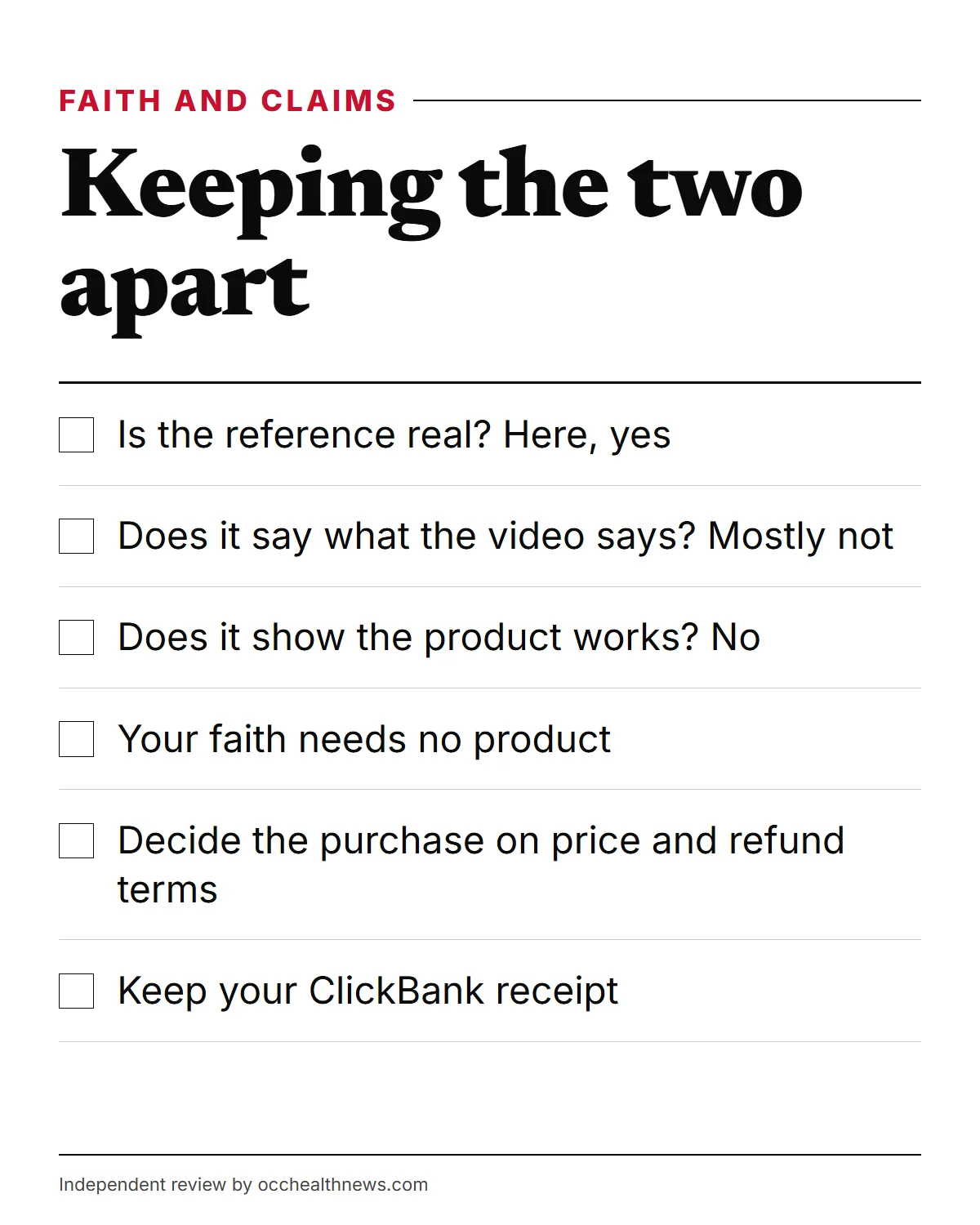
A calm way to weigh this is to separate three questions. Is the reference real? Here, yes. Does the reference say what the video says it says? Mostly not. Does it show that this product works? No. A banner on the sales page claims research from “Harvard and University of Michigan” without naming any study; we could not match one to the product. The Terms say the content is “For Entertainment Purposes Only.”
Faith needs no product. If a nightly quiet moment, with or without prayer, helps you, that is yours to keep. Whether you want to pay for a particular recording is a consumer decision, and the facts for it are plain: $37.44, local currency plus tax at checkout, a 60-day refund per the Terms and the ClickBank checkout, an optional add-on and later offers at $97.19 and $47.19. Refund promises vary across the funnel: a 365-day badge stands alone without text, and abundant-life.co terms in the video page footer set a stricter 90-day regime. Hold on to the ClickBank receipt and use ClickBank’s route. Marketing email, including outside offers, may follow, and the countdown clock is there to hurry you.
If money is tight, nonprofit credit counseling through the NFCC is a better first step than any purchase. For how we judge claims, see our methodology.
Where to go next
The research side of the manifestation claim is in the claim against the research. The seller’s steps are laid out in the step-by-step explainer, and our overall score is in the main verdict.
Frequently asked questions
Does Exodus 25 say anything about the brain?
Not in the passage we read. Exodus 25:17-22 describes a cover of pure gold for the ark, with two golden cherubim at its ends, wings spread overhead, facing the cover. It says God will meet Moses there, between the cherubim. The video reads the cherubim as pointing to the brain, which is the seller's interpretation.
Are cherub and cerebrum the same word?
No. Cherub comes from Hebrew and cerebrum from Latin. The video says they share a root, which is the seller's wordplay rather than an established link, so the sound-alike should not be treated as evidence.
What did Descartes say about the pineal gland?
In the 17th century Descartes proposed that the pineal gland is the principal seat of the soul, the place where mind and body meet. That was a philosophical argument, not a measurement, and today the gland is described as the organ that makes melatonin.
What is the Vatican pine cone?
It is a large ancient Roman bronze pine cone, described as a 1st-century work and once an ancient fountain, displayed in the courtyard that is named after it in the Vatican Museums. The video links it to the pineal gland, but the sources we read say nothing of that.
Is the Creation of Adam a picture of the brain?
One physician, Frank Meshberger, argued in a 1990 article in the Journal of the American Medical Association that the shapes behind God match a human brain. It is one of several readings of Michelangelo's fresco, and it does not show that sound can switch on a gland.
Is the priest and parchment story true?
We could not verify it. The video tells it as the narrator's own experience, and the seller's Terms say names in marketing materials may be pen names and some scenarios dramatized. Treat it as a story, not a source.
Can I be a person of faith and still question the product?
Yes. Faith and a product claim are different things. You can hold your beliefs fully and still ask for evidence before paying for a claim about audio, wealth or a gland.
Sources
- 1 Exodus 25:17-22 (New Revised Standard Version Updated Edition) BibleGateway
- 2 Descartes' ethics, on the pineal gland as the principal seat of the soul Stanford Encyclopedia of Philosophy
- 3 Cortile della Pigna Wikipedia
- 4 The Creation of Adam Wikipedia
- 5 Pineal region tumors (StatPearls) StatPearls Publishing · 2025
About the author
OccHealthNews Editorial Team. We read the studies, guidelines and regulatory filings so you do not have to, and we show our sources on every piece. More about how we work.