NeuroSalt · Ingredients
NeuroSalt Ingredients: Every Label Line Explained
Every line of the NeuroSalt Supplement Facts panel with its printed amount, a plain-language note on what each botanical is known for, and how to read the rest of the label.
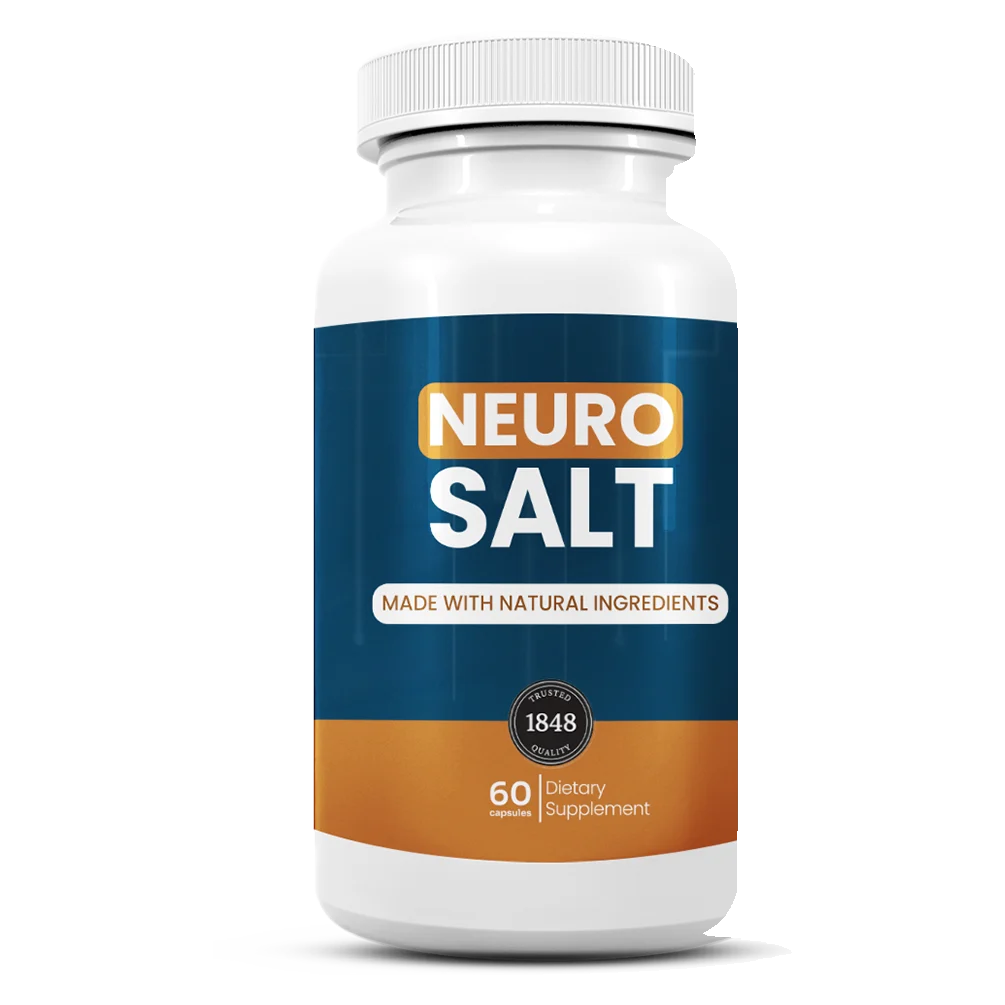
A daily capsule built on five calming botanicals, passionflower, marshmallow root, corydalis, prickly pear and California poppy seed, which the seller designed to support nerve comfort, a calm nervous system and restful sleep.
- From $49/bottle
- 60-day refund
- Joint & Nerve Support
At a glance
- Refund window
- 60 days from the date of purchase
- Lowest per bottle
- $49
- in the largest package
- Category
- Joint & Nerve Support
- Our editorial score
- 4.5 / 5
- our judgement, not a customer rating
A short label is easy to trust, and NeuroSalt has one. Five botanicals, five printed amounts and a brief list of capsule ingredients: you can read all of it in a minute and know exactly what goes into your daily routine. This page walks through it line by line, using the Supplement Facts panel on the bottle, where a serving is two capsules and a bottle holds 30 servings.
The panel at a glance
Listed here from the largest amount to the smallest, this is what a serving of two capsules supplies.
| Per serving | Ingredient | Part or form on the label |
|---|---|---|
| 145 mg | Passionflower | Passiflora incarnata |
| 110 mg | Marshmallow | Althaea officinalis, root |
| 100 mg | Corydalis | Corydalis yanhusuo, powder |
| 50 mg | Prickly pear | Opuntia phaeacantha, 20:1 extract |
| 45 mg | California poppy | Eschscholzia californica, seed |
None of it sits inside a proprietary blend, so you never have to guess how much of a plant you are getting. Our NeuroSalt ingredients post walks through the same list in a different order.
The five botanicals, one at a time
What follows is general background on how each plant is commonly described. It adds context and promises nothing about this particular bottle.
Passionflower (145 mg). A climbing vine whose leaves and flowers show up in many herbal blends meant for winding down. It is the largest line on this label, and the one closest to the seller’s talk of a calm nervous system.
Marshmallow root (110 mg). The root of a soft, soothing plant that herbal tradition has used for a very long time. The label gives the part used, root, which is worth noticing when you compare products.
Corydalis (100 mg). A plant from traditional Chinese herbal practice, listed on the label as a powder. Like several herbs on this panel, it is generally described as a calming plant and may cause drowsiness.
Prickly pear (50 mg). A cactus, supplied as a 20:1 extract. That ratio points to a concentrated extract made from a larger amount of the plant.
California poppy seed (45 mg). The seed of California’s state flower, traditionally regarded as a gentle, calming herb. It is the smallest line by weight, and it also may cause drowsiness.
Plant parts and forms in plain words
Labels use a few terms that are easy to skim past, so here is what they mean on this panel.
- Root. The underground part of the plant. The marshmallow line names it, so you know the amount refers to the root and not to the leaf or flower.
- Powder. The dried plant material ground fine, as with corydalis. It is the whole material and not a concentrate.
- Extract. A concentrated form. The prickly pear line is an extract, and the 20:1 ratio signals that it is concentrated.
- Seed. The seed of the plant, which is the part named for California poppy.
Knowing the part and the form matters when you compare products, since 50 mg of an extract and 50 mg of plain powder are not the same thing. NeuroSalt names the part or form on each line, which makes that comparison straightforward.
Why the formula is built this way
The seller’s idea is straightforward: gather soothing herbs that are traditionally linked with calm, put them in one capsule and make them a daily habit. That is the seller’s own description: a formula meant to support nerve comfort, a calm nervous system and more restful nights. We cannot test that claim ourselves. What we can say is that the choice of plants fits the positioning, and that every amount is printed so you can compare it with other products or with whatever your doctor suggests.
What else is in the capsule
Beyond the botanicals, the label names microcrystalline cellulose, hydroxypropyl methylcellulose, which is the capsule shell, and magnesium stearate. These are everyday capsule helpers: they keep the powder flowing and the shell intact. The shell is a cellulose-based one, which is worth knowing if you check labels for animal-derived gelatin.
Directions and cautions on the bottle
Use is written on the label: take two capsules daily with an 8 oz glass of water. Storage is easy too, because the bottle prefers a spot away from heat, light and humidity. The caution box tells readers not to go over the recommended dose, and it asks pregnant or nursing mothers, children under 18 and anyone with a known medical condition to consult a physician before using this or any supplement. The seller’s FAQ repeats that advice.
Like all supplement labels, this one carries the standard note that its statements have not been evaluated by the FDA. Separately, the seller says the product comes from a facility registered with the FDA, and that describes the building and not the product.
How the amounts fit into a day
Each figure on the panel is for a serving of two capsules, so your daily intake is simply the table above, taken once. Nothing is divided across the day and nothing changes from one day to the next. A bottle of 60 capsules holds 30 servings, which is why the seller calls it a month, and why three bottles and six bottles stretch to 90 and about 180 days.
Because passionflower, California poppy and corydalis are calming herbs, ask your doctor or pharmacist how NeuroSalt fits with anything else you use. That matters most for alcohol, sedatives, sleep aids, blood thinners and medicines for blood pressure, diabetes or nerve pain. It is a five-minute chat that keeps your routine tidy.
Habits for reading any label
NeuroSalt makes a handy practice run, so here is a short routine you can reuse.
- Count the lines and confirm that every one has an amount next to it.
- Look at the plant part (root, seed) and the form (powder, extract) so you know what you are actually getting.
- Read the other ingredients for anything you avoid.
- Compare the serving size with the number of servings in the bottle. Here that is two capsules and 30 servings.
- Read the caution box and show the label to your doctor or pharmacist if you take medicines.
Who should show the label to a professional
The seller advises a doctor’s look at the label first for women who are pregnant or nursing, for teens and children, and for anyone managing a medical condition, and it is just as wise for everyone else to mention it at the next appointment. Keep taking whatever your doctor has prescribed and ask before changing anything. Our safety page covers the cautions in more depth.
Good to know
- • NeuroSalt is a dietary supplement and individual results vary. Keep taking your prescribed medicines and ask your doctor first, especially if you are pregnant, nursing, under 18 or have a medical condition.
3 bottles
90-day supply
$69/bottle
$207 total
- Free US shipping
- 5 free bonus guides
- 60-day money-back guarantee
6 bottles
180-day supply
$49/bottle
$294 total
- Free US shipping
- 5 free bonus guides
- 60-day money-back guarantee
Prices are the ones on the seller's order page when we checked on November 2, 2026. The 2 bottle package adds $9.99 for US shipping; 3 and 6 bottles ship free inside the US. Tax and your final total appear at checkout, and you pay once with no automatic renewals.
Frequently asked questions
What are the NeuroSalt ingredients?
Per serving of two capsules the label lists passionflower 145 mg, marshmallow root 110 mg, corydalis powder 100 mg, prickly pear 20:1 extract 50 mg and California poppy seed 45 mg.
Does NeuroSalt print every ingredient amount?
Yes. All five botanicals show an amount, and the label also names the other ingredients in the capsule.
What else is in the capsule?
Microcrystalline cellulose, hydroxypropyl methylcellulose, which forms the capsule, and magnesium stearate.
What does 20:1 mean for prickly pear?
It describes a concentrated extract. A ratio like 20:1 generally indicates that a large amount of the plant was used to make a small amount of extract.
More on NeuroSalt
- Overview: NeuroSalt Price Nov 2026: $49/Bottle, Legit & Where to Buy
- Review: NeuroSalt Review: Capsule, Offer and Our 4.5 Score
- Benefits: NeuroSalt Benefits: What It Is Designed to Support
- Safety: NeuroSalt Safety: Cautions and Who Should Ask First
- Price: NeuroSalt Price: $79, $69 or $49 a Bottle Compared
- FAQ: NeuroSalt FAQ: Price, Use, Guarantee and Safety
- Comparison: NeuroSalt Packages Compared: 2, 3 or 6 Bottles
- Where to buy: Where to Buy NeuroSalt: Order Steps and Best Package
- Official website: NeuroSalt Official Website: Find the Real Order Page
More in Joint & Nerve Support, or see our editorial shortlist.
Other products in Joint & Nerve Support
All- Joint GenesisA once-a-day joint support capsule from BioDynamix, labeled Doctor Formulated, built on five listed ingredients: ginger, boswellia, a hyaluronic acid matrix, French maritime pine bark and black pepper extract.$49 to $79
- JointViveA liquid joint-comfort formula in a 2 fl oz dropper bottle with nine plant ingredients, taken as one drop a day per the seller, and backed by a 365-day money-back guarantee.$29 to $69
- Neuro-Balance TherapyA home balance routine of follow-along videos and a digital manual, built on short spike ball sequences and designed to support steadier footing, says the seller. $37 digital or $47 plus shipping on DVD.$37 to $47
About this guide
OccHealthNews Editorial Team. We read the seller's pages, terms and refund policy and the published research, and we show our sources. We do not run lab tests. Our methodology.