NeuroSalt Ingredients: A Plain-English Look at All Five Botanicals
Five plants, five printed amounts and one short formula. Here is what each botanical is, how much of it is in a serving and why the seller combined them.
Contents
- 1NeuroSalt ingredients at a glance
- 2Passionflower: the largest line at 145 mg
- 3Marshmallow root: 110 mg of a soft, traditional herb
- 4Corydalis: 100 mg from traditional Chinese herbal practice
- 5Prickly pear: 50 mg of a concentrated extract
- 6California poppy: 45 mg of seed
- 7What else is in the capsule
- 8Why combine these five?
- 9Who will like this kind of formula
- 10How to use it
- 11Safety notes that go with the ingredients
- 12Common questions about the label
- 13Reading any supplement label like a pro
- 14Our take on the formula
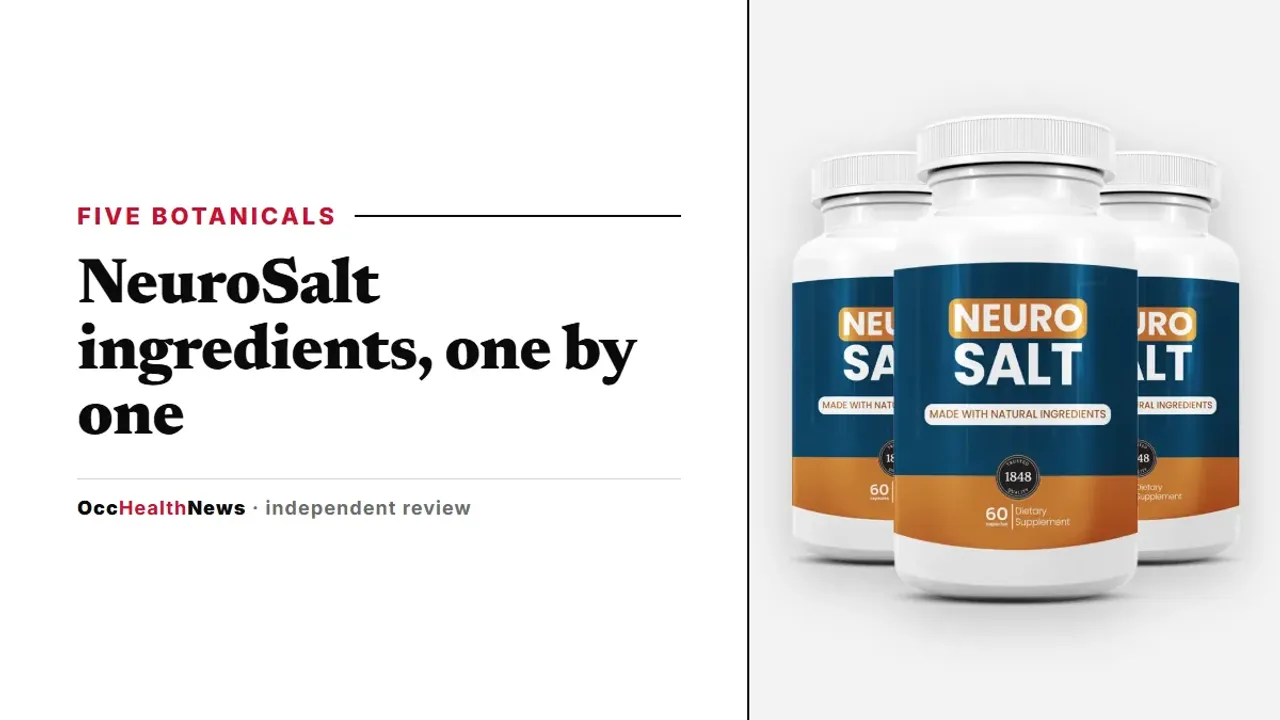
A label you can read from top to bottom is a good sign, and NeuroSalt has one. Before you buy any supplement it helps to know what you will actually swallow, so this guide goes through the NeuroSalt ingredients one by one: what each plant is, how much sits in a serving and why a seller might choose it for an evening-friendly formula. Everything below describes the plants in general terms and the seller’s design, never a promise about what the capsule will do for you.
NeuroSalt ingredients at a glance
The seller describes the capsule as a blend of soothing, calming herbs, aimed at nerve comfort alongside a relaxed nervous system and restful nights. The panel lists a serving as two capsules, with 30 servings in a 60-capsule bottle. Add the five botanical lines together and a serving carries 450 mg of plant material. Here is the lineup, largest first:
- Passionflower, 145 mg
- Marshmallow root, 110 mg
- Corydalis powder, 100 mg
- Prickly pear extract, 50 mg
- California poppy seed, 45 mg
Nothing is folded into a secret mixture. Each line has a name and a number, so you or your pharmacist can compare it with what you already take.
Passionflower: the largest line at 145 mg
Passionflower (Passiflora incarnata) is a climbing vine with striking blooms, native to the Americas. People have long used its leaves and flowers in herbal teas and evening blends, which is why it features so often in products aimed at winding down. It leads this formula by weight, and that fits the seller’s emphasis on calm and rest. As with all the plants here, that is a traditional reputation and not a study result.
Marshmallow root: 110 mg of a soft, traditional herb
Marshmallow (Althaea officinalis) is not the campfire sweet. It is a perennial plant whose root is rich in mucilage, a gel-like material that gives it a smooth feel. Herbal traditions have long used the root in gentle, soothing preparations. In a capsule it plays a supporting part, rounding out the formula with a mild botanical.
Corydalis: 100 mg from traditional Chinese herbal practice
Corydalis (Corydalis yanhusuo) is a flowering plant whose tubers appear in traditional Chinese herbal practice, where it is known as yan hu suo. Here it is used as a powder. It is one of the three herbs on the panel that the seller groups with the calming side of the formula, so drowsiness is worth keeping in mind.
Prickly pear: 50 mg of a concentrated extract
Prickly pear (Opuntia phaeacantha) is a cactus, and its pads and fruit turn up in many wellness products. The label calls this one a 20:1 extract. That ratio describes how the extract was made: roughly twenty parts of plant material were concentrated into one part of extract. So the 50 mg on the panel stands for a larger amount of the original plant, which is a common way to fit more botanical into a small capsule.
California poppy: 45 mg of seed
California poppy (Eschscholzia californica) is the golden-orange wildflower that is also the state flower of California. Its seed is the part used here. Gentle herbal blends often include it, especially those meant for the evening. It is the smallest line on the panel, though not the least interesting, since it is another of the calming herbs.
What else is in the capsule
Beyond the five botanicals, the panel lists microcrystalline cellulose, hydroxypropyl methylcellulose, which forms the capsule shell, and magnesium stearate. These are ordinary supporting ingredients: a bulking agent, the shell itself and a flow agent that helps the powder move smoothly during manufacturing. We name them for completeness, because a good label reports everything.
Why combine these five?
Each botanical has its own reputation, and the seller’s idea is that five of them together make a short, easy-to-follow evening formula. Passionflower, California poppy and corydalis bring the calming theme. Marshmallow root and prickly pear fill out the plant side of the blend. That is a design choice, and the seller’s description of what the combination is meant to support is the seller’s own. For a wider view of how the capsule is used and priced, our NeuroSalt hub pulls everything together, and our ordering guide shows how to place an order, and the ingredients page in our NeuroSalt section keeps a quick reference to the label.
Who will like this kind of formula
A short botanical list appeals to readers who prefer plant-based products and who like to understand every line before they buy. If you enjoy herbal teas in the evening, much of this list will sound familiar, and the capsule simply packs the same family of plants into a form that is easy to keep on a shelf. It also suits people who want a routine with few moving parts: no powders to measure, no schedule beyond one serving a day. Readers who dislike strong flavors, or who find tea a chore, often favor capsules for that reason.
How to use it
The directions are simple: two capsules a day with a glass of water, 8 oz. A bottle holds 60 capsules, so it lasts about 30 days. The label sets no time of day, so pick one you can repeat, and the NeuroSalt product page shows the full directions. Whenever you take it, remember that several of the plants may cause drowsiness.
Safety notes that go with the ingredients
Because three of the five botanicals are calming herbs, drowsiness is possible. Alcohol and sedatives are best avoided while you use NeuroSalt, and driving should wait if you feel drowsy. If one of your prescriptions is for nerve pain or diabetes, or you take a blood pressure or blood-thinning tablet or a sleep aid, ask your doctor before you start. Keep taking your prescriptions exactly as directed, and never change them because of a supplement. The seller’s FAQ adds a courtesy for readers who are expecting, nursing, under 18 or managing a medical condition: let a doctor look at the label before you begin. Our side effects guide covers this in more depth.
Common questions about the label
Is a serving one capsule or two? Two. The amounts above belong to a two-capsule serving, so one capsule holds about half of each.
Does the panel show daily percentages? We leave those out of this guide. The amounts in milligrams are the useful part, because they tell you how much of each botanical you are getting.
Why are the botanicals in milligrams and not a single “blend” figure? Because the seller itemizes every line. You see exactly where the 450 mg comes from, which makes the label easier to check than one with a grouped total.
Can I compare it with another product? Yes. Put the two panels side by side and look at the named botanicals and their amounts. Our review shows how we weigh the offer around the label.
Reading any supplement label like a pro
A few habits will serve you with NeuroSalt and everything else on your shelf. Look for named ingredients with amounts, since a vague “proprietary blend” hides detail. Check the serving size, because the amounts apply to a serving and not to a single capsule. Read the “other ingredients” line for anything you avoid. And bring the label to a pharmacist, who can spot interactions you might miss. By those standards, a panel that names five botanicals, prints every amount and lists its supporting ingredients is easy to review.
Our take on the formula
For a buyer who likes plant-based routines, the NeuroSalt formula is easy to understand and easy to evaluate. It is short, it is fully itemized and it fits a simple evening habit. The sensible way to find out whether it suits you is a proper trial, and the 60-day money-back guarantee, counted from the purchase date, makes that low-risk. Six bottles at $294 ($49 each, free US shipping, five bonus guides) is the order we would choose for a trial you plan to finish.
Frequently asked questions
What are the NeuroSalt ingredients?
Passionflower, marshmallow root, corydalis powder, prickly pear extract and California poppy seed. The other ingredients are microcrystalline cellulose, hydroxypropyl methylcellulose (the capsule) and magnesium stearate.
How much of each is in a serving?
A serving is two capsules and holds passionflower 145 mg, marshmallow root 110 mg, corydalis 100 mg, prickly pear extract 50 mg and California poppy seed 45 mg.
Is there a hidden proprietary blend?
No. Each botanical is listed with its own amount, so you can read exactly what a serving holds.
What does 20:1 mean for prickly pear?
It describes the extract ratio, which is roughly twenty parts of plant material concentrated into one part of extract.
Do any ingredients cause drowsiness?
Passionflower, California poppy and corydalis are calming herbs and may cause drowsiness, so avoid alcohol and sedatives and do not drive if you feel drowsy.
Who should check the label with a doctor?
Anyone who takes medicines, and anyone who is pregnant, nursing, under 18 or living with a medical condition. Keep taking prescribed medicines.
About the author
OccHealthNews Editorial Team. We read the studies, guidelines and regulatory filings so you do not have to, and we show our sources on every piece. More about how we work.