Ikaria Lean Belly Juice · Ingredients
Ikaria Lean Belly Juice Ingredients: The Label by Block
Each block on the Ikaria Lean Belly Juice label with the total the seller prints, a neutral note on every named ingredient, the other ingredients and how to read the panel.
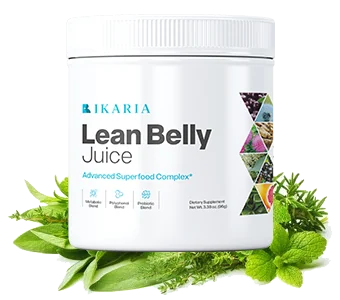
A powder drink mix, one scoop stirred into about 6 ounces of water each morning, which the seller designed to support a healthy metabolism, energy and digestion as part of a weight-management routine.
- From $39/bottle
- 180-day refund
- Weight Management
At a glance
- Refund window
- 180-day money-back guarantee
- Lowest per bottle
- $39
- in the largest package
- Category
- Weight Management
- Our editorial score
- 4.5 / 5
- our judgement, not a customer rating
A label shows what a supplement actually is. Below, we take the Supplement Facts panel of this drink mix block by block, describe each named ingredient in everyday words and explain how to read the numbers. Our notes are neutral, and none of them claims that an ingredient will do something for you. Whatever the seller hopes for belongs to the formula as a whole, and we credit it to the seller.
The panel at a glance
At the top, the label gives the serving size as one scoop (3.2 g) and the count as 30 servings per container, which matches one bottle. Four blocks follow, and each is printed as one total per serving. We keep them in the order the label shows them.
| Label block | Per serving | What it holds |
|---|---|---|
| Metabolic Blend | 1,000 mg | nine plant ingredients, from roots and leaves to seeds and fruit |
| Polyphenol Blend | 1,000 mg | eleven fruit, flower and root powders and extracts |
| Digestive Blend | 325 mg | inulin and oat fiber |
| 9 Strain Probiotic | 125 mg (3 billion CFU at manufacture) | nine live bacteria strains |
The Metabolic Blend
This block, at 1,000 mg, names nine ingredients. Here is each one in plain terms.
- Dandelion root powder: a powder from the root of the dandelion plant.
- Turmeric root powder: a powder from the root of turmeric, the bright yellow spice.
- Citrus pectin: a plant fiber found in the peel and pulp of citrus fruit.
- Green tea extract (leaf): an extract from green tea leaves. The label specifies 98% polyphenols, 50% EGCG and 80% catechins, with under 1% caffeine.
- Kelp extract (Laminaria japonica): an extract from a brown seaweed, standardized on the label to 10% fucoxanthin.
- Milk thistle extract (seed): an extract from the seeds of the milk thistle plant, standardized to 80% silymarin.
- Panax ginseng powder (root): a powder from the root of Asian ginseng.
- Black pepper extract (fruit): an extract from black pepper fruit, standardized to 95% piperine.
- Japanese knotweed extract: an extract from the root of Polygonum cuspidatum, specified on the label as 98% resveratrol.
The percentages describe how each extract is standardized, which is a specification of the ingredient and not an amount per serving. The label prints the Metabolic Blend as one 1,000 mg total.
The Polyphenol Blend
The second block also totals 1,000 mg and lists eleven names, mostly fruit and flower powders.
- Beet root powder: ground from the root of the beet.
- Hibiscus powder (flower): ground from hibiscus flowers.
- Strawberry juice powder: dried strawberry juice.
- Acai juice powder: dried juice of the acai berry.
- African mango extract: an extract of the seed of Irvingia gabonensis.
- Black currant powder: ground black currants.
- Blueberry powder: ground blueberries.
- Cranberry powder: ground Vaccinium macrocarpon L. cranberries.
- Grapefruit powder: ground Citrus paradisi.
- Pomegranate powder: ground pomegranate.
- Raspberry powder: ground raspberries.
Polyphenols are a broad family of plant compounds found in fruit, vegetables and tea, which is why the block takes that name.
The Digestive Blend
At 325 mg, the third block holds two fibers. Inulin comes from the root of the jerusalem artichoke (Helianthus tuberosus) and is a plant fiber used in many foods. Oat fiber powder is the ground fibrous part of the oat. The label files both fibers under the one Digestive Blend heading.
The 9 Strain Probiotic
The last block weighs 125 mg and carries 3 billion CFU at the time of manufacture. CFU means colony-forming units, the usual way to count live bacteria. The label names nine strains: L. acidophilus, L. salivarius, L. plantarum, L. rhamnosus, B. lactis, B. bifidum, L. fermentum, L. reuteri and B. longum. The L names belong to the Lactobacillus family and the B names to Bifidobacterium, two groups of bacteria commonly found in probiotic products.
The eight names the seller highlights
On its pages the seller picks out eight ingredients by name: fucoxanthin, Panax ginseng, Bioperine, resveratrol, EGCG, Taraxacum, citrus pectin and milk thistle. Here is what those names mean, in calm terms.
- Fucoxanthin is a pigment found in brown seaweed such as kelp.
- Panax ginseng is a root traditionally used in herbal products.
- Bioperine is a trade name for black pepper extract.
- Resveratrol is a compound found in the skin of some fruit and in Japanese knotweed.
- EGCG is one of the catechins found in green tea.
- Taraxacum is the Latin genus name for dandelion.
- Citrus pectin is the fiber from citrus fruit we met above.
- Milk thistle is a plant whose seeds are used in traditional herbal preparations.
The seller also describes the formula as a proprietary blend of antioxidants. That is the seller’s description of the whole formula, and we do not tie any outcome to a single name on the list.
What else is in the tub
Under the four blocks come the other ingredients: maltodextrin, natural flavors, citric acid and stevia leaf extract. Maltodextrin is a starch-based powder, citric acid is the acid found in citrus fruit, and stevia leaf extract is a plant-based sweetener. Anyone who avoids a particular ingredient should read this short list before ordering, since it covers everything that is not named inside a block. The seller lists the mix as gluten-free and dairy-free, with no soy, wheat, barley or animal products.
How to read the amounts
Every figure on the panel is per serving, and a serving is one scoop of 3.2 g. The blocks are printed as totals, so the table above shows the four totals, which are 1,000 mg, 1,000 mg, 325 mg and 125 mg. Multiply a total by 30 and you have what a bottle holds, which is the simplest way to line Ikaria Lean Belly Juice up against another label that uses a different serving size.
Comparing this label with what you already use
Perhaps you already take a multivitamin, a green tea product or a probiotic. Set the labels next to each other and look for names that repeat, such as green tea, resveratrol or inulin, then compare forms. A pharmacist can tell you in a minute whether anything overlaps, so bring both. The seller itself warns against doubling up with supplements that hold similar ingredients, so this small step pays off before a new product joins your routine.
Habits for reading any supplement label
A few habits make every label easier to read.
- Find the serving size first. Here it is one scoop, so every figure is per scoop.
- Check how the amounts are printed. On this panel each block carries its own total.
- Read the other ingredients. They show the sweetener and the base.
- Compare form as well as name. An extract, a powder and a juice powder are different things.
- Take the label to your pharmacist. They can compare it with anything you already use.
Who should show the label to a professional
A few points call for a conversation. The seller’s guidance is to see a physician first if you are expecting, nursing, on medication or managing a medical condition. Our own general advice adds people on blood thinners, diabetes or blood-pressure medicine, and people with thyroid, liver or gallbladder conditions, because turmeric, ginseng, kelp, resveratrol, milk thistle, black pepper extract and green tea extract are among the named ingredients. Grapefruit powder is on the label too, so if one of your medicines carries a grapefruit warning, ask your pharmacist. Prescriptions continue as normal. Our post on Ikaria Lean Belly Juice ingredients repeats the list with more background, and the page on cautions covers them in detail.
For the wider picture, see the hub guide and the full review.
Good to know
- • Ikaria Lean Belly Juice is a dietary supplement and individual results vary. It goes alongside balanced meals and regular movement, never in place of them, and unexplained weight change needs a doctor. Keep taking your prescribed medicines, and ask your doctor first if you are pregnant, nursing, take medicine or have a medical condition.
3 bottles
90-day supply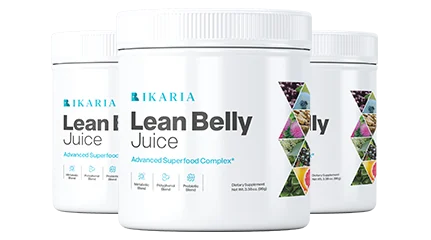
$59/bottle
$177 total
- Free US shipping
- 3 free bonuses
- 180-day money-back guarantee

6 bottles
180-day supply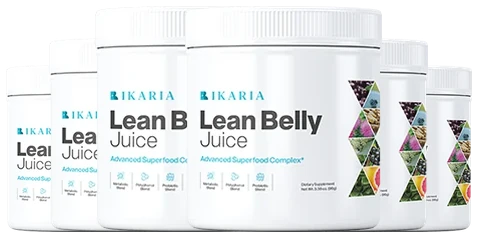
$39/bottle
$234 total
- Free US shipping
- 3 free bonuses
- 180-day money-back guarantee
Prices are the ones on the seller's order page when we checked on November 10, 2026. The single bottle adds $9.95 for US shipping, and three and six bottles ship free within the US. Overseas shipping varies and shows at checkout.
Frequently asked questions
What is in Ikaria Lean Belly Juice?
Four label blocks per scoop: a Metabolic Blend (1,000 mg), a Polyphenol Blend (1,000 mg), a Digestive Blend (325 mg) and a 9 Strain Probiotic (125 mg, 3 billion CFU at manufacture).
What are the other ingredients?
Maltodextrin, natural flavors, citric acid and stevia leaf extract. The green tea extract brings a trace of caffeine, which the label puts at under 1%.
Does Ikaria Lean Belly Juice contain gluten, dairy or soy?
The seller says it is free from gluten, dairy, soy, wheat, barley and animal products. Anyone with an allergy should still read the label and ask a doctor.
More on Ikaria Lean Belly Juice
- Overview: Ikaria Lean Belly Juice Price Nov 2026: $39, Where to Buy
- Review: Ikaria Lean Belly Juice Review: Mix, Offer and Our 4.5 Score
- Benefits: Ikaria Lean Belly Juice Benefits: What It Is Built For
- Safety: Ikaria Lean Belly Juice Safety: Who Should Ask First
- Price: Ikaria Lean Belly Juice Price: $69, $59 or $39 a Bottle
- FAQ: Ikaria Lean Belly Juice FAQ: Price, Use and Guarantee
- Comparison: Ikaria Lean Belly Juice Packages Compared: 1, 3 or 6 Bottles
- Where to buy: Where to Buy Ikaria Lean Belly Juice: Order the Safe Way
- Official website: Ikaria Lean Belly Juice Official Website: Real Order Page
More in Weight Management, or see our editorial shortlist.
Other products in Weight Management
All- Java BurnA tasteless liquid serum in a dropper bottle that you stir into your daily coffee, hot or iced, which the seller designed to support metabolism, calm energy and reduced hunger.$49 to $79
- LeanBiomeA daily delayed-release capsule, two with a sip of water before breakfast, which the seller designed to support a balanced gut microbiome and a weight-management routine.$49 to $79
- Liv PureA once-a-day capsule built around the liver, with two named blends of ten ingredients, which the seller designed to support liver function, metabolism and healthy weight management.$49 to $79
- Metabo DropsTasteless liquid drops for your coffee, hot or cold, which the seller designed to support metabolism, calm energy and reduced hunger over a long run of steady use.$29 to $79
- Ultra Omega BurnA daily softgel, 30 to a bottle, built around omega-7 (palmitoleic acid) according to the seller, with free shipping on every package and a 365-day money-back guarantee.$33.33 to $49.95
About this guide
OccHealthNews Editorial Team. We read the seller's pages, terms and refund policy and the published research, and we show our sources. We do not run lab tests. Our methodology.