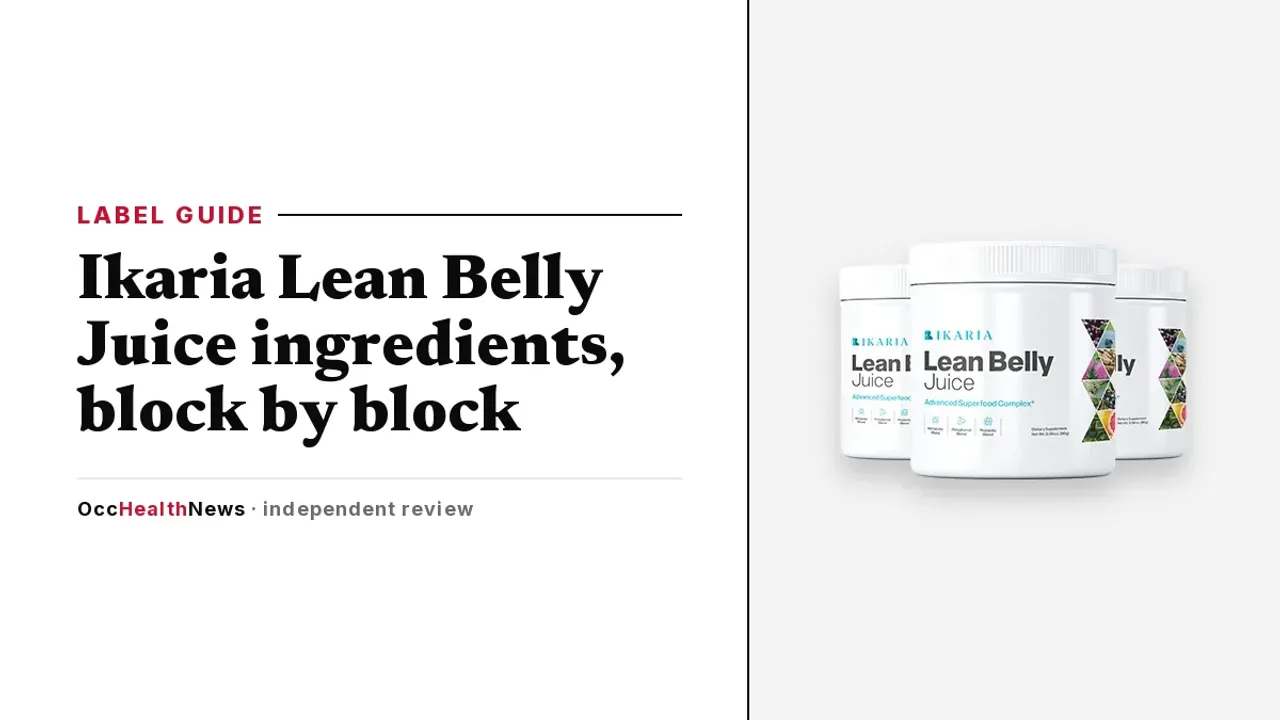
Ikaria Lean Belly Juice Ingredients: The Label Explained
The Supplement Facts panel read in plain English: four blocks with their printed totals, every named ingredient described in everyday words, and how to bring the label to your pharmacist.
Contents
- 1Ikaria Lean Belly Juice ingredients at a glance
- 2The Metabolic Blend
- 3The Polyphenol Blend
- 4The Digestive Blend
- 5The 9 Strain Probiotic
- 6How the four blocks meet in one glass
- 7What else goes in the tub
- 8Eight names from the seller’s own pages
- 9How to read the amounts
- 10Five tips for reading any label
- 11Who should show the label to a professional first
- 12Our take on the label
A good label turns a mystery powder into something you can understand. If you are weighing Ikaria Lean Belly Juice, you probably want to know what goes into the glass before you stir it. This guide walks through the Ikaria Lean Belly Juice ingredients one block at a time, puts every named ingredient into everyday words and shows how to read the numbers, so you can order knowing exactly what the tub holds.
Ikaria Lean Belly Juice ingredients at a glance
The panel sets a serving at one scoop, which is 3.2 g, and 30 servings fill a tub. Everything is organized under four headings. Each heading carries one total, and the named ingredients sit inside it.
| Block | Contents | Total on the label, per scoop |
|---|---|---|
| Metabolic Blend | Nine plant ingredients | 1,000 mg |
| Polyphenol Blend | Eleven fruit, flower and root powders | 1,000 mg |
| Digestive Blend | Inulin and oat fiber | 325 mg |
| 9 Strain Probiotic | Nine strains, counted at 3 billion CFU when made | 125 mg |
The seller presents the formula as one whole, with support for metabolism, energy and digestion as its aim, all within a weight-management routine. Our notes below stay neutral and describe what each ingredient is, nothing more.
The Metabolic Blend
This block names nine ingredients. Here is each in plain terms.
| Ingredient | What it is |
|---|---|
| Dandelion powder | Ground root of the dandelion plant, an herb with a long history in teas |
| Turmeric powder | Ground root of turmeric, the golden spice used in curries |
| Citrus pectin | A fiber from citrus peel, also the substance that helps jams set |
| Green tea extract | A concentrate from green tea leaf; the label lists 98% polyphenols, 50% EGCG, 80% catechins and caffeine under 1% |
| Kelp extract | From the brown seaweed Laminaria japonica, standardized to 10% fucoxanthin |
| Milk thistle extract | Made from milk thistle seeds, with the label specifying 80% silymarin |
| Panax ginseng powder | Ground root of Asian ginseng, traditionally used in herbal products |
| Black pepper extract | From pepper fruit, standardized to 95% piperine, the compound behind pepper’s bite |
| Japanese knotweed extract | From the root of Polygonum cuspidatum, standardized to 98% resveratrol |
Those percentages describe how pure each extract is, and they are not doses. The label gives the whole Metabolic Blend as 1,000 mg.
The Polyphenol Blend
The block borrows its name from polyphenols, a large group of plant compounds that turn up in berries, tea and beets, among many other foods. Its printed total is also 1,000 mg and names eleven ingredients: beet root powder, hibiscus flower powder, strawberry juice powder, acai juice powder, African mango seed extract (Irvingia gabonensis), black currant powder, blueberry powder, cranberry powder, grapefruit powder, pomegranate powder and raspberry powder.
If that list sounds like a fruit bowl, that is because most of it is. The powders are made by drying and grinding the fruit or its juice, and the beet root and hibiscus add color from vegetables and flowers.
The Digestive Blend
The third block weighs in at 325 mg and holds two fibers. Inulin is extracted from the root of the jerusalem artichoke and is used in many everyday foods, while oat fiber powder is simply the ground fibrous part of the oat. Together they form the part of the label the seller points to when it talks about digestion.
The 9 Strain Probiotic
The final entry is a probiotic at 125 mg per scoop, and the label counts 3 billion CFU from the day it was made. CFU stands for colony-forming units, the standard way to count live bacteria. Six Lactobacillus strains (acidophilus, salivarius, plantarum, rhamnosus, fermentum and reuteri) and three Bifidobacterium strains (lactis, bifidum and longum) are named, two groups of bacteria found in many probiotic products.
How the four blocks meet in one glass
The practical charm of this label is that everything arrives together. One level scoop carries all four blocks at once, so there is no sorting of tablets by time of day and no second step. A single stir brings the plant blend, the fruit blend, the fibers and the probiotic into the same 6 ounces of water. If you like the idea of one simple habit instead of a shelf of separate products, the layout makes sense on its face.
What else goes in the tub
Under the four blocks, the label adds a short list of other ingredients: maltodextrin and citric acid, natural flavors, and stevia leaf extract. Maltodextrin is a powdered starch, citric acid is the sharp acid in citrus fruit and stevia leaf extract is a sweetener from a plant. These explain why the mix is flavored and easy to drink. The seller reports that the mix has no gluten or dairy, no soy, wheat or barley, and nothing of animal origin, and the green tea brings a trace of caffeine, under 1% on the label.
Eight names from the seller’s own pages
The seller’s pages single out eight ingredients by name. In plain terms they are fucoxanthin (a pigment from brown seaweed), Panax ginseng (a traditional herbal root), Bioperine (a trade name for black pepper extract), resveratrol (found in grape skins and knotweed), EGCG (a tea catechin), Taraxacum (the Latin name for dandelion), citrus pectin (a citrus fiber) and milk thistle (a seed extract). We describe the names and leave any promises to the seller.
How to read the amounts
Every figure is per serving, and a serving is one scoop. Because each block is printed as a total, the four numbers above are the ones to compare with other labels. Multiply a total by 30 to see what a tub holds. If you compare this mix with a multivitamin or a probiotic, look for repeats such as green tea or inulin, and bring both labels to your pharmacist for a quick check.
Five tips for reading any label
These tips make any panel easier to follow, this one included.
- Find the serving size first, because every number is per serving.
- Notice whether amounts are given for each ingredient or as block totals.
- Read the other ingredients, which reveal the sweetener and the base.
- Compare forms as well as names: an extract, a plain powder and a juice powder are not the same thing.
- Bring the label to your pharmacist if you use regular medicine.
Who should show the label to a professional first
Plenty of readers can simply order and start. A few should talk first. The seller advises seeing a physician if you are expecting, nursing, taking medication or managing a health condition, and it recommends not combining the mix with other supplements that hold similar ingredients. Our own general advice adds readers whose medicines treat blood clotting, blood sugar or blood pressure, and anyone with thyroid, liver or gallbladder trouble. Grapefruit powder is on the list, so if a medicine of yours carries a grapefruit warning, mention it to your pharmacist. Keep taking your prescriptions. Our side effects post covers these notes in more detail, while our buyer’s guide lists them beside the price table.
Our take on the label
We like a panel that is well organized, and this one is. Four blocks, a printed total for each and a plain list of the remaining ingredients make it easy to read in a minute. For the full offer, see our Ikaria Lean Belly Juice product guide and the catalog ingredients page, which holds a compact version of this guide. For our verdict, see our full review post.
Frequently asked questions
What is in Ikaria Lean Belly Juice?
Four label blocks per scoop: a Metabolic Blend (1,000 mg), a Polyphenol Blend (1,000 mg), a Digestive Blend (325 mg) and a 9 Strain Probiotic (125 mg, 3 billion CFU at manufacture), plus maltodextrin, natural flavors, citric acid and stevia leaf extract.
Does it contain caffeine?
The green tea extract brings a trace. The label puts caffeine at under 1% of that extract.
Which probiotic strains are listed?
Nine: L. acidophilus, L. salivarius, L. plantarum, L. rhamnosus, B. lactis, B. bifidum, L. fermentum, L. reuteri and B. longum.
Is Ikaria Lean Belly Juice free from common allergens?
The seller says it is free from gluten, dairy, soy, wheat, barley and animal products. Anyone with an allergy should still read the label and ask a doctor.
Why are there no amounts for each ingredient?
The label prints each block as one total. The named ingredients sit inside that total.
Should I ask a doctor about the ingredients?
Yes if you take regular medicine, especially blood thinners, diabetes or blood-pressure medicine, or have a thyroid, liver or gallbladder condition.
About the author
OccHealthNews Editorial Team. We read the studies, guidelines and regulatory filings so you do not have to, and we show our sources on every piece. More about how we work.