Finessa · Ingredients
Finessa Ingredients: Every Label Blend Explained
Each entry on the Finessa label with the amount the seller prints, a neutral note on what every ingredient is, the probiotic strains, the other ingredients and how to read a blend total.
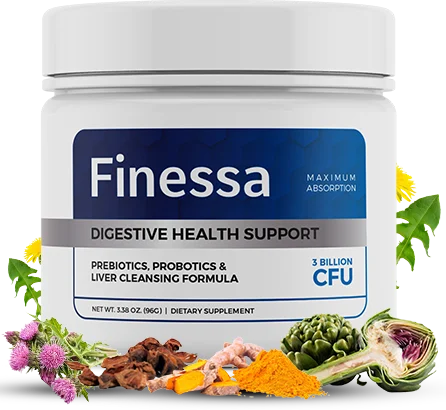
A daily powder drink in a bottle: one scoop stirred into water or your favorite drink each morning, which the seller designed to support smooth digestion, regularity, liver and colon health and energy.
- From $39/bottle
- 180-day refund
- Digestive Wellness
At a glance
- Refund window
- 180-day 100% satisfaction money-back guarantee
- Lowest per bottle
- $39
- in the largest package
- Category
- Digestive Wellness
- Our editorial score
- 4.5 / 5
- our judgement, not a customer rating
When you want to know what a supplement really is, the label is the place to look. Below, we go through the Finessa Supplement Facts panel entry by entry, explain in everyday words what each ingredient is and show how to read the places where the label gives one figure for a whole group. Our descriptions are neutral, and none of them says what an ingredient will do for you. The seller’s aims apply to the formula as a whole, and we credit them to the seller.
The panel at a glance
A scoop is a light serving. The label puts it at 10 calories and gives carbohydrate as 3 g in total, then adds a trace of selenium (1 mcg), sodium at 40 mg and potassium at 10 mg. Everything else in the formula is arranged into groups.
| Label entry | Weight per scoop | What the group holds |
|---|---|---|
| Polyphenol blend | 1,000 mg | fruits, juices and roots |
| Gut health blend | 755 mg | barks, a root, a licorice extract and a prebiotic |
| Liver health blend | 450 mg | plant roots, milk thistle and two extracts |
| Probiotic blend | 52.5 mg | nine strains, 5 billion CFU at manufacture |
| Akkermansia muciniphila AH39 | 2 mg | one strain |
The Polyphenol blend
Heaviest on the panel, this group weighs 1,000 mg and names nine items. Five berries lead the list: acai, black currant, blueberry, cranberry and raspberry. Pomegranate is a fruit filled with red seeds, and strawberry juice is simply juice pressed from strawberries. The two roots in the group are beet root, the root of the beet plant, and purple carrot, a carrot variety with a purple color.
The Gut health blend
Weighing 755 mg, this group names five items. Ginger root comes from the ginger plant, and cinnamon (cassia) bark is bark from the cassia tree, one kind of cinnamon. Fructooligosaccharides, abbreviated FOS, are a prebiotic ingredient. The label lists a licorice extract in its deglycyrrhizinated form, shortened to DGL, taken from the licorice root. Cascara sagrada appears as a bark extract printed at 10:1, which is the extract ratio on the label. The bark is a traditional one used to stimulate bowel movements, which is why the safety page asks you to follow the directions on the bottle.
The Liver health blend
This 450 mg group has five entries. Dandelion root is the root of the dandelion plant, and turmeric root is the root of the plant behind the yellow spice. Milk thistle is a flowering plant. Artichoke extract is written with its Latin name, Cynara scolymus, and a specification of 5% cynarin, so the label tells you how the extract was standardized. The last entry is silymarin 80%, a compound group tied to milk thistle and printed with its own specification.
The Probiotic blend and Akkermansia
The blend weighs 52.5 mg, and the label states 5 billion CFU at manufacture. CFU stands for colony-forming units, the counting unit on probiotic labels, and “at manufacture” tells you the number describes the product as it was made.
Nine strains are named. The Lactobacillus family accounts for five of them: L. casei, L. rhamnosus, L. acidophilus, a second acidophilus line coded LA85, and a reuteri line coded LR08. The remaining four are Bifidobacterium lactis BLa80, Bacillus coagulans BC99, Streptococcus thermophilus and Clostridium butyricum.
On a separate line the panel lists Akkermansia muciniphila AH39 at 2 mg. It is a single strain with its own entry, outside the blend.
What else is in the bottle
Below the active entries sit the other ingredients: resistant dextrin, natural flavors, citric acid, sea salt, stevia leaf extract and silicon dioxide. They form the powder base around the groups above. If you avoid a particular ingredient, this short list is the one to read before you order.
What a blend total means
A blend is a set of ingredients printed under a shared weight. Here the sets weigh 1,000 mg, 755 mg, 450 mg and 52.5 mg, and each holds several members. The panel does not say how a set divides between its members, so the sensible way to read each one is as a single block.
The thinking behind the formula
According to the seller, the gut and the liver work as a pair, and it names that pairing the gut-liver axis. The label lays the four groups side by side, and the seller sells the bottle as one daily routine designed to support digestion, regularity, gut balance, liver and colon health, energy and a belly that feels lighter. We report it as an aim, not as a result anyone can count on. Outcomes differ from one person to the next, and a supplement works alongside everyday habits.
Directions
The seller’s directions are short. Stir a scoop into water or any drink you enjoy once the day begins. Every bottle is sold as a 30-day supply, and the guidance is to follow the directions and drink water.
Comparing this label with what you already use
Say you already take a probiotic, a fiber product or a multivitamin. Put the labels next to each other and look for names that repeat, such as Lactobacillus strains or selenium, then compare the amounts and forms. A pharmacist can tell you in a minute whether anything doubles up, so bring both. The step is simple and worth taking before any new supplement joins your routine.
Habits for reading any supplement label
A few habits make every label easier to read.
- Find the serving size first. Here it is one scoop, so every figure on the panel is per scoop.
- Check which entries carry their own weight. On this panel the four blends and Akkermansia do, while the members of each blend do not.
- Read the other ingredients. They reveal the sweeteners and flavors that the active list leaves out.
- Compare form as well as name. An entry such as DGL licorice root extract names one specific form.
- Take the label to your pharmacist. They can check it against anything you already use.
Who should show the label to a professional
A handful of entries on this panel call for a conversation. If you are pregnant or nursing, live with a bowel condition or have a weakened immune system, speak to a doctor first, since the formula contains probiotics. The same applies if you use heart medicines, diuretics or blood thinners. Your prescriptions carry on as usual. The seller itself advises seeing a physician before use, as is sensible with any supplement. Our Finessa ingredients post repeats the list with more background, and the safety page covers the cautions in detail.
For the whole picture, see the hub guide and the full review.
Good to know
- • Finessa is a dietary supplement and individual results vary. The seller recommends checking with your physician before use, as with any supplement. Keep taking your prescribed medicines and ask your doctor first, especially if you are pregnant or nursing, have a bowel condition or take blood thinners, diuretics or heart medicines.
3 bottles
90-day supply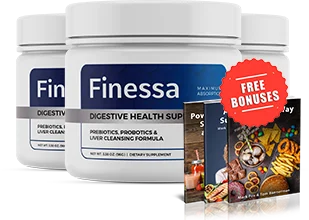
$49/bottle
$147 total
- Plus shipping
- 3 free bonuses
- 180-day money-back guarantee

6 bottles
180-day supply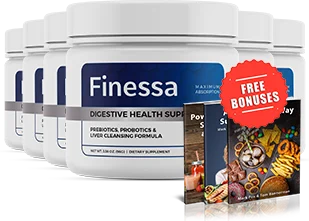
$39/bottle
$234 total
- Free US shipping
- 3 free bonuses
- 180-day money-back guarantee
Prices are the ones on the seller's order page when we checked on November 3, 2026. One and three bottles are plus shipping; six bottles ship free within the US. The order page lists the packages as bottles.
Frequently asked questions
What is in Finessa?
Four blends plus one stand-alone strain: a Polyphenol blend (1,000 mg), a Gut health blend (755 mg), a Liver health blend (450 mg), a Probiotic blend (52.5 mg, 5 billion CFU at manufacture) and Akkermansia muciniphila AH39 (2 mg).
Does the label give an amount for each item inside a blend?
No. Every blend carries a single weight for the whole group, and the label does not divide it between the members.
How many probiotic strains does Finessa list?
Nine named strains sit in the Probiotic blend, and Akkermansia muciniphila AH39 has a line of its own. The blend is labeled 5 billion CFU at manufacture.
More on Finessa
- Overview: Finessa Price Nov 2026: $39/Bottle, Legit & Where to Buy
- Review: Finessa Review: Formula, Offer and Our 4.5 Score
- Benefits: Finessa Benefits: What It Is Designed to Support
- Safety: Finessa Safety: Cautions and Who Should Ask First
- Price: Finessa Price: $59, $49 or $39 a Bottle Compared
- FAQ: Finessa FAQ: Price, Use, Guarantee and Safety
- Comparison: Finessa Packages Compared: 1, 3 or 6 Bottles
- Where to buy: Where to Buy Finessa: Order Steps and Best Package
- Official website: Finessa Official Website: Find the Real Order Page
More in Digestive Wellness.
About this guide
OccHealthNews Editorial Team. We read the seller's pages, terms and refund policy and the published research, and we show our sources. We do not run lab tests. Our methodology.