Finessa Ingredients: What Is on the Label, Blend by Blend
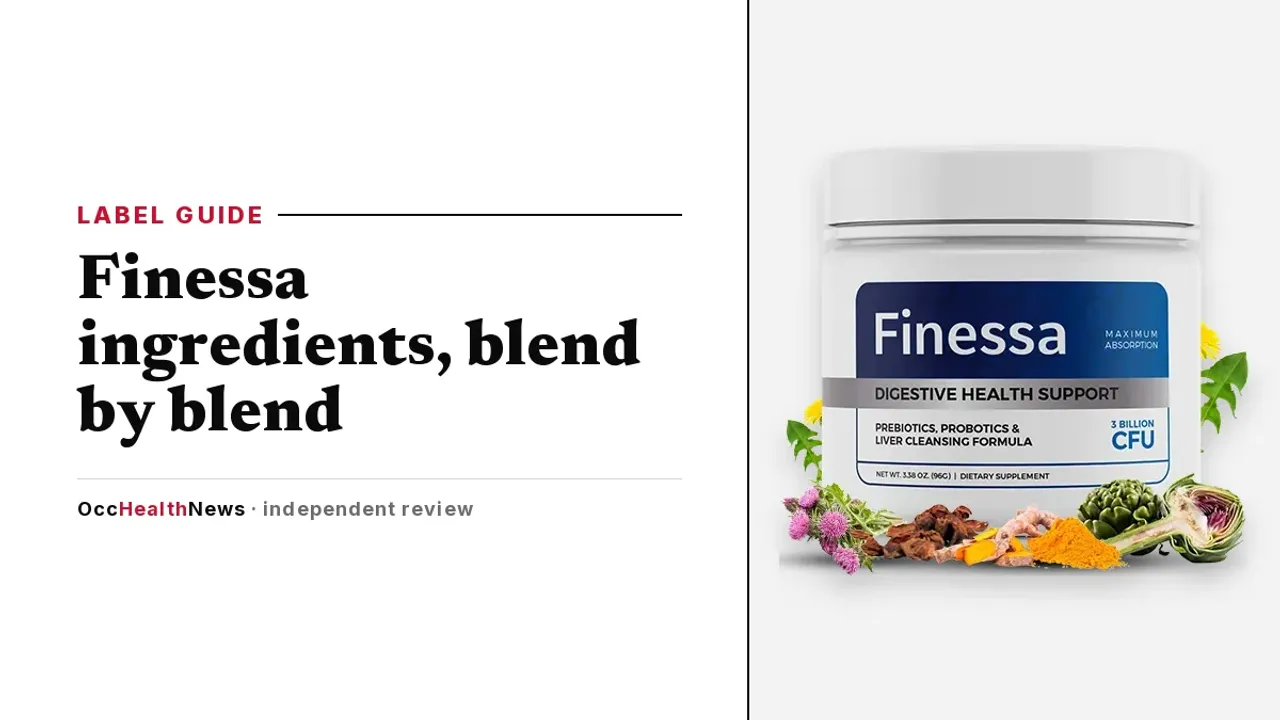
The Supplement Facts panel read from top to bottom: four blends and one stand-alone strain, with the weight the seller prints for each and a neutral note on what every ingredient is.
Contents
- 1Finessa ingredients at a glance
- 2The Polyphenol blend: 1,000 mg
- 3The Gut health blend: 755 mg
- 4The Liver health blend: 450 mg
- 5The Probiotic blend: 52.5 mg
- 6Akkermansia muciniphila AH39: 2 mg
- 7What else is in the bottle
- 8A short glossary for the panel
- 9How the daily scoop fits the label
- 10Quick answers about the panel
- 11Why the formula is built this way
- 12How to read a blend weight
- 13What the seller says about production
- 14Using the label with your doctor or pharmacist
- 15Our take on the Finessa ingredients
A supplement worth buying is one whose label you can read, and Finessa gives you plenty to read. Before the ingredients, one point of comfort: whatever the panel shows, a 180-day money-back guarantee, the seller’s 100% satisfaction promise, covers your order. This page goes through the Finessa ingredients line by line, says in plain words what each one is and leaves any claims about effects to the seller’s description of the formula as a whole.
Finessa ingredients at a glance
Each figure is per scoop: 10 calories, 3 g of total carbohydrate, sodium at 40 mg, potassium at 10 mg and selenium at 1 mcg. The formula itself is organized into blends.
| Entry on the label | Printed weight | Members |
|---|---|---|
| Polyphenol blend | 1,000 mg | 9 |
| Gut health blend | 755 mg | 5 |
| Liver health blend | 450 mg | 5 |
| Probiotic blend | 52.5 mg | 9 strains |
| Akkermansia muciniphila AH39 | 2 mg | 1 strain |
Reading down the weight column, the polyphenol group is the heaviest and the probiotic group the lightest. Each blend has a single printed weight, so its members share the total.
The Polyphenol blend: 1,000 mg
Nine items appear here. Seven are fruits or fruit juice: acai berry, black currant, blueberry, cranberry, pomegranate, raspberry and strawberry juice. The other two are colorful root vegetables, beet root and purple carrot. In everyday terms, this is the part of the label that reads like a fruit bowl.
The Gut health blend: 755 mg
Five entries share this weight.
- Cinnamon (cassia) bark: a bark from the cassia tree, one of the cinnamon types.
- Ginger root: the root of the ginger plant.
- Cascara sagrada bark extract 10:1: an extract of a bark, with the ratio printed on the label. It is a traditional bark used to stimulate bowel movements.
- Deglycyrrhizinated licorice (DGL) root extract: licorice root in its DGL form.
- Fructooligosaccharides (FOS): the prebiotic entry in the group.
The cascara sagrada line is the one that calls for a little care, which is why our side effects guide gives it a section of its own.
The Liver health blend: 450 mg
This group also lists five entries.
- Dandelion root: the root of the dandelion plant.
- Turmeric root: the root of the plant that gives us the yellow spice.
- Milk thistle: a flowering plant.
- Artichoke extract: written as Cynara scolymus and standardized to 5% cynarin, which tells you how the extract is specified.
- Silymarin 80%: an entry associated with milk thistle, printed with its own specification.
The Probiotic blend: 52.5 mg
The label counts this blend at 5 billion CFU at manufacture. CFU is short for colony-forming units, the unit probiotic labels use, and the phrase at manufacture says the figure reflects the product as it left production.
Nine strains are named, and they fall into two groups.
- Five Lactobacillus entries: L. rhamnosus, L. casei, Lactobacillus reuteri LR08, L. acidophilus and Lactobacillus acidophilus LA85.
- Four from other families: Streptococcus thermophilus, Clostridium butyricum, Bacillus coagulans BC99 and Bifidobacterium lactis BLa80.
Probiotics are live microorganisms, and the seller says anyone with a weakened immune system should check with a doctor first. Notice that the blend prints two different measures, a weight in milligrams and a CFU count, and that each of them describes the group as a whole.
Akkermansia muciniphila AH39: 2 mg
This strain stands on its own line, outside the probiotic blend. It is one named strain at a printed weight of 2 mg.
What else is in the bottle
The other ingredients begin with resistant dextrin and natural flavors. Citric acid and sea salt come next, then stevia leaf extract and silicon dioxide. Together they form the powder base and the taste around the groups above. Anyone who avoids a particular ingredient should read this short list before ordering.
A short glossary for the panel
A handful of terms on the label are worth decoding.
- Blend: several ingredients printed under one shared weight.
- CFU: colony-forming units, the counting unit for live cultures.
- At manufacture: the count was made when the product was produced.
- DGL: deglycyrrhizinated, the form in which the licorice root extract is listed.
- FOS: fructooligosaccharides, the prebiotic entry.
- Standardized: an extract specified to a stated level, as with the 5% cynarin on the artichoke line.
- 10:1: the extract ratio printed beside cascara sagrada.
With those seven terms in hand, the whole panel reads easily, and you can compare it with any other supplement label you own.
How the daily scoop fits the label
The label weights are per scoop, and the seller’s directions are simple: a scoop stirred into a glass of water, or any drink you like, at the start of the day. Each bottle is the seller’s 30-day supply, which means the figures above describe one day’s portion and not a whole month’s. If you want the whole offer in one place, including prices and the guarantee, the Finessa product page puts it beside the full label.
Quick answers about the panel
Does cascara sagrada have its own weight? No. It shares the Gut health blend’s 755 mg with four other entries.
Do the three packages hold different formulas? No. One bottle, three bottles and six bottles all contain the same powder.
Where are the sweeteners and flavors? Under other ingredients, where stevia leaf extract and natural flavors appear.
How many calories are in a scoop? The label says 10, along with 3 g of total carbohydrate.
Why the formula is built this way
The seller’s idea is that gut and liver form a partnership it calls the gut-liver axis, and the four blends mirror it. In the seller’s words, the point of the formula is support for digestion and regularity, for the liver and colon, for energy and for a lighter-feeling belly. We pass that on as an aim for the whole formula and never as a promise. Results differ between people.
How to read a blend weight
A blend weight is the combined weight of the group. The label gives 1,000 mg for the polyphenol group, and it does not split that figure among the nine items. The sensible approach is to read each blend as a single block and to judge the product by the whole panel plus the terms of the offer. Our ingredients page in the product guide shows the panel in a compact table.
What the seller says about production
The seller describes the facility as American, FDA-registered and following GMP guidelines. That is its account of the manufacturing setting, offered alongside the label.
Using the label with your doctor or pharmacist
Expecting, nursing, managing a bowel condition, living with a weakened immune system or using blood thinners, diuretics or heart medicines? Show the panel to your doctor before the first scoop. The same goes for anyone who already uses a probiotic or fiber product. The seller itself recommends checking with a physician before use, as with any supplement.
Our take on the Finessa ingredients
The strength of this label is its readability: four weighted blends, a stand-alone strain, every member named and the other ingredients listed. We would pair that with the six-bottle package: the lowest bottle price, free shipping inside the US, three bonuses and 180 days of cover. Our editorial score is 4.5 out of 5 for the offer overall. Our Finessa review explains how we reached it, and the Finessa hub page shows the packages.
Frequently asked questions
What are the Finessa ingredients?
Four blends plus one separate strain: Polyphenol blend 1,000 mg, Gut health blend 755 mg, Liver health blend 450 mg, Probiotic blend 52.5 mg and Akkermansia muciniphila AH39 2 mg.
How many probiotic strains are in Finessa?
The probiotic blend names nine strains, labeled 5 billion CFU at manufacture. Akkermansia muciniphila AH39 has its own line.
Does the label show an amount for each ingredient in a blend?
Each blend carries one weight for the whole group, so the members share it.
What are the other ingredients?
Resistant dextrin, natural flavors, citric acid, sea salt, stevia leaf extract and silicon dioxide.
Is cascara sagrada in Finessa?
Yes, as a bark extract printed at 10:1 inside the Gut health blend. It is a traditional bark used to stimulate bowel movements, so start as directed and drink water.
Should I ask my doctor about the ingredients?
The seller recommends checking with a physician before use. Keep taking prescribed medicines and ask your doctor first if you are pregnant, nursing, have a bowel condition or take certain medicines.
About the author
OccHealthNews Editorial Team. We read the studies, guidelines and regulatory filings so you do not have to, and we show our sources on every piece. More about how we work.