VisiFlora Ingredients: What Each Nutrient and Botanical Is There For
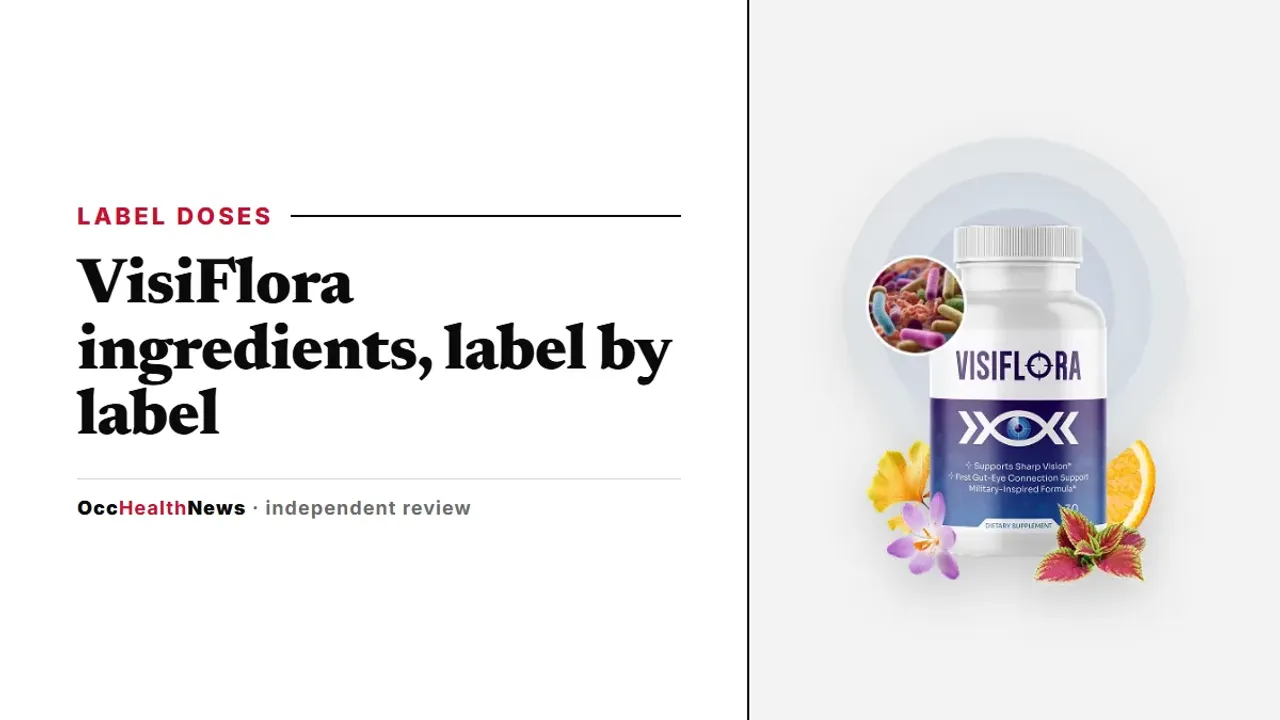
The VisiFlora label lists 21 ingredients. This guide groups them by family, gives the amounts the label prints, passes on the seller's description of each and links the research the seller cites.
Contents
- 1Family one: the vitamins and minerals
- 2Family two: the carotenoids
- 3Family three: berries and botanicals
- 4Family four: the helper compounds
- 5Three names worth a closer look
- 6The 351 mg question
- 7The idea that ties them together
- 8What the research does and does not mean
- 9The other ingredients
- 10Who should ask a physician first
- 11How to read this alongside the label
- 12Ingredient questions we hear
- 13A note for label readers
- 14Our verdict on the ingredients
Read the VisiFlora ingredients and you will notice quickly that the label is busier than most. Seven vitamins and minerals come with printed amounts, and a further fourteen ingredients share a single blend, giving 21 in all. Rather than recite the panel from top to bottom, this guide sorts the ingredients into families, tells you what the label prints for each, passes on the role the seller gives it and points to the research the seller cites. We kept to the label and the seller’s own pages, as checked on October 28, 2026.
Family one: the vitamins and minerals
These are the rows with real numbers, per capsule.
- Vitamin A (from beta carotene), 450 mcg RAE. The seller links it with normal cellular health.
- Vitamin C (ascorbic acid), 90 mg. The seller groups it with vitamin E as nutrients that help neutralize oxidative stress.
- Vitamin E (DL-alpha tocopheryl acetate), 15 mg. The partner of vitamin C in the same description.
- Zinc (zinc oxide), 11 mg. The seller ties zinc to normal enzyme activity in the eye.
- Selenium, 20 mcg. Described by the seller, with copper, as an essential mineral.
- Copper (copper gluconate), 0.9 mg. An essential mineral in the seller’s wording.
- Chromium (chromium picolinate), 15 mcg. Linked by the seller with healthy metabolic function.
Four of those seven reach a full daily value on the label, and the rest sit between a third and a half. The vitamin A, zinc, copper and selenium rows are worth remembering if you already take a multivitamin, since the same nutrients may show up there too.
Family two: the carotenoids
Carotenoids are the colorful plant pigments, and the blend carries four: lutein (from marigold), zeaxanthin, astaxanthin and lycopene. The seller calls astaxanthin a potent carotenoid antioxidant and presents lutein and zeaxanthin as carotenoids associated with eye nutrition. Lycopene is described as an antioxidant.
Two of the references on the seller’s page relate here: a 2024 review of lycopene as an antioxidant, and a 2020 review of lutein, zeaxanthin and beta-carotene in eye health. They are background reading on the ingredients and they are not trials of VisiFlora.
Family three: berries and botanicals
This is where the label starts to read like a herbal shelf.
- Bilberry fruit extract. The seller points out that bilberry is rich in anthocyanins.
- Saffron stigma extract. The seller calls it a carefully studied botanical extract.
- Ginkgo leaf. With coleus, described as supporting healthy microcirculation, visual focus and the delivery of nutrients to the eye.
- Eyebright aerial parts. A traditional botanical that the seller says has long been used to promote ocular comfort. A 2014 laboratory study assessed eyebright extract on human corneal cells in vitro.
- Grape seed extract. Grouped by the seller with rutin and quercetin as bioflavonoids that support cellular integrity and vascular health around the eyes.
Family four: the helper compounds
The last group is a mix of compounds with their own jobs.
- Taurine. The seller says it supports cellular hydration.
- Alpha lipoic acid. Presented as an antioxidant.
- Rutin and quercetin (both from Sophora japonica). Bioflavonoids, as noted above.
- Coleus forskohlii root. Paired with ginkgo in the seller’s description of microcirculation and nutrient delivery.
Three names worth a closer look
Astaxanthin. The reddish carotenoid that the seller calls a potent antioxidant. It is the last name on the blend list, though the order on a label is not a ranking of amounts we can read.
Ginkgo. A familiar leaf extract with a long history in herbal supplements. The seller pairs it with coleus forskohlii in a description about circulation and nutrient delivery. It is also one of the names to mention to a doctor if you take blood thinners.
Eyebright. A small meadow plant used traditionally for eye comfort, and the subject of the 2014 laboratory study on human corneal cells. The label lists the aerial parts, which means the leaves, stems and flowers above ground.
The 351 mg question
All fourteen of these blend ingredients share one total: 351 mg per capsule. The label does not break it down, which means we cannot tell you how much lutein, saffron or ginkgo a capsule holds, and we will not guess. If you want to know the exact doses, only the seller can tell you, and its support email is [email protected]. Our supplement review treats this as the main gap on an otherwise clear label.
The idea that ties them together
The seller says the formula is built on the thinking that nutrient absorption and eye nutrition are linked, and a review of the gut-eye link is among its references. We treat that as the seller’s rationale and not as evidence. What the label does show is a deliberate mix: antioxidant vitamins and minerals, carotenoids, berry and herb extracts and a few supporting compounds.
What the research does and does not mean
We checked four studies the seller cites and found them real. They are a 2024 lycopene review, a 2014 eyebright laboratory study, a 2020 review of lutein, zeaxanthin and beta-carotene in eye health and a 2022 review of the gut-eye link. Each is research on an ingredient or a topic, and none tests VisiFlora itself. A fair reading is that the ingredients are not random choices, and that interest in them is real. A fair reading is not that the capsule is proven to do anything, and we would be wrong to suggest it. The links are listed at the bottom of this page.
The other ingredients
Beyond the 21 named ingredients, the label lists hypromellose (the vegetable capsule), rice flour, magnesium stearate and silicon dioxide. These are the capsule shell and the fillers that help the contents flow. The seller calls the capsules non-GMO, stimulant-free and vegetarian-friendly, and we pass that on as the seller’s description.
Who should ask a physician first
The label says not to exceed the recommended dose, that it is not for anyone under 18 or for pregnant or nursing mothers, and that you should consult a physician before use, especially if you take medication or have a medical condition. A few ingredients here, ginkgo, coleus forskohlii, quercetin and grape seed, are the kind that people on blood thinners or other prescription medicine, or those planning surgery, should raise with their doctor first. Our side-effects guide turns that into a checklist.
How to read this alongside the label
Keep the label open next to this page. Start with the seven rows that have amounts, move to the blend names, and then to the other ingredients line. Our ingredients list article sets the whole panel out as a table, and the product hub and its ingredients page hold the same facts in short form.
Ingredient questions we hear
Is any ingredient a stimulant? The seller describes the capsule as stimulant-free, and the label lists no caffeine or similar compound.
Why does vitamin E read DL-alpha tocopheryl acetate? That is the form named on the label. It is a synthetic form, and the seller does not describe the capsule as all natural.
Can I take it with a multivitamin? Compare the labels for vitamin A, zinc, copper and selenium, which would overlap, and ask a physician or pharmacist if you are unsure.
Are the ingredients tested? The seller says they are carefully handled in a certified facility according to strict quality standards, and we pass that on as the seller’s statement.
Where do I see the numbers on one screen? The VisiFlora overview lines up the label facts, and our cost-per-bottle guide shows what a month costs.
A note for label readers
If you enjoy reading labels, VisiFlora gives you plenty to work with. Compare the vitamin amounts with a multivitamin, look up each plant on the blend list, and note which names appear twice in different forms, such as the beta carotene in the vitamin A row alongside the carotenoids in the blend. Reading a label this way teaches you far more than any marketing copy can, and the habit carries over to every supplement you consider afterwards.
Our verdict on the ingredients
The VisiFlora formula reads as a considered one: familiar vitamins and minerals in meaningful amounts, a set of carotenoids and plant extracts that people associate with eye nutrition and a clear admission, through the label itself, that the blend is a single total. We give the offer 4.6 out of 5, a mark for label clarity and terms that says nothing about results.
Frequently asked questions
What are the main VisiFlora ingredients?
Vitamins A, C and E, zinc, selenium, copper and chromium, plus a 351 mg blend that includes lutein, zeaxanthin, astaxanthin, bilberry, saffron, ginkgo and eyebright.
Does the label give each ingredient's dose?
Only for the seven vitamins and minerals. The 14 blend ingredients share one 351 mg total.
What are the other ingredients?
Hypromellose (the vegetable capsule), rice flour, magnesium stearate and silicon dioxide.
Is there research on the ingredients?
The seller links studies on individual ingredients such as lycopene and eyebright. They are background, not proof that VisiFlora works.
Who should check with a doctor first?
Anyone on medication, planning surgery, under 18, pregnant or nursing, as the label and common sense advise.
Sources
- 1 Lycopene: A Potent Antioxidant with Multiple Health Benefits Journal of Nutrition and Metabolism · 2024
- 2 A review of lutein, zeaxanthin and beta-carotene in eye health Antioxidants (Basel) · 2020
- 3 Eyebright (Euphrasia officinalis L.) extract activity in human corneal cells, in vitro tests Balkan Medical Journal · 2014
- 4 A review of the gut-eye link Ophthalmic Research · 2022
About the author
OccHealthNews Editorial Team. We read the studies, guidelines and regulatory filings so you do not have to, and we show our sources on every piece. More about how we work.