Nitric Boost Ingredients List: The Eight at a Glance and What Is Not Published
A table for the reader in a hurry, followed by a plain-language glossary and a list of the details the seller's pages leave out.
Contents
- 1Nitric Boost ingredients list: the table
- 2A plain-language glossary
- 3The eight, counted by type
- 4What the seller does not publish
- 5Names you may have met before
- 6What to ask support
- 7How to read the list as a shopper
- 8Taking the list to your doctor
- 9The same list, as part of a package
- 10One-paragraph cheat sheet
- 11Using the table well
- 12Our take
The Nitric Boost ingredients list is short enough to fit in one table, and that is where we begin. The table is for readers who want the answer in ten seconds. Below it we explain the terms in plain language, set out what the seller does and does not publish, and suggest what to ask support if a missing detail matters to you. Every role is the seller’s description, passed along as such.
Nitric Boost ingredients list: the table
| Ingredient | What it is | The seller’s stated job |
|---|---|---|
| Beet root powder | Vegetable powder | Natural nitrates for the nitric oxide idea |
| L-arginine | Amino acid | Starting material for nitric oxide |
| L-citrulline DL-malate | Amino acid, malate form | Supports nitric oxide levels, with a nod to energy |
| Niacin (vitamin B3) | Vitamin | Flexible, healthy blood vessels |
| Epimedium | Traditional herb | None beyond the description |
| Ginkgo biloba powder | Leaf powder | Antioxidant support for blood vessels |
| Dong quai | Traditional plant ingredient | Circulation tonic |
| D-aspartic acid | Amino acid | None beyond the description |
Those eight names are the whole list as the seller gives it. The powder is taken as one scoop a day, and a jar holds 30 servings.
A plain-language glossary
Nitric oxide. A molecule the body makes that helps blood vessels relax. The seller builds its explanation around it.
Amino acid. A building block of protein. Three of the eight are amino acids, and the seller treats two of them as raw materials.
Malate. A compound paired with citrulline here. The seller says the malate side supports energy.
Proprietary blend. A recipe whose proportions the seller keeps private. It is a common term and not a verdict.
Traditional herb. The seller’s label for epimedium, and similar wording for dong quai. It describes long use, not proof of an effect.
Antioxidant support. The seller’s phrase for what it expects of ginkgo. It is a general description and not a measured result.
Our full ingredient guide explains each of these in prose for readers who prefer sentences to cells.
The eight, counted by type
Sorting by type shows the shape of the formula. One ingredient is a vegetable powder, which is beet root. Three are amino acids: L-arginine, L-citrulline DL-malate and D-aspartic acid. One is a vitamin, niacin. Three are plant ingredients with traditional use behind them: epimedium, ginkgo biloba powder and dong quai. One plus three plus one plus three makes eight. If you are comparing this formula with another, that breakdown is a quicker comparison than reading both lists name by name, because it shows what kind of recipe you are looking at: amino acids and a vegetable at the core, with a vitamin and three plants around them.
What the seller does not publish
This second table lists the gaps, because honest ingredient coverage includes them.
| Detail | Published? |
|---|---|
| Amount of each ingredient | No |
| Supplement facts image | Not found |
| Other-ingredients list | Not found |
| Weight of one scoop | No |
| Flavor and sweetener details | No |
| Eight ingredient names | Yes |
| Quality statements | Yes, as the seller’s words |
On quality, the seller describes the powder as made in a US facility certified under Good Manufacturing Practices, with third-party inspections, and as vegan, vegetarian, dairy-free, soy-free, non-GMO and non-habit-forming. We have not seen certificates or lab sheets, so we attribute those lines to the seller.
Names you may have met before
Several entries will be familiar even to casual shoppers. Beet powder and the amino acids L-arginine and L-citrulline are everyday names on the shelves of sports nutrition shops. Niacin is a staple of multivitamin labels. Ginkgo biloba has been sold as a wellness leaf for a long time, and dong quai and epimedium belong to the world of traditional herbal products. Familiar names are reassuring, but a familiar name is not a dose, and that is the reminder this page keeps repeating. Without amounts you are comparing recipes by their cast list.
What to ask support
If an unpublished detail matters, ask before you order. Short questions work best.
- How much does one scoop weigh?
- Can you give me the amount of each ingredient?
- Does the powder contain any allergen or added flavor I should know about?
- Can you send the facility certificate you refer to?
You can write to [email protected] or ring the weekday support line. The way the seller handles the request tells you something even if the answer is partial.
How to read the list as a shopper
Treat a list without amounts as a description of intent. It shows what the seller meant to include and the story it tells about each part. It does not show how much of anything you get, so it cannot replace experience. That is why the refund window matters here: sixty days from purchase, the seller says, on every package, even when the containers are empty. A sensible plan is to try the routine steadily, keep short notes and decide before the window closes.
If you already take medicine, particularly anything that affects circulation, or if you have a health condition or surgery planned, ask your doctor or pharmacist about the list before you order. Our safety guide explains the reasoning calmly, and the safety page on our hub keeps a short version.
Taking the list to your doctor
A short printed list is easier to discuss than a webpage. If you take medicine or have a health condition, bring the eight names to your doctor or pharmacist and ask whether any of them is a concern for you. Mention that the seller publishes no amounts, so they can think about it with that limit in mind. It is a two-minute conversation, and it is more useful than any online forum. If your doctor suggests waiting or choosing something else, that is a good outcome too, and the refund window means you have lost very little by asking before you start. Our Nitric Boost hub carries the same list in a compact form that is easy to print.
The same list, as part of a package
A jar costs $69 on its own, plus $9.99 US shipping, so $78.99 at checkout. Three jars are $177 and six jars are $294, which is $59 and $49 a jar, with free US shipping. The larger orders include two bonus guides, and one of them, The Nitric Boost Blueprint, is a how-to on timing, food pairings and smoothie ideas. For the supplement-style scorecard of the same product, see our supplement review.
One-paragraph cheat sheet
If you remember nothing else: eight ingredients, three groups, no amounts. Beet root powder is the nitrate source. L-arginine and L-citrulline DL-malate are the amino acid raw materials. Niacin, ginkgo biloba powder, dong quai, epimedium and D-aspartic acid make up the supporting cast. The seller calls the blend proprietary, prints no doses and shows no label. It does describe the powder as vegan, vegetarian, dairy-free, soy-free and non-GMO, and it offers sixty days from purchase to change your mind.
Using the table well
A table invites skimming, so a reminder: the right column states what the seller says, not what we have measured. Read it as a map of intentions. If you want to go deeper on any row, our ingredient guide gives each one a short paragraph, and the seller’s own page gives its wording for each.
Our take
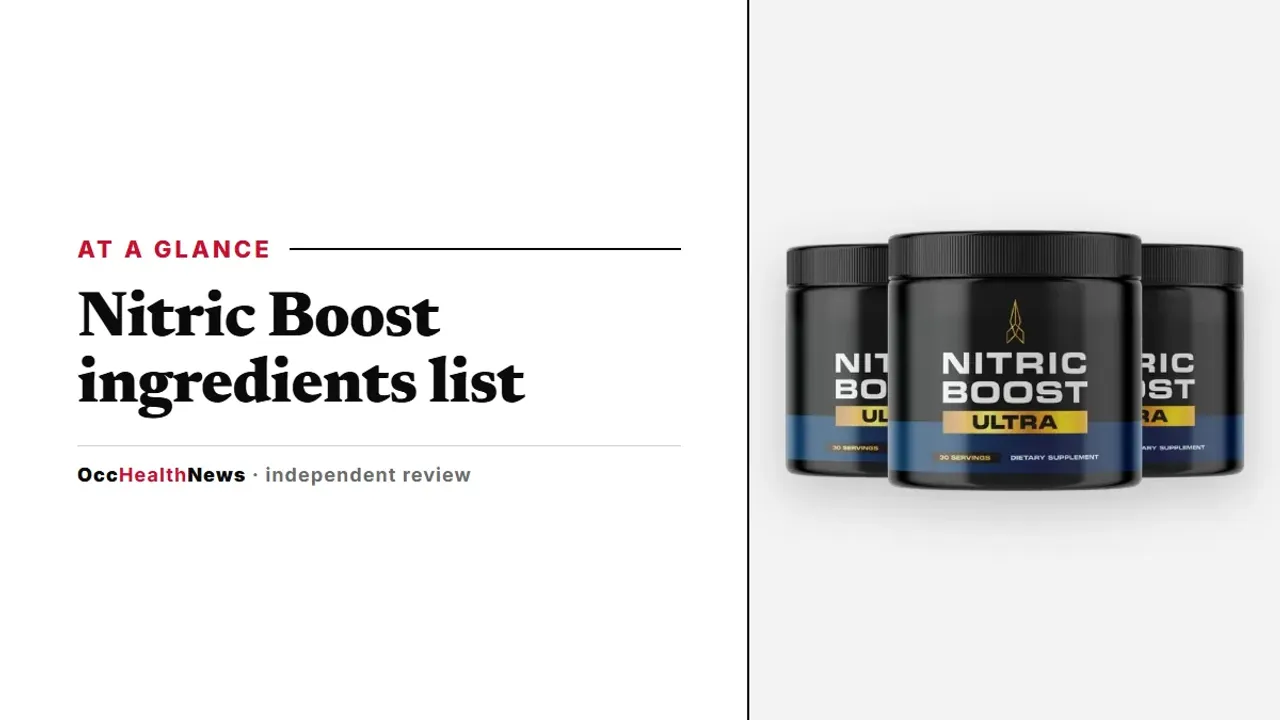
Eight clear names, no amounts. That is the honest summary of the Nitric Boost ingredients list. For a reader who values transparent doses, it is a limitation. For a reader who judges by experience and likes a generous refund window, it is acceptable. Our editorial mark is 4.6/5, and it is ours rather than a customer count, and the Nitric Boost hub keeps the key facts together. The jar’s label reads Nitric Boost Ultra.
Frequently asked questions
What is the full Nitric Boost ingredients list?
Beet root powder, L-arginine, L-citrulline DL-malate, niacin (vitamin B3), epimedium, ginkgo biloba powder, dong quai and D-aspartic acid.
Is there an other-ingredients list?
We found none on the seller's pages, and no supplement facts image.
Why are no doses shown?
The seller calls the mix a proprietary blend and prints no amount for any ingredient.
Is the powder flavored?
The seller states nothing about flavor or sweeteners, so we cannot say.
Where can I ask about a specific ingredient?
Email [email protected] or call the weekday support line, and ask before you order.
About the author
OccHealthNews Editorial Team. We read the studies, guidelines and regulatory filings so you do not have to, and we show our sources on every piece. More about how we work.