Is FemiCore a Health Supplement? What That Label Means
The word on the bottle is 'dietary supplement'. That one phrase decides who checks the product, what the label may promise and what the FDA does and does not do. Here is what it means for a woman deciding whether to try FemiCore.
Contents
- 1Is FemiCore a health supplement or a medicine?
- 2What the FDA does and does not do for a supplement like FemiCore
- 3“FDA-registered facility” is not “FDA approved”
- 4What the FemiCore label is allowed to say
- 5What supplement status means for your expectations
- 6Supplement does not mean risk-free
- 7The answer in one paragraph
Is FemiCore a health supplement? Yes. The bottle calls it a dietary supplement, and that is the legal category it is sold under in the United States. But the more useful question is what that label actually means. It decides who checks the product before it reaches you, what the marketing is allowed to promise, and what you can reasonably expect from a capsule taken once a day.
Many buyers assume a product sold for bladder control must have been tested and approved somewhere along the way. For dietary supplements, that is not how the system works. This article explains the rules in plain English, using FemiCore as the worked example, so you can read its label and its marketing with the right expectations.
Is FemiCore a health supplement or a medicine?
In US law there is no category called “health supplement”. The term people use in everyday speech maps onto dietary supplement, defined by the Dietary Supplement Health and Education Act of 1994, usually shortened to DSHEA.
Under that law, a dietary supplement is a product taken by mouth that contains a dietary ingredient, such as a vitamin, mineral, herb or other botanical, amino acid, or a concentrate or extract of these, and that is labelled as a dietary supplement. Probiotic bacteria are sold under the same framework.
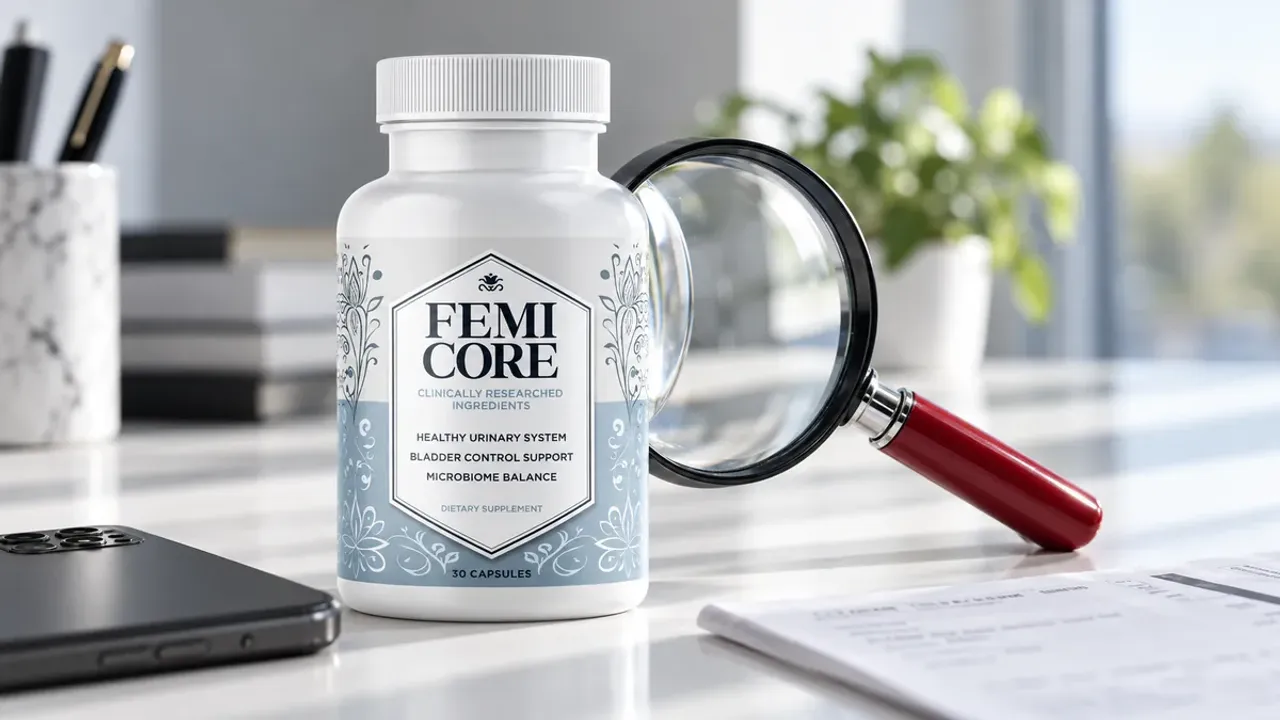
FemiCore fits that description. It is a capsule containing four botanicals (Mimosa Pudica, bearberry, cranberry extract and berberine) and five Lactobacillus strains, and it is labelled as a dietary supplement.
It is not a drug. Drugs, whether prescription or over the counter, go through a different path, with clinical trials submitted to the FDA and approval before sale. The bladder medicines a doctor might prescribe, such as anticholinergics or beta-3 agonists, went through that process. FemiCore did not, and as a supplement it was not required to.
What the FDA does and does not do for a supplement like FemiCore
This is the part most buyers get wrong, so it is worth being precise.
| Question | Prescription drug | Dietary supplement such as FemiCore |
|---|---|---|
| FDA approval before sale? | Yes | No |
| Clinical trials required? | Yes | No |
| Who is responsible for safety? | Maker, reviewed by FDA | Maker |
| Who checks the claims before sale? | FDA | No one before sale |
| Can FDA act after sale? | Yes | Yes, if unsafe or mislabelled |
| Manufacturing rules | Drug GMP | Supplement GMP, 21 CFR Part 111 |
| Who polices adverts? | FDA and FTC | FTC, with FDA for labels |
The FDA says plainly in its consumer guidance that it does not have the authority to approve dietary supplements for safety and effectiveness before they are marketed. The manufacturer must make sure the product is safe and the label truthful. The FDA can step in afterwards, for example by warning a company, seizing products or asking for a recall if a supplement turns out to be unsafe or misbranded.
There is one pre-market step. A supplement that contains a “new dietary ingredient”, one not marketed in the US before 15 October 1994, generally requires the maker to notify the FDA with safety information. That is a notification, not an approval.
“FDA-registered facility” is not “FDA approved”
The official FemiCore website displays seals for “GMP Certified” and “Made in an FDA registered facility”, along with “Manufactured in USA with imported ingredients”. We have seen these on the website, not verified them independently, and both phrases are often misread.
FDA-registered means the factory is on the FDA’s food facility register, which US law requires of facilities that make, process or store food, including supplements. The FDA itself states that registration does not mean approval or endorsement of a facility or its products. You will never see the phrase “FDA approved” used correctly for a supplement, and you should be wary of any seller who uses it.
GMP-certified points to current good manufacturing practice. Supplement makers must follow the rules in 21 CFR Part 111, which took effect in 2007 and cover things like testing ingredients for identity, setting specifications for purity and strength, record keeping, hygiene and complaint handling. A GMP certificate usually comes from an outside auditor and indicates the maker follows those rules.
GMP is about making the product consistently and cleanly. It says nothing about whether the product does what the marketing suggests. A well-made capsule can still be ineffective.
What the FemiCore label is allowed to say
Supplements can make three kinds of claims. Understanding them helps you read FemiCore’s marketing at the right level.
- Structure or function claims describe how an ingredient affects the normal structure or function of the body. “Supports bladder control” and “supports a healthy urinary system” are examples. These are allowed if they are truthful, the maker notifies the FDA within 30 days of using them, and the label carries the standard disclaimer.
- Health claims link an ingredient to a reduced risk of a disease. These need FDA authorisation and are rare on products like FemiCore.
- Disease claims, such as “treats incontinence” or “cures urinary tract infections”, are not allowed for supplements at all. A product that makes them is being marketed as an unapproved drug.
The standard disclaimer reads, in substance: this statement has not been evaluated by the Food and Drug Administration, and this product is not intended to diagnose, treat, cure or prevent any disease. When you see it on FemiCore’s materials, it is not small print to skip. It is the legal boundary of what the product promises.
Advertising is a separate matter. The Federal Trade Commission requires health claims in ads to be backed by competent and reliable scientific evidence. That rule applies to every seller, including affiliate sites like this one.
What supplement status means for your expectations
Put the rules together and a realistic picture emerges.
- Expect support, not treatment. FemiCore is positioned to support bladder control and urinary health, not to treat a diagnosed condition.
- Expect less evidence than a drug. No clinical trial of the finished FemiCore formula has been published. The evidence available is for individual ingredients, often at doses or by routes that may differ from FemiCore. Our full FemiCore review goes through that research.
- Expect less disclosure than you might like. FemiCore uses a proprietary blend, so the amount of each ingredient and the probiotic count are not published. That is legal, and it limits what anyone can say about dose.
- Expect a slow, uncertain result. The seller advises using it for at least 3 months before deciding. Results vary, and some people notice nothing.
- Use the guarantee as your safeguard. Every package carries a 60-day money-back guarantee. Email support within 60 days of the day your order is delivered and return all bottles, opened or empty, with the packing slip. Return shipping is at your own cost.
None of this is unique to FemiCore. It applies to almost every bladder, sleep or joint supplement on the market. Knowing it simply lets you judge the product on fair terms.
Supplement does not mean risk-free
“Natural” and “supplement” are not safety guarantees. FemiCore’s ingredient list includes a few that deserve care.
- Berberine lowers blood sugar and can affect blood pressure. It is processed by liver enzymes that also handle many prescription drugs.
- Cranberry products have been reported to interact with warfarin.
- Bearberry (uva ursi) is traditionally used only for short periods and is not recommended in pregnancy, breastfeeding or kidney disease.
- Probiotics are generally well tolerated but are not advised for people with seriously weakened immune systems without medical advice.
Our guide to who should use FemiCore sets out who is a reasonable fit and who should check with a doctor first.
The answer in one paragraph
Is FemiCore a health supplement? Yes, it is a dietary supplement under US law. That means the FDA did not approve it before sale, the maker is responsible for its safety and the truth of its label, its manufacturing should follow GMP rules, and its claims are limited to supporting normal body function. Treat it as a low-risk, slow-acting experiment, not a treatment, and keep your doctor in the loop if you have symptoms or take medicine. For the physical product, dose and label details, see our FemiCore supplement guide.
Frequently asked questions
Is FemiCore a health supplement?
Yes. FemiCore is marketed as a dietary supplement, the legal category for vitamins, minerals, herbs, probiotics and similar products taken by mouth to supplement the diet. It is not a prescription or over-the-counter drug.
Is FemiCore approved by the FDA?
No. The FDA does not approve any dietary supplement before it is sold. The official website displays a 'Made in an FDA registered facility' seal and carries the standard notice that its statements have not been evaluated by the FDA. Registration only means the facility is on the FDA's list. It is not an approval of the product or its claims.
What can a supplement like FemiCore legally claim?
It can make structure or function claims, such as supporting bladder control or urinary health, as long as they are truthful and carry the FDA disclaimer. It cannot claim to diagnose, treat, cure or prevent a disease such as incontinence or a urinary tract infection.
What does GMP-certified mean for FemiCore?
US supplement makers must follow current good manufacturing practice rules in 21 CFR Part 111, which cover identity, purity, strength and composition testing, record keeping and hygiene. A GMP certificate from an outside auditor is a sign a maker follows those rules. The official FemiCore website displays a GMP Certified seal but does not name the certifying body, and GMP would not show the product works anyway.
Who checks whether a supplement is safe?
The manufacturer is legally responsible for making sure its product is safe before sale. The FDA can act against a product after it is on the market if it is unsafe or mislabelled, and the FTC polices misleading advertising. Consumers and doctors can report problems through the FDA's reporting systems.
Does being a supplement mean FemiCore is safe for everyone?
No. Supplements can cause side effects and interact with medicines. Berberine in FemiCore can affect blood sugar and some prescription drugs, cranberry can interact with warfarin, and bearberry is not recommended in pregnancy or kidney disease. Ask a doctor or pharmacist first if any of these apply.
Sources
- 1 Questions and answers on dietary supplements US Food and Drug Administration
- 2 Current good manufacturing practice in manufacturing, packaging, labeling, or holding operations for dietary supplements (21 CFR Part 111) US Code of Federal Regulations
- 3 Statements made for dietary supplements concerning the effect of the product on the structure or function of the body (21 CFR 101.93) US Code of Federal Regulations
- 4 Dietary supplements: what you need to know NIH Office of Dietary Supplements
- 5 Health products compliance guidance US Federal Trade Commission
About the author
OccHealthNews Editorial Team. We read the studies, guidelines and regulatory filings so you do not have to, and we show our sources on every piece. More about how we work.