Arctic Blast Side Effects: A Calm Guide to Safe Use
A calm, practical guide to the Arctic Blast label cautions, a patch test on a small area, the ingredients worth a pharmacist's check and the signs that need a doctor. Label checked November 17, 2026.
Contents
- 1Arctic Blast side effects: what the label cautions
- 2A small-area test before the first full use
- 3Ingredients that deserve a second look
- 4DMSO and other products on your skin
- 5When pain needs a doctor, not a liquid
- 6Keep your prescribed medicines going
- 7Using the liquid with confidence
- 8If your skin reacts
- 9Questions to ask a pharmacist
- 10Keeping the bottle safe at home
- 11What a sensible first week looks like
- 12Where to read more
Arctic Blast side effects are the question careful buyers ask before they open a bottle, and it is a fair one. No liquid can promise you a reaction-free experience, so this guide keeps to the facts: what the label cautions, how to test a small area, what to keep away from the liquid, and when a sore area needs a doctor rather than a drop of liquid. Read it through once, then keep the steps in mind for every use.
Arctic Blast side effects: what the label cautions
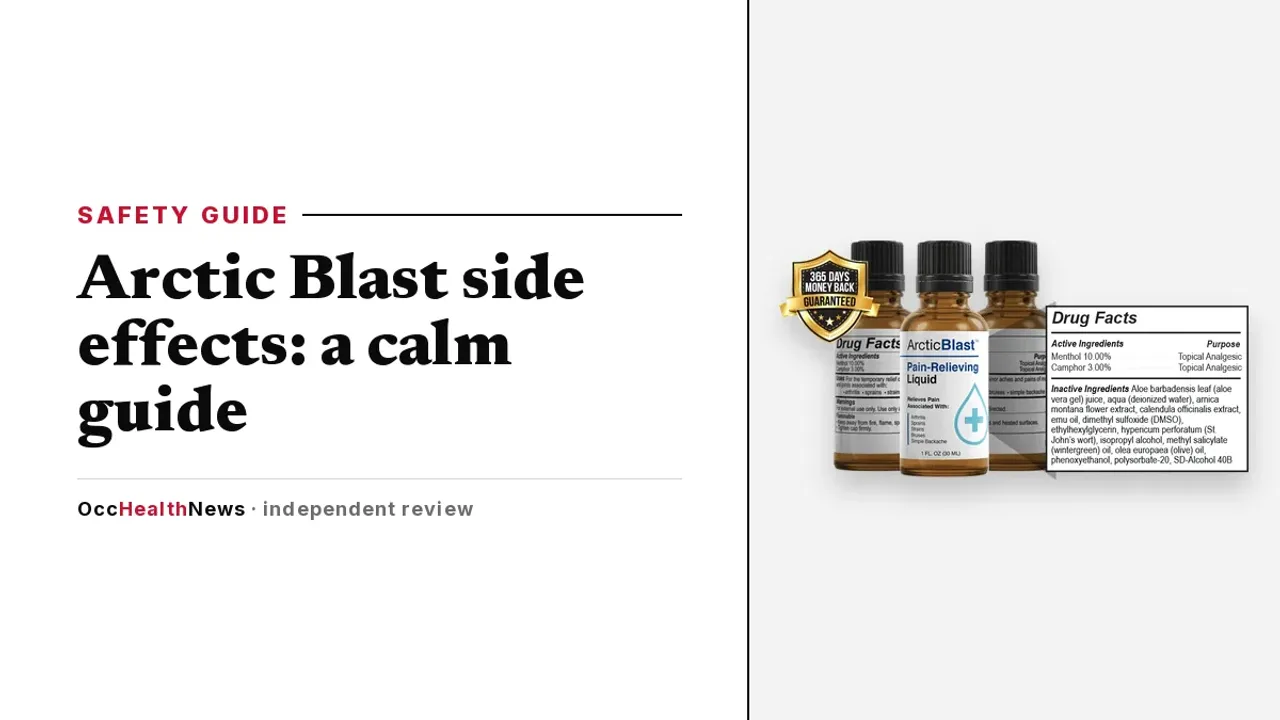
The Drug Facts label carries the cautions you should read first. The liquid is for external use only, so keep it off your lips and out of your eyes. Keep it off wounds and broken skin, and never wrap the area snugly. Adults 18 and over use it, and the seller’s directions cap use at three or four applications a day.
Two more cautions matter for the bottle itself. The liquid is flammable, so keep it away from fire, flame, sparks and heated surfaces, and keep the cap snug after every application. Keep it out of reach of children. If it is swallowed, contact a physician. If you are pregnant or breastfeeding, the label asks you to contact a physician before use.
A small-area test before the first full use
Our own advice starts with a small patch. Choose clean skin on a less sensitive part of the body, apply a little of the liquid and watch that area for the rest of the day. Let the test show you how your skin responds before you use the liquid on a larger sore area. If you have sensitive skin, a history of allergies or you take blood thinners, ask a doctor or pharmacist before the test.
A small test takes little effort, and it tells you more about your own skin than any description on a page, including this one.
Ingredients that deserve a second look
St. John’s wort and wintergreen oil (methyl salicylate) are printed in the ingredient list. Anyone with an aspirin or salicylate allergy should check with a doctor or pharmacist first, and so should people on blood thinners. Isopropyl alcohol and SD-Alcohol 40B are alcohols, which is one more reason the liquid needs to stay away from flame and heat.
If one of these items is a concern for you, bring the label to a pharmacist. A short conversation with a professional beats guessing from a product page.
Naming an ingredient is not the same as predicting a reaction. Our reason for pointing these items out is simple: a label that names its ingredients gives you a clear question to take to a professional.
DMSO and other products on your skin
The seller describes DMSO as the carrier, and it sits among the inactive ingredients on the label. Our general note: DMSO can take other substances along when it moves through the skin. So keep each use on clean skin, and do not stack it under or over other creams, lotions or products. If you use a prescription cream or patch on the same area, ask your doctor before you combine them.
Keep the bottle capped, stored at room temperature as the seller advises, and away from heat.
When pain needs a doctor, not a liquid
Some pain is a sign to stop and see a doctor. When pain arrives with swelling, redness, warmth or fever, or with numbness or weakness, a doctor should look at it. So does pain after an injury, and pain that wakes you at night. A topical liquid is not the right answer to those signs, and it should never replace a visit when a doctor is needed.
If your pain keeps returning, or it changes in a way you did not expect, make the appointment rather than adding another product to the routine.
Keep your prescribed medicines going
Keep taking your prescribed medicines as directed, and keep seeing your doctor. Do not stop a prescribed medicine because you have started a new product. If you are unsure whether the liquid fits alongside what you take, a pharmacist can check the label’s list against your medicines and tell you what to watch for.
Using the liquid with confidence
Careful buyers tend to settle into a simple routine: one small test, the directions on the bottle, clean skin and the cap closed tight. Buying from the seller’s own order page keeps the 365-day guarantee and the support line with your order, so you can read the label, test the area and decide over a full year.
For the economics, six bottles cost $39 each, $234 in total, and free standard shipping applies to every package in the seller’s order graphics. Read the final total on the checkout page before you confirm. The three packs are also laid out in full on the catalog price page, so you can compare the cost of each choice before you decide.
If your skin reacts
Stop using the liquid if your skin reacts, for example with burning that does not settle, a rash or swelling where you applied it. Do not apply it again to that area, and ask a doctor or pharmacist before you use it anywhere else. If the reaction is strong, or you have trouble breathing or swelling of the face, get medical help straight away. Take the bottle with you, or a photo of its label, so the ingredients can be read out.
This is our general advice. It does not replace the warnings printed on your own bottle.
Questions to ask a pharmacist
A pharmacist can answer practical questions in a short visit. Bring the label and your list of medicines, and ask:
- Does wintergreen oil or St. John’s wort matter for any medicine I take?
- Is it sensible to use a product containing DMSO alongside my current creams?
- Which warnings on the bottle matter most for my situation?
- What should I watch for during my first small-area test?
Keeping the bottle safe at home
Keep the cap closed tight after each use, and store the bottle at room temperature as the seller advises. Keep it well away from open flame, sparks, a stove or a heater, because the liquid is flammable. Keep it out of reach of children, and keep it apart from food and medicine. A bottle that is stored well is easier to use safely from the first drop to the last.
The hub lists the packs if you want to compare them with the safety points above.
What a sensible first week looks like
Start with one small-area test on clean skin and keep a note of the date and the place you tried. Read the warnings on your own bottle once more before you go further, and keep the cap closed tight afterward. If the test area looks and feels the way you expected, you can move to the directions printed on the bottle, which say adults 18 and over dab a little onto the sore patch, no more than three or four times daily.
If anything about the area changes in a way that worries you, stop and ask a doctor or pharmacist before you continue. A worrying change is a good reason to pause, however calm the rest of the week feels.
Where to read more
Our ingredients guide lists every item on the label with a plain note on each one. The guarantee details lay out the return steps in sequence, and the verdict is in our drops write-up. The catalog safety page sits beside the hub, where the packs and the guarantee are on one page.
Frequently asked questions
What are the Arctic Blast side effects people ask about?
Readers who look into this usually want to know about skin reactions, the eyes, pregnancy and what to do if the liquid is swallowed. The label addresses each of these, and the safe-use steps in this guide follow it.
Who should not use Arctic Blast?
The label is for adults 18 and over. Keep it away from children, and ask a doctor first if you are pregnant or breastfeeding.
What should I do before the first full use?
Test a small area of clean skin, watch it for the rest of the day and read the warnings printed on your bottle.
What if the liquid is swallowed?
The label says to consult a physician. Do not wait to see if it passes.
Can I use Arctic Blast with other creams?
We advise against layering it under or over other creams or products, because DMSO can carry other substances through the skin. Ask a pharmacist if you are unsure.
What if I have pain that does not ease?
Pain with swelling, redness, warmth, fever, numbness or weakness, pain after an injury, or pain that wakes you at night needs a doctor. Keep taking your prescribed medicines throughout.
About the author
OccHealthNews Editorial Team. We read the studies, guidelines and regulatory filings so you do not have to, and we show our sources on every piece. More about how we work.