Sleep Debt Is Real: How a Week of Short Nights Changes Your Blood Sugar, Mood and Immunity
You feel the tiredness. You do not feel the rise in blood sugar, the drop in immune defence or the shift in how your brain reads a threat. The studies that measured them are unusually clear.
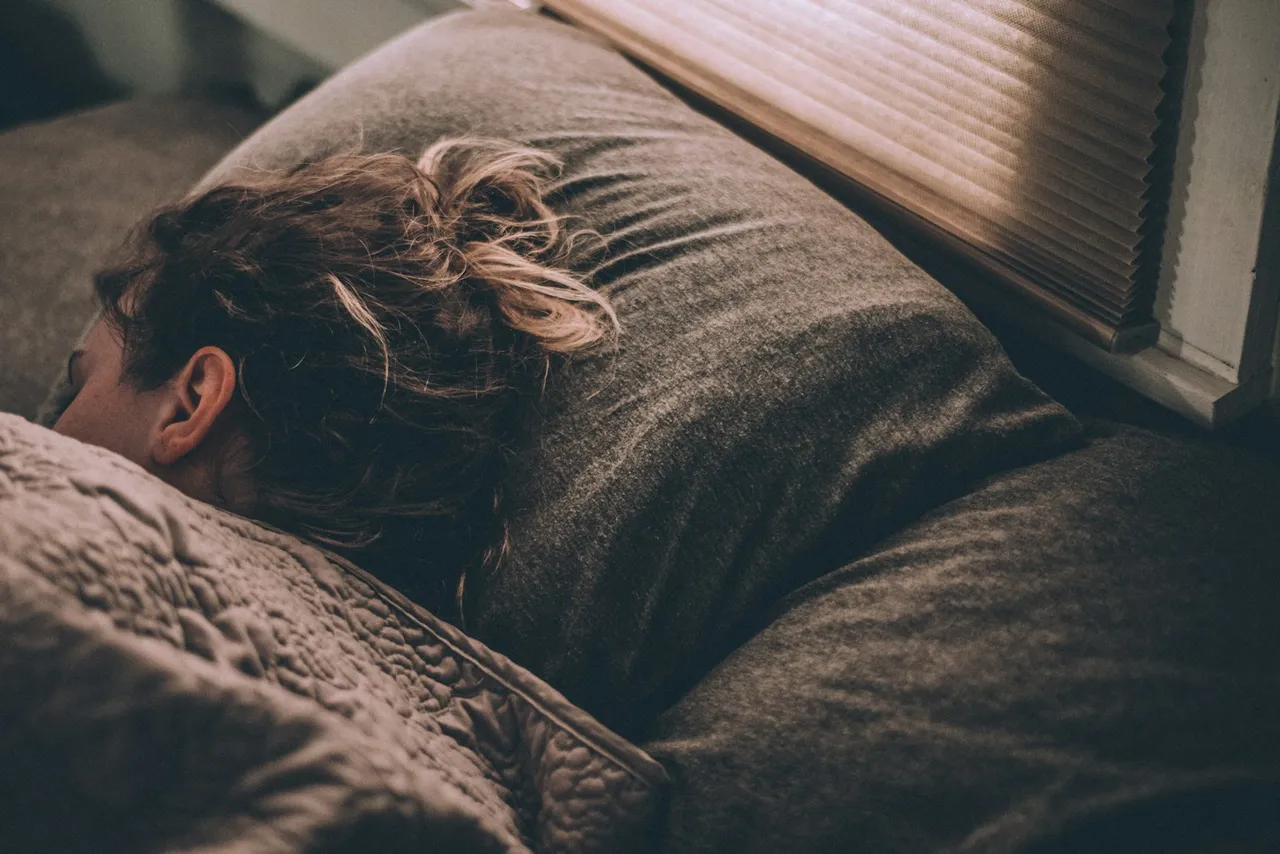
Most advice about sleep is vague because most people’s experience of it is vague. You know a bad week leaves you foggy. What you cannot feel is what the bad week does below the surface. A handful of tightly controlled studies, some of them decades old, measured exactly that, and their results are the reason sleep researchers talk about “sleep debt” as a physiological state rather than a figure of speech.
How short is short
The American Academy of Sleep Medicine and the Sleep Research Society issued a joint consensus in 2015: adults should regularly get seven or more hours a night. Fewer is associated with weight gain, diabetes, hypertension, heart disease, depression and impaired immune function. Based on national survey data, the Centers for Disease Control and Prevention estimates that about a third of US adults fall short of seven hours on a typical night.
That “regularly” is the key word. One short night is not a debt. A pattern of short nights is, and the effects below were produced by patterns measured in days to weeks.
Blood sugar: the 1999 study that started it
In 1999, Karine Spiegel, Rachel Leproult and Eve Van Cauter at the University of Chicago took 11 healthy young men into a sleep lab and restricted them to four hours in bed for six nights, then allowed 12 hours in bed for six nights of recovery. After the restriction phase, the men cleared glucose from their blood about 40% more slowly than after recovery, and their acute insulin response to glucose was about 30% lower. Evening cortisol was raised and the normal overnight dip was blunted.
The numbers at the end of the short-sleep week resembled those of people with impaired glucose tolerance, a pre-diabetic state. The participants were in their twenties and healthy. The effect reversed with recovery sleep, which is reassuring, but the study established that sleep loss has a direct metabolic cost that does not depend on being older or overweight.
Later work has replicated the finding with milder restriction and in women. The practical implication is uncomfortable: a stretch of short nights nudges blood sugar in the same direction as a poor diet, and the two compound.
Immunity: the rhinovirus experiment
Observational studies had long suggested short sleepers get sick more. In 2015 Aric Prather and colleagues tested it directly. They measured the sleep of 164 healthy adults for a week using wrist actigraphy, then quarantined them in a hotel and dripped a live rhinovirus into their noses. Everyone was exposed; the question was who developed a cold.
Participants who had averaged less than six hours of sleep were about 4.2 times more likely to develop a clinical cold than those who averaged more than seven hours. Under five hours, the odds were 4.5 times higher. The association held after adjusting for age, body mass index, stress, income, smoking and antibody levels to the virus at baseline. Sleep was a stronger predictor than any of those.
Mood and judgement: the deficit you cannot feel
The most cited study of chronic sleep restriction is Hans Van Dongen’s 2003 experiment at the University of Pennsylvania. Volunteers were randomised to four, six or eight hours in bed per night for two weeks, with a separate group kept awake for up to three days.
After two weeks of six-hour nights, attention lapses on a standard reaction task had accumulated to a level comparable to one to two nights of total sleep deprivation. The four-hour group was worse. Yet participants’ own ratings of sleepiness levelled off after a few days. They stopped feeling worse while continuing to perform worse. Sleep debt, in other words, hides itself.
Brain-imaging work has filled in the emotional side. After a night without sleep, the amygdala, which flags threats, responds far more strongly to negative images, while its connection to the prefrontal cortex, which puts those signals in context, weakens. That pattern maps onto what tired people report: everything feels more urgent and more personal.
For mood disorders the relationship runs both ways. Short sleep raises the risk of depression and anxiety in cohort studies, and insomnia is one of the most common early symptoms of both. Treating the sleep problem, typically with cognitive behavioural therapy for insomnia, improves mood outcomes in trials.
Why weekend catch-up falls short
The intuitive fix for a short week is a long weekend. In 2019, Christopher Depner and colleagues at the University of Colorado tested it. They assigned healthy adults to nine nights of either adequate sleep, five-hour nights throughout, or five-hour weeknights followed by a weekend of unrestricted sleep and then more five-hour nights.
The weekend group did sleep longer on their days off. But they also shifted their body clock later, ate more at night, and when the short nights resumed their insulin sensitivity dropped again. By the end of the study the catch-up group’s whole-body insulin sensitivity was no better than the group that never caught up at all, and liver and muscle insulin sensitivity were, if anything, worse.
The lesson is not that weekend sleep is pointless; it is that it does not undo the week. Metabolically, a consistent seven hours beats a pattern of five and nine.
What actually helps
The evidence on improving sleep is stronger for behaviour than for products.
- Fix the wake time first. A stable wake time anchors the body clock. Bedtime will follow.
- Protect the last hour. Bright screens close to the eyes delay melatonin; alcohol shortens deep sleep and fragments the second half of the night even though it speeds the first.
- Get morning light. Outdoor light soon after waking advances the clock and makes the next night’s sleep come easier.
- Keep caffeine to the morning. Its half-life is around five hours, so an afternoon coffee is still partly active at midnight.
- If it has gone on for months, get CBT-I. Cognitive behavioural therapy for insomnia is the first-line treatment in every major guideline and outperforms sleeping pills over the long run. Digital versions exist and work.
Supplements have a smaller role. Melatonin helps with timing problems such as jet lag and delayed sleep phase more than with ordinary insomnia. Magnesium has weak trial evidence, mostly in older adults who were low to begin with; we cover it in our magnesium guide.
The bottom line
The research is unusually consistent for a field that relies on self-report. Short sleep, sustained for days, raises blood sugar, weakens the first line of immune defence and degrades judgement in ways you stop noticing. It is also one of the few risk factors that reverses quickly when you fix it. A week of seven-hour nights is not a luxury; it is the repair.
Sources
- 1 Impact of sleep debt on metabolic and endocrine function The Lancet · 1999
- 2 Behaviorally assessed sleep and susceptibility to the common cold Sleep · 2015
- 3 The cumulative cost of additional wakefulness: dose-response effects on neurobehavioral functions and sleep physiology from chronic sleep restriction and total sleep deprivation Sleep · 2003
- 4 Ad libitum weekend recovery sleep fails to prevent metabolic dysregulation during a repeating pattern of insufficient sleep and weekend recovery sleep Current Biology · 2019
- 5 Recommended amount of sleep for a healthy adult: a joint consensus statement of the American Academy of Sleep Medicine and Sleep Research Society Sleep · 2015
- 6 Adults: sleep facts and stats US Centers for Disease Control and Prevention
About the author
OccHealthNews Editorial Team. We read the studies, guidelines and regulatory filings so you do not have to, and we show our sources on every piece. More about how we work.