Phytomem One Ingredients: What Each One Is Said to Do
Ten ingredients, three complexes and one proprietary blend. Here is each ingredient, the role the seller describes and where general research adds context.
Contents
- 1The big picture: three complexes
- 2Cellular Defense Matrix
- 3Brain Fuel & Vitality Complex
- 4Neural Amplifier System
- 5Other ingredients on the label
- 6The story behind the design
- 7What the research does and does not tell you
- 8How to read a proprietary blend
- 9Dose and the proprietary blend
- 10Who should check with a doctor first
- 11How it fits the daily routine
- 12Our take
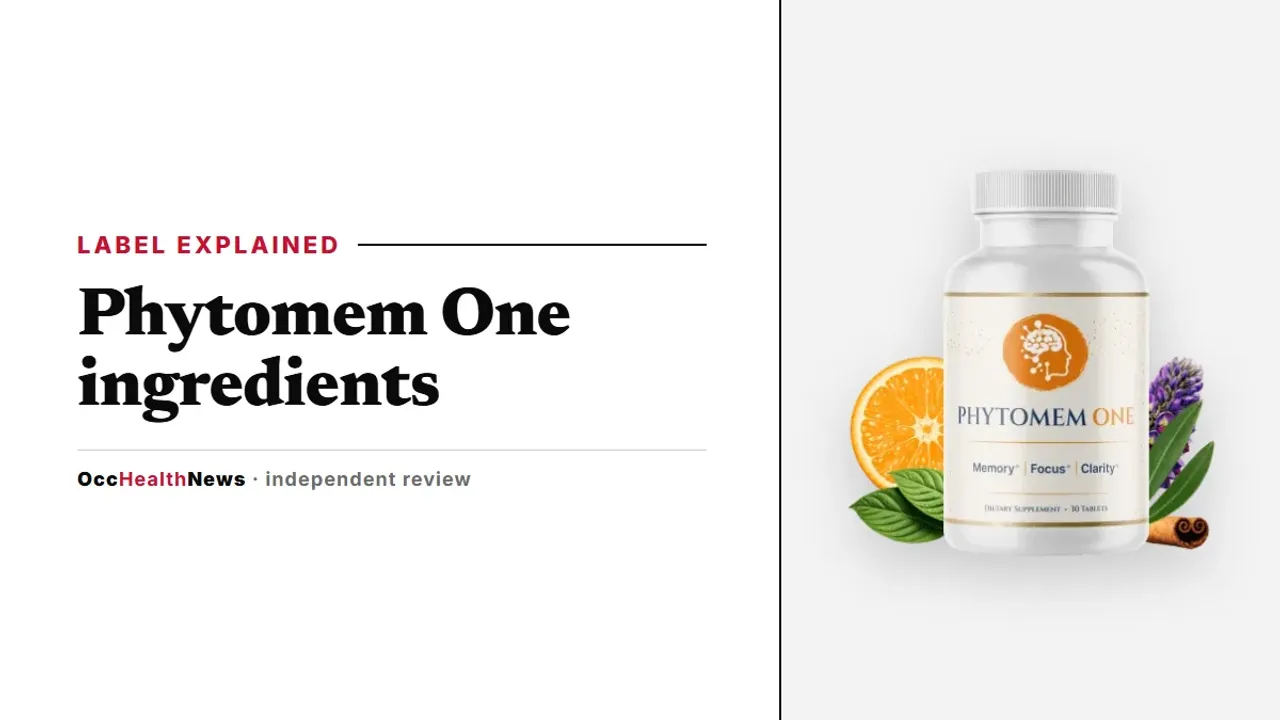
A label is the most honest part of any supplement, because it tells you what you are actually putting in your mouth. This guide to Phytomem One ingredients goes through all ten, grouped the way the seller groups them, with the role the seller gives each one. Where general research adds useful context, we link to it and describe it only as its title says. The roles below are the seller’s descriptions, and no individual dose is published, so we do not guess at any.
The big picture: three complexes
The seller describes a “10-in-1 neuro-essential formula” designed to support memory, focus and mental clarity. The ten ingredients sit in three groups, and the label shows them all inside a proprietary blend of 458 mg per tablet.
| Complex | Ingredients | Seller’s theme |
|---|---|---|
| Cellular Defense Matrix | Saffron, fucoxanthin, fucoidan, oleuropein | Antioxidant support against everyday environmental stressors |
| Brain Fuel & Vitality Complex | Berberine HCl, Ceylon cinnamon, corosolic acid, kudzu flower | Healthy glucose use so brain cells stay energized |
| Neural Amplifier System | Morosil, xylitol | Healthy metabolic function, antioxidant defense and nutrient absorption |
Cellular Defense Matrix
Saffron (Crocus sativus L.) bulb extract. The seller describes saffron as rich in antioxidant properties and says it helps protect brain cells from daily oxidative stress. Saffron is a familiar spice with a long history of kitchen and traditional use. General research includes a placebo-controlled randomized trial titled “Saffron (Crocus sativus) on mood and food craving in overweight women”, published in the Journal of Clinical Pharmacy and Therapeutics in 2020. It is research on saffron in a different setting, and it is not a trial of Phytomem One.
Fucoxanthin (from Laminaria japonica, sea kelp). The seller says fucoxanthin has been studied for healthy neural communication and cognitive flexibility. It comes from a brown seaweed, and the seller places it in the defense group because of its antioxidant character.
Fucoidan (from Laminaria japonica). Also from sea kelp, fucoidan is described by the seller as having a potent antioxidant profile that helps protect brain tissue from everyday oxidative challenges.
Oleuropein (olive leaf extract). The seller describes oleuropein as supporting healthy blood sugar that is already within normal ranges, along with whole-body antioxidant support.
Brain Fuel & Vitality Complex
The seller’s argument here is that the brain runs on glucose, and that supporting how brain cells use it is part of supporting focus and clarity.
Berberine HCl. The lead ingredient of the group. The seller says it helps activate AMPK, which it calls a “metabolic master switch”, and promotes optimal glucose use so that brain cells stay energized. General research includes a 2024 systematic review and meta-analysis in Frontiers in Pharmacology, titled “Berberine for blood sugar in type 2 diabetes”. It is a general review about berberine, not about Phytomem One.
Ceylon cinnamon bark (Cinnamomum verum). The seller says it supports healthy insulin sensitivity and normal glucose balance, and that it works alongside berberine.
Corosolic acid (from banaba leaf extract). Described by the seller as supporting healthy glucose transport to active brain cells.
Kudzu (Pueraria montana) flower extract. The seller says its isoflavones support healthy cellular glucose uptake.
Neural Amplifier System
Morosil (Moro blood orange, Citrus sinensis, from Mount Etna, Sicily). The seller describes Morosil as supporting healthy metabolic function, antioxidant defense and nutrient absorption. General research includes a 2022 randomized controlled trial in Nutrients titled “Moro blood orange extract and weight loss in overweight adults”. Again, that is research on the extract in another context.
Xylitol. Which the seller describes as “clean cognitive fuel without sudden blood sugar spikes”.
Other ingredients on the label
Outside the blend, the label lists natural flavors, stearic acid, magnesium stearate, silicon dioxide and stevia (Reb A). These are listed on the label as other ingredients, outside the blend.
The story behind the design
The seller says its formula was inspired by research on environmental stressors and brain energy. One of the pieces of general context behind that conversation is a 2025 paper in Nature Medicine titled “Bioaccumulation of microplastics in decedent human brains”, which measured microplastics in human brain tissue. We mention it as background only. It says nothing about what any supplement does, and we do not use it to make a claim about Phytomem One.
What the research does and does not tell you
The four studies we link are general ingredient or context research. Three cover individual ingredients in settings that are not about memory or Phytomem One, and one covers a general environmental topic. None tested the finished tablet. That is typical for a blend, and it is why we keep returning to the same sensible advice: read the research as background and use the 60-day guarantee for your own test.
How to read a proprietary blend
Many shoppers meet the phrase “proprietary blend” and wonder whether it is a red flag. It is simply a labeling format, where a maker lists a group of ingredients under one total weight without giving each one’s share. Here, that total is 458 mg per tablet for all ten ingredients and not counting the other ingredients that shape the tablet.
Three practical tips help when you read a blend.
- Look at the structure. The label groups the ten ingredients into three named complexes, which at least tells you how the maker thinks about them.
- Count what is named. Ten named ingredients inside 458 mg means each one is a small share, which is normal for a multi-ingredient formula.
- Ask a professional about your case. If you need exact amounts because of a medicine or a condition, a doctor or pharmacist can contact the seller at [email protected] for details.
None of this changes the daily routine. It simply sets realistic expectations about what a label can and cannot tell you. The Phytomem One hub keeps the label facts, the bonuses and the guarantee in one view.
Dose and the proprietary blend
The label gives one number: 458 mg per tablet for the whole blend. It does not break down the amount of each ingredient. For readers who like precision, that is a limitation, and we mention it in our score. For readers who simply want a clear list of what is inside, the label does that well. Our ingredients list guide presents the whole label as a table, and the ingredients sub-page is a short reference.
Who should check with a doctor first
The label asks you not to exceed the stated dose, and to speak to a doctor first if you are pregnant or nursing, under 18 or living with a medical condition. If you take prescription medicine, especially for blood sugar, bring the list of ingredients to your doctor or pharmacist, because several members of the Brain Fuel & Vitality Complex are discussed in connection with glucose. Our side effects guide covers this calmly.
How it fits the daily routine
One chewable tablet once daily, with food, is the routine on the label and in the seller’s FAQ. The seller lists the formula as stimulant-free, non-GMO and non-habit forming, and says many users report changes in mental clarity, word recall and morning sharpness within a few weeks. Results vary. Pricing runs from $79 to $49 a bottle depending on the package, with three free e-books on every package and a 60-day guarantee counted from the day you receive the order.
Our take
The Phytomem One label is clear about its structure: three complexes, ten named ingredients and one blend total. We like that it is easy to read and easy to discuss with a doctor. We would like per-ingredient doses, which the seller does not publish. Our editorial score for the offer is 4.6 out of 5. See the Phytomem One product page for the packages and bonuses.
Frequently asked questions
What are the Phytomem One ingredients?
Saffron bulb extract, fucoxanthin, fucoidan, oleuropein, berberine HCl, Ceylon cinnamon bark, corosolic acid, kudzu flower extract, Morosil and xylitol, plus natural flavors, stearic acid, magnesium stearate, silicon dioxide and stevia (Reb A).
How are they grouped?
Into a Cellular Defense Matrix, a Brain Fuel & Vitality Complex and a Neural Amplifier System.
How much of each ingredient is in a tablet?
The label shows one proprietary blend of 458 mg per tablet and does not publish individual doses.
Is there research on these ingredients?
General research exists on several of them. We link four studies, described only as their titles say, and none tested Phytomem One itself.
What does the seller say the formula is for?
The seller says it is designed to support memory, focus and mental clarity.
Who should check with a doctor first?
Anyone who is pregnant or nursing, under 18, taking medication or living with a medical condition, as the label advises.
Sources
- 1 Bioaccumulation of microplastics in decedent human brains Nature Medicine · 2025
- 2 Berberine for blood sugar in type 2 diabetes: systematic review and meta-analysis Frontiers in Pharmacology · 2024
- 3 Moro blood orange extract and weight loss in overweight adults: randomized controlled trial Nutrients · 2022
- 4 Saffron (Crocus sativus) on mood and food craving in overweight women: placebo-controlled randomized trial Journal of Clinical Pharmacy and Therapeutics · 2020
About the author
OccHealthNews Editorial Team. We read the studies, guidelines and regulatory filings so you do not have to, and we show our sources on every piece. More about how we work.