Gluco6 Scam Worries: How to Avoid Copycats and Fake Sellers
The capsule itself is real. The thing to guard against is the page that only looks like where you buy it. Here is a short, practical safety routine.
Contents
- 1Separating the product from the pages around it
- 2The three kinds of trouble worth knowing
- 3A two-minute safety routine
- 4What the genuine process looks like afterward
- 5If you think you’ve paid the wrong party
- 6Why “scam” searches spike for supplements
- 7A note on screenshots, videos and testimonials
- 8Safety beyond the checkout
- 9Our verdict
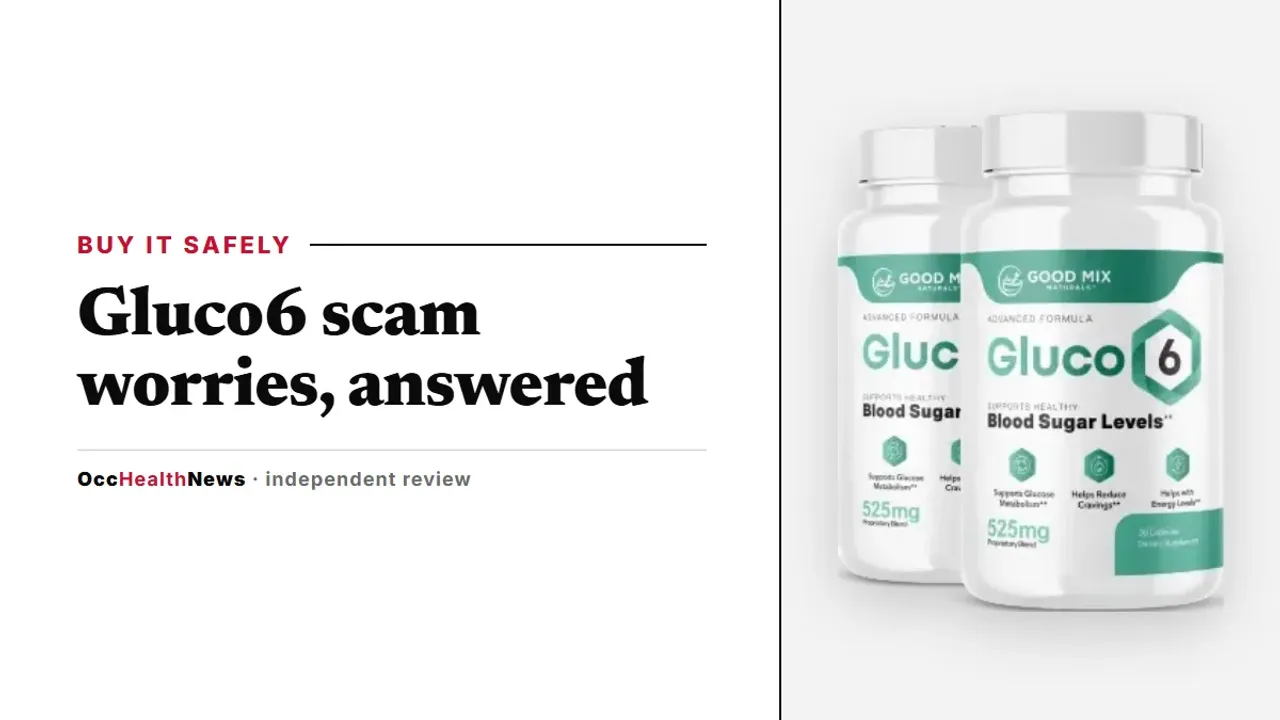
When people type “Gluco6 scam” into a search bar, they usually aren’t worried about the capsule. They’re worried about being fooled: sending money to a page that looks right and isn’t. That’s a sensible fear, and it has a practical answer. The product is real. Gluco6 is a once-a-day vegetable capsule, distributed by Gluco6 in Aurora, CO, and its maker positions it around healthy blood sugar levels already in the normal range, plus weight management. What deserves your caution is the route you take to the checkout. This guide gives you a routine you can run in a couple of minutes.
Separating the product from the pages around it
Two different questions get tangled together. One is whether the product exists and the seller is accountable. For Gluco6 the answer is yes: there’s a physical label, a ClickBank checkout, a written refund policy, a US return address and an email, a phone line and a helpdesk form. Our legit checklist goes through those.
The other question is whether the page in front of you is the real seller’s page. That one you have to answer every time, because anyone can build a page, borrow a bottle photo and copy a headline. The sections below are about that second question.
The three kinds of trouble worth knowing
Lookalike order pages. A site copies the look of the real page and collects card details. Typical signs: an odd web address, spelling slips, prices that don’t match the live packages, or a checkout that asks for more than a normal order needs.
Marketplace listings. The seller says Gluco6 isn’t stocked in stores or by retailers like GNC, Walgreens, Wal-Mart, Amazon or eBay. So a listing on one of those isn’t something the seller says it supports, and the refund protection tied to the real checkout may not reach you. Our Amazon guide covers that case.
Offers that are too good. Deep discounts, mystery coupon codes and “last chance” pages invite a pause. The real prices are simple and don’t move around: two bottles for $138 plus $9.95 US postage, three for $147 and six for $234. Anything dramatically different deserves suspicion.
A two-minute safety routine
- Start from a route you trust. Reach the order page from a link you chose, not from an unsolicited message or a pop-up.
- Read the address bar. Look at the whole web address, not just the first word. A single swapped letter is the oldest trick there is.
- Match the packages. The live page shows three: 2, 3 and 6 bottles. Six bottles should work out at $39 a bottle. If you see a smaller pack than two bottles on offer, or a price that doesn’t line up, stop.
- Look for ClickBank. The checkout runs through ClickBank, and the charge shows on a card statement as CLKBANK*Gluco6BloodSug.
- Check for a subscription. The seller’s FAQ describes a single payment with no auto-ship. A form that asks you to agree to recurring billing doesn’t match.
- Save your records. Keep the ClickBank order number and the order date. Support asks for both first.
What the genuine process looks like afterward
After a real order, the pieces fit together. A tracking email follows dispatch; the seller says it aims to ship within 24 working hours and that US delivery averages 5 to 10 days. The two download bonuses (a nutrition guide and a recipe collection) arrive instantly on three and six bottle orders. Your statement shows the ClickBank descriptor. If you ever need help, ClickBank’s order line is 1-800-390-6035 and the seller’s support is at [email protected] or (866) 864-7721.
None of that is exotic, and that’s the point. A genuine order produces ordinary, checkable paperwork. If any piece is missing or looks off, ask questions before you assume the best.
If you think you’ve paid the wrong party
Don’t panic, and don’t wait. Take these steps in order.
- Call your card issuer using the number on the back of the card. Explain that you believe you paid a lookalike seller and ask about disputing the charge.
- Keep everything. Screenshots of the page, the web address, any receipt and the date and time are all useful.
- Watch your statements. Check the next few weeks for charges you don’t recognize.
- Contact the real seller. Tell support what happened. They can confirm whether an order exists under your name.
Speed matters with card disputes, so move quickly rather than hoping the problem resolves itself.
Why “scam” searches spike for supplements
Supplements sit in an awkward spot. People buy them hoping for a result, results vary, and the marketing is often loud. Anyone who feels let down tends to search “scam,” whether or not anything improper happened. A product that didn’t suit someone isn’t a fraud, and a refund policy exists precisely so that a mismatch can be undone. Gluco6’s policy gives you 60 days from the purchase date to send the bottles back, with the return postage on you and the first shipping and handling excluded. Our money-back guarantee article lists the steps.
What does help is keeping expectations realistic. The seller itself talks about using the capsule steadily for three to six months and says results vary. Use the sixty days as a window to decide, not a deadline for miracles.
A note on screenshots, videos and testimonials
Fake pages often lean on borrowed proof: a screenshot of a glowing comment, a clip with a confident narrator, a “before and after” with no source. None of it can be checked, and all of it is cheap to produce. A genuine seller’s strongest evidence is dull by comparison: a label, an address, a refund policy with dates in it. When you meet flashy proof, ask where it came from, who is vouching for it and whether you could confirm it independently. If the answer is no, give it zero weight.
The same goes for pages that claim a product can deal with a medical condition. A food supplement shouldn’t make that kind of claim, and a page that does has moved from information to hype. You can read about the product itself on our Gluco6 page, which sticks to the label, the packages and the terms.
Safety beyond the checkout
A safe purchase is only half of safe use. The label keeps children and teens, expecting mothers and nursing mothers away, and asks those who use medication or have a health condition to see a physician before use. The blend’s green tea, theacrine and theobromine are caffeine-family substances, so sensitive people should take care. If you take prescribed medicines, leave them exactly as directed and let your doctor or pharmacist read the label before Gluco6 joins the routine, especially where diabetes medicines are involved. If you’d like the cautions at a glance, the Gluco6 safety page has them.
Our verdict
The Gluco6 scam question has a two-part answer. The product and the seller check out, and we rate the offer 4.6 out of 5, our own score, which looks at the label, the price list, the returns policy and the support contacts. The remaining risk is copycat pages, and that you can manage with the routine above. If you’re ready, the Gluco6 hub shows the real packages side by side.
Frequently asked questions
Is the Gluco6 product itself a scam?
We found no sign of that. It is a real capsule with a readable label, a ClickBank checkout, written refund terms and several support contacts.
What is the biggest Gluco6 scam risk?
Buying from a page that only imitates the real order page, or from a listing the seller does not stand behind.
How can I tell I am on the genuine checkout?
Reach it from a trusted route, check that the price matches the live packages and look for ClickBank as the processor, with CLKBANK*Gluco6BloodSug as the statement name.
What if I already paid a doubtful site?
Contact your card issuer promptly, explain what happened and ask about disputing the charge. Keep screenshots and any receipt.
Should I talk to my doctor first?
Yes, if prescriptions or a health condition apply. Carry on with your medicines as directed and have a doctor or pharmacist see the label first, particularly where diabetes medicines are involved.
About the author
OccHealthNews Editorial Team. We read the studies, guidelines and regulatory filings so you do not have to, and we show our sources on every piece. More about how we work.