Cholibrium Ingredients: Ten Mushroom Extracts, One by One
A plain-English tour of the ten mushrooms the seller names, grouped by what they are, followed by directions, allergy notes and a few habits for reading any ingredient list.
Contents
- 1Cholibrium ingredients at a glance
- 2The kitchen mushrooms
- 3The ones named for their looks
- 4The remaining four
- 5How the ten fit together
- 6What an extract is
- 7What else the seller says about the capsule
- 8Directions
- 9Allergies and medicines
- 10Taking the list to your doctor
- 11Why a short list helps
- 12Habits for reading any supplement label
- 13Comparing the formula with what you already take
- 14The value of knowing what you buy
- 15Our take on the Cholibrium ingredients
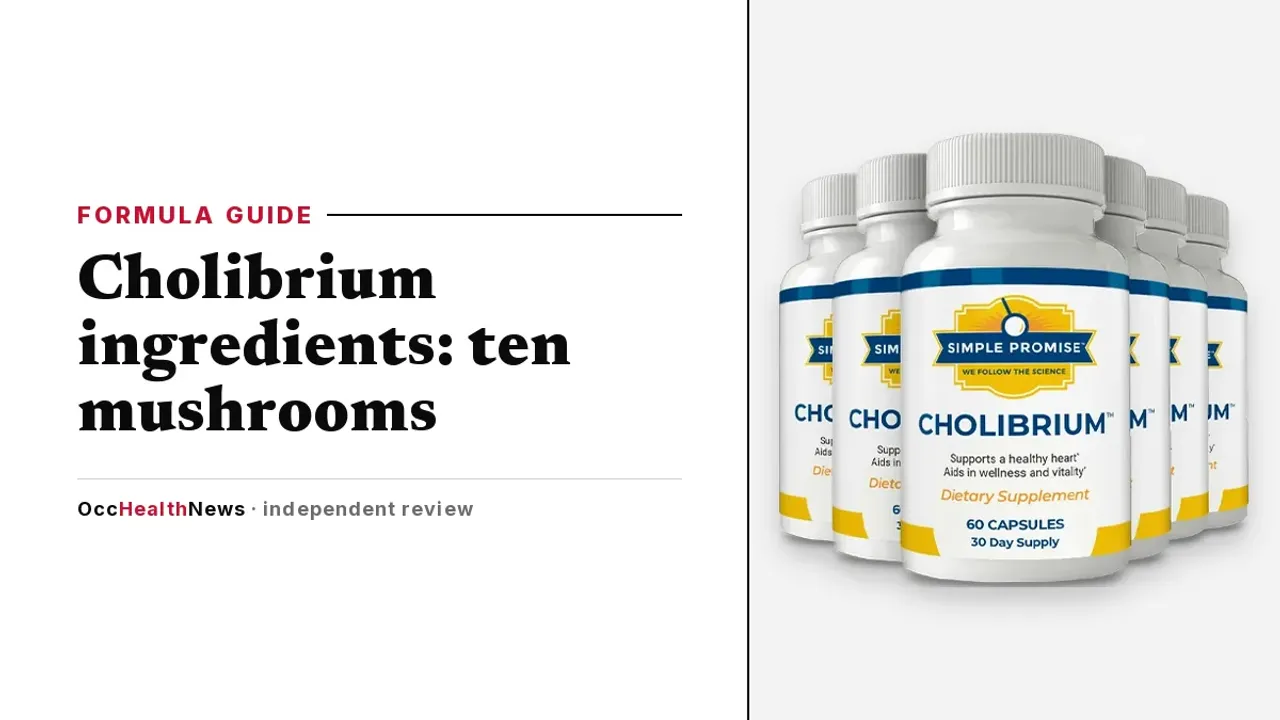
What is actually inside a Cholibrium capsule? Ten mushroom extracts, each named by the seller, in a formula that comes with a 365-day money-back guarantee. Below we meet them one by one, in everyday words and without claiming that any single mushroom does anything on its own, because the seller presents the ten as one blend.
Cholibrium ingredients at a glance
Each bottle contains 60 capsules and a serving means two. Here are the ten names, each with a plain note.
| Ingredient | What it is |
|---|---|
| Reishi (Lingzhi) | a firm, shiny, fan-shaped mushroom with two names |
| Lion’s Mane | a white mushroom hung with soft spines |
| Cordyceps | a genus of fungi, listed by that name |
| Shiitake | a brown umbrella-capped mushroom from the kitchen |
| Maitake | a frilly cluster of overlapping fronds, nicknamed hen of the woods |
| Turkey Tail | a slender, fan-shaped shelf with colored bands |
| Chaga | a hard, dark growth found on birch trees |
| Royal Agaricus | a member of the Agaricus family |
| White Button Mushroom | the pale, round mushroom of the supermarket shelf |
| Black Fungus (tree ear) | a dark, thin, ear-shaped mushroom |
The kitchen mushrooms
Three entries are likely to be familiar. Shiitake is the brown, umbrella-capped mushroom that turns up in soups and stir-fries. White Button Mushroom is the plain, pale one sold loose or in tubs. Black Fungus carries the nickname tree ear on the seller’s list and is dark, thin and shaped like it. Here, each one appears as an extract, which is a concentrated preparation and not a whole mushroom on a plate.
The ones named for their looks
Several entries earn their names from their shape. Lion’s Mane carries long, soft spines that hang like a mane. Turkey Tail is a thin fan with bands of color, a little like a turkey’s feathers. Maitake grows as a frilly, layered cluster, which is why it is also known as hen of the woods. They are different mushrooms, and the seller lists each one separately.
The remaining four
Reishi shows up with Lingzhi in brackets, and the seller uses both names. Look for a glossy, firm mushroom with a flat cap. Cordyceps is a genus name covering a family of fungi, and it is the label the seller chose. Chaga is a dark, crusty growth that forms on birch trees and looks more like a lump of charcoal than like a mushroom you would cook. Royal Agaricus belongs to the Agaricus family, and we keep to the seller’s wording for it.
How the ten fit together
The seller sells Cholibrium as one formula, not as ten separate promises. The goals it names are heart function, antioxidants and support for cholesterol readings that are already in the healthy range. Those goals describe the blend as a whole. We do not match a mushroom to a goal, and nothing on the list should be read as a promise of what it will do for you. Our Cholibrium product page places the formula in context alongside price and guarantee.
What an extract is
Supplement makers use the word extract for a concentrated preparation drawn from a raw material, here a mushroom. Capsules have little room, so concentrated forms are common on labels. The seller names ten such extracts for Cholibrium. If you want more detail on form or strength, the order page is where the seller presents what it chooses to share.
What else the seller says about the capsule
Per the seller, the capsule has no gluten, no GMO ingredients and no allergens, is gut-friendly and carries no flavor or odor, and production is said to happen in a cGMP-certified facility. We pass these on as the seller’s statements. Anyone following a special diet or avoiding a certain ingredient can read the order page and ask a pharmacist before buying.
Directions
The serving is two capsules a day, taken with a full glass of water in the half hour or so before a meal, or as your healthcare provider advises. Do not exceed it. A 60-capsule bottle covers 30 days, and the seller’s suggestion is to stay with daily use for 90 days at least, which three bottles supply and six double.
Allergies and medicines
Since every ingredient is a mushroom, an existing mushroom allergy ends the discussion: skip the capsule. If you are expecting, nursing, managing a condition or on medication, the seller asks you to see a healthcare provider first. We add a reminder for people on medicine for blood pressure, blood sugar or clotting, and for anyone on a cholesterol medicine, since the formula is aimed at cholesterol levels already inside a healthy range. Prescriptions stay as written, and Cholibrium is not meant to substitute for a statin or any treatment. Our side effects guide goes through these cautions calmly and in order.
Taking the list to your doctor
A written list makes the appointment faster. Copy the ten names from this page, add the serving of two capsules a day and hand both to your doctor or pharmacist along with your current medicine list. Ask one plain question: is there any reason this should not sit alongside what I already take? The answer takes a minute and settles the matter with the one person who knows your history. It also gives you a record to refer back to if you decide to use the refund promise later.
Why a short list helps
Ten entries, all of one kind, make for an easy cross-check. You are never decoding code names or hunting for a hidden category, because every line is a mushroom. Our ingredients page keeps a compact version of this tour, and the buyer’s guide adds the price, the bonus guides and the guarantee around it. If you want to see how the packages compare, our price post turns each one into a daily cost.
Habits for reading any supplement label
- Start with the serving. Everything printed refers to it, and here it is two capsules.
- Look for plain names. Shiitake and Maitake tell you exactly which mushroom you are buying.
- Notice the form. An extract is a concentrate, which differs from a whole food.
- Check your own allergies. The fewer the ingredient types, the quicker the answer.
- Bring the bottle to a pharmacist. A minute at the counter can show whether anything overlaps with what you already take.
Comparing the formula with what you already take
Maybe you already use a multivitamin or another daily capsule. Put the two labels next to each other and watch for repeated names, then ask a pharmacist to confirm. That small step is worth doing before any new supplement joins your routine, and it works with any bottle, not just this one.
The value of knowing what you buy
A formula is easier to trust when the ingredient names are plain and public. Cholibrium lists ten recognizable mushrooms, and that openness fits the seller’s wider offer: free US shipping on every package, three bonus guides marked free on the order page and a refund promise that lasts 365 days. Our price post shows how the packages compare.
Our take on the Cholibrium ingredients
Ten named mushrooms, two capsules a day and no unexplained code names make for a readable label. We score the offer 4.5 out of 5, our own editorial grade. For a first order, six bottles at $39 each carry the best price and the longest supply.
Frequently asked questions
What is in Cholibrium?
Ten mushroom extracts: Reishi (Lingzhi), Lion's Mane, Cordyceps, Shiitake, Maitake, Turkey Tail, Chaga, Royal Agaricus, White Button Mushroom and Black Fungus (tree ear).
How many capsules are in a bottle?
Sixty. At two capsules a day, a bottle is a 30-day supply.
Is Cholibrium gluten-free?
The seller describes it as gluten-free, non-GMO and allergen-free, with no flavor or odor.
Where is it made?
The seller says it is made in a cGMP-certified facility.
Who should skip it?
Anyone with a mushroom allergy, since every ingredient is a mushroom extract.
Does each mushroom do something specific?
We make no claim for any single mushroom. The seller presents the ten extracts as one formula.
About the author
OccHealthNews Editorial Team. We read the studies, guidelines and regulatory filings so you do not have to, and we show our sources on every piece. More about how we work.